A discussion on Geo’s Capital Talk hosted by Hamid Mir on Thursday night brought together former diplomats to assess the ongoing peace efforts in Islamabad, with participants emphasising that while progress has been made, a lasting breakthrough will require time and careful negotiation.
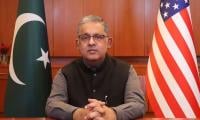
Former president of the UN Security Council Munir Akram stressed that patience would be essential, noting that the talks could continue over a long duration and that immediate results should not be expected. While he acknowledged that a comprehensive agreement may prove difficult, he maintained that the process itself was unlikely to fail completely. He also warned of external complications, arguing that Israel’s Prime Minister Netanyahu prefers the war to continue to avoid domestic political challenges.
Former foreign secretary Jalil Abbas Jilani described the talks as a significant achievement for Pakistan’s political and military leadership in bringing both sides to the negotiating table. He viewed the participation of US Vice President J D Vance as a positive signal, suggesting that Washington is aware that failure would carry domestic political costs. He also pointed to Iran’s economic pressures, noting that Tehran seeks peace to stabilise its internal situation, and added that the lifting of sanctions could allow the Pak-Iran gas pipeline to be activated, benefiting the wider region.
Former ambassador Dr Maleeha Lodhi raised concerns about possible sabotage, stating that Israel had intentionally attacked Lebanon, killing over 200 people, specifically to undermine the Islamabad talks. She described Vance as a strong choice who understands ‘red lines’ and has not historically supported the war, and suggested that there should be a 24-hour ‘ceasefire’ in the war of words to allow negotiations to proceed.
During the programme, Mir noted that while Pakistan had achieved a breakthrough with Chinese assistance, hostile powers and a Zionist lobby in the global media were actively working to undermine the peace process.
A day earlier, in an interview with India Today journalist Rajdeep Sardesai, Mir gave a detailed account of Pakistan’s role in facilitating the US-Iran ceasefire, framing it as a carefully calibrated diplomatic effort rather than formal mediation. He explained that Pakistan’s lack of diplomatic ties with Israel limited its ability to act as a full intermediary, even as multiple stakeholders publicly acknowledged its contribution.
“Pakistan’s role was explained by President Trump. Pakistan’s role was explained by the Iranian leadership. Everyone is appreciating Pakistan’s role. But yes, there is a technical question: was it the role of a mediator or a facilitator? Because you see, there were two or three parties in this war....Pakistan does not have diplomatic relations with Israel, so a mediator should have access to all parties. So I think Pakistan was acting as a facilitator. It was a peace initiative that began immediately after the war”.
Tracing the initiative’s origins, he said it began in early March through outreach led by Deputy Prime Minister/Foreign Minister Ishaq Dar, initially aimed at opening communication channels before expanding into a broader diplomatic role.
“On March 1, Deputy Prime Minister and Foreign Minister Ishaq Dar called both parties. He called Abbas Araghchi, and he also contacted the US administration, as well as Saudi Arabia and other stakeholders in the Gulf countries. Initially, Pakistan was only trying to create a communication channel between Iran and Saudi Arabia. Pakistan was telling the Iranians: please don’t attack Saudi Arabia. We have a defence cooperation pact with them, so please don’t create a situation in which we are forced to take a decision you may not like. But slowly and gradually, Turkiye also joined in, Egypt also became involved and Pakistan was pushed into the position of a facilitator”.
Responding to suggestions by Sardesai that Pakistan may have been acting on Washington’s instructions, Mir rejected the claim and pointed to the unusual convergence of trust Islamabad appeared to enjoy from both Tehran and Washington.
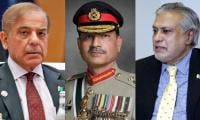
“Rajiv, what about the statement and tweet posted by Iran’s foreign minister? He ended that statement with ‘Pakistan Zindabad’....that means Pakistan was enjoying the full confidence of the Iranian government. People in Iran were on the streets, chanting slogans of ‘Pakistan Zindabad’, carrying Pakistani flags. And Trump was also praising Prime Minister Shehbaz Sharif and Field Marshal Asim Munir. So Pakistan was in a unique position. You may like it or not, but Pakistan was enjoying the confidence of both parties”.
He also pointed to a marked improvement in Pakistan-Iran relations over the past two years, attributing it to high-level goodwill and behind-the-scenes cooperation on security issues.
“Yes, the relationship between Iran and Pakistan has improved over the last two years. I must give credit to the late Supreme Leader of Iran, Ayatollah Ali Khamenei, because he had .... deep affection for Pakistan. He even authored a book on the life and philosophy of Dr Muhammad Iqbal....[I was told recently that] the AYatollah had spent some time in Karachi during his exile, where he made many friends... There is another angle that is not widely known. In the past year, just days before his assassination, Ayatollah Khamenei played a significant role in addressing militancy in Balochistan. Some militant groups were using Iranian territory as a hideout. Iran provided cooperation and support and Pakistan was able to address that problem. That became a turning point”.
Regarding who was leading the effort on Pakistan’s side, Mir identified Dar as the central figure, emphasising that the initiative had the full backing of both the civilian and military leadership.
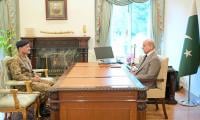
“I was expecting this question. As far as my information as a journalist is concerned, I told you that the Deputy Prime Minister and Foreign Minister Ishaq Dar started efforts to bridge the gap between Iran and Saudi Arabia, and then between Iran and the US, in the first week of March. He was visiting multiple countries, including China. So he was the main player in this effort. From the briefings I attended, it was clear that whatever Ishaq Dar was doing had the full confidence of Prime Minister Shehbaz Sharif and Field Marshal Asim Munir”.
Highlighting Pakistan’s broader diplomatic positioning, he said its simultaneous engagement with Washington, Tehran and Beijing had enabled it to play a bridging role.
“Yes, COAS Asim Munir and Shehbaz Sharif have a special relationship not only with Trump but also with the Iranian president, Masoud Pezeshkian. I witnessed this myself last year.... Both the prime minister and the army chief also have strong relationships with the Chinese leadership. So this is a unique situation: they have good relations with Trump, the Iranian leadership, and the Chinese leadership”.
Expanding on China’s role, he said Beijing’s intervention proved crucial at a critical moment of escalation, helping Islamabad secure Tehran’s agreement to the ceasefire.
“So this is a unique situation: they have good relations with Trump, the Iranian leadership and the Chinese leadership. Last night, when Trump made a very aggressive statement threatening massive destruction, it was China that helped Pakistan convince Iran to agree to the ceasefire. So Pakistan and China were playing a coordinated facilitation role. And now, on April 10, I hope this facilitation role will evolve into mediation”.
However, Mir cautioned that the ceasefire should be seen as a temporary de-escalation rather than a lasting resolution, noting that both sides continue to hold entrenched positions.
“This is a very important question. I will give you my personal opinion. I am in contact with Iranians, Americans, Chinese and Pakistani stakeholders, but this is my own view: this is not a resolution of the conflict. It is just a ceasefire. It is a positive development. Pakistan, with China’s help, played an important role”.
He warned that deep-rooted disagreements would make any long-term settlement difficult.
“But moving towards a permanent solution will be very difficult because both the American and Iranian sides have very hard positions. The temporary opening of the Strait of Hormuz for two weeks is not a major breakthrough”.
Outlining Iran’s expectations, he said Tehran is seeking a more comprehensive, internationally backed resolution.
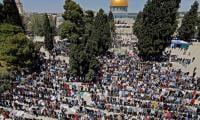
“Iran wants a permanent solution, endorsed by the UN Security Council. But a permanent solution, from their perspective, requires the withdrawal of Israeli troops from Gaza and the liberation of Al-Aqsa Mosque. This demand has not been made public, but it has been communicated to Pakistan, China and, through Pakistan, to the Americans”.
He concluded: “So in Islamabad, there will be a major challenge -- not only for the Americans and Iranians, but also for Pakistan and other stakeholders -- to find a path toward a permanent solution”.