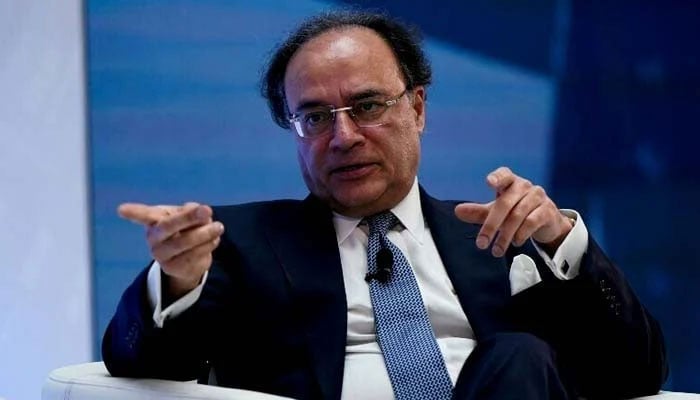
ISLAMABAD: Just ahead of his departure to Washington, D.C., Pakistan’s Minister for Finance, Muhammad Aurangzeb, held a consultative meeting with business tycoons, who unanimously demanded that the government rationalise tax rates and energy costs to boost export competitiveness.
Pakistan’s delegation, led by Minister for Finance Muhammad Aurangzeb, is set to attend the annual Spring Meetings of the Bretton Woods Institutions (BWIs), namely the IMF and World Bank, in Washington, D.C., from April 13 to 18. Pakistan is preparing to seek a more lenient approach from the IMF for the upcoming budget to reduce tax rates and energy prices in the country. The IMF team is expected to visit Pakistan next month to finalise the major contours of the upcoming budget, which is expected to be unveiled in parliament on 1 June 2026.
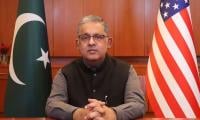
Federal Minister for Finance and Revenue, Senator Muhammad Aurangzeb, on Thursday chaired a virtual meeting with presidents and senior office-bearers of chambers of commerce and business entities from across the country to discuss the prevailing economic situation, upcoming budget priorities, and avenues for strengthening economic recovery and growth. The meeting, which lasted nearly 90 minutes, was also attended by Minister of State for Finance Bilal Azhar Kayani, along with senior officials of the Finance Division, Revenue Division and Tax Policy Office.
The finance minister highlighted the purpose of the meeting was to focus on identifying practical and forward-looking ideas to leverage opportunities for enhancing trade, attracting investment, and promoting sustainable economic growth. He noted that Pakistan had entered the recent challenging phase from a position of relative macroeconomic stability, supported by fiscal discipline and strengthened external buffers, and reaffirmed the government’s commitment to maintaining economic resilience while ensuring inclusive and durable recovery. Highlighting the recent economic developments, the finance minister pointed to improvements in fiscal management, fulfilment of external obligations and targeted support measures for vulnerable segments.
The finance minister emphasised that economic recovery is grounded in strengthening fundamental economic indicators and institutional discipline, achieved in partnership with the private sector. He encouraged participants to share actionable proposals to capitalise on emerging opportunities, particularly in trade facilitation, logistics and regional connectivity, including the growing potential of Pakistan as a transshipment and investment hub.
Following the minister’s remarks, the floor was opened for discussion. From the perspective of the upcoming federal budget, the business tycoons broadly emphasised the need for a shift towards a more growth-oriented and competitive fiscal framework. A central theme across the discussions was the rationalisation of tax regime, with participants calling for simplification of the existing structure and moderation of the overall tax burden to align with regional benchmarks. There was a strong preference for reducing reliance on higher tax rates and instead expanding the tax base through improved documentation and inclusion of untaxed sectors. At the same time, participants stressed the importance of predictability and consistency in tax policies, underlining that early and meaningful consultation with stakeholders before the budget would help avoid disruptions and foster greater confidence among businesses.
A significant focus of the recommendations was the need for targeted incentives to encourage export growth, including support for incremental exports and facilitation for import substitution. They also emphasised the urgency of improving cash flows through timely processing of refunds and flexible adjustment mechanisms to reduce working capital pressures, particularly for export-oriented sectors. In parallel, there was a strong call for reducing the overall cost of doing business by addressing energy pricing, financing costs and operational inefficiencies.
The chambers also recommended providing incentives for capital formation, reducing duties and taxes on industrial inputs and machinery, and facilitating access to affordable financing for both large industries and SMEs. Particular emphasis was placed on supporting small and medium enterprises through simplified compliance requirements and enhanced access to credit. The participants also highlighted the need for targeted sectoral support, improved ease of doing business through gradual digitalisation and regulatory simplification and the introduction of investment-friendly policies to attract both domestic and overseas capital.
The participants called for improving the overall business environment, facilitating exports, strengthening productivity and aligning policy frameworks with regional benchmarks. Participants emphasised the importance of reducing operational inefficiencies, enabling optimal utilisation of infrastructure and fostering investment across key sectors of the economy.
They also highlighted the need to improve liquidity flows, support export-oriented industries and diversify markets to expand Pakistan’s global trade footprint. Suggestions underscored the importance of policy predictability, consultative engagement in the budget-making process and targeted facilitation to promote investment in infrastructure, manufacturing and emerging sectors. The dialogue reflected a shared commitment to strengthening the formal economy, encouraging innovation and technology adoption, and unlocking long-term growth potential through coordinated efforts.
Minister of State for Finance Bilal Azhar Kayani, in his remarks, appreciated the constructive input from the business community and reaffirmed the government’s commitment to continued engagement. He noted that many of the proposals were aligned with the government’s reform agenda and emphasised the importance of prioritising measures that deliver maximum economic impact within available fiscal space, while ensuring practical and implementable solutions.
Senior officials from the Tax Policy Office and Federal Board of Revenue also briefed the participants on the ongoing consultative process, assuring that their proposals were being carefully evaluated to formulate balanced and effective policy measures.