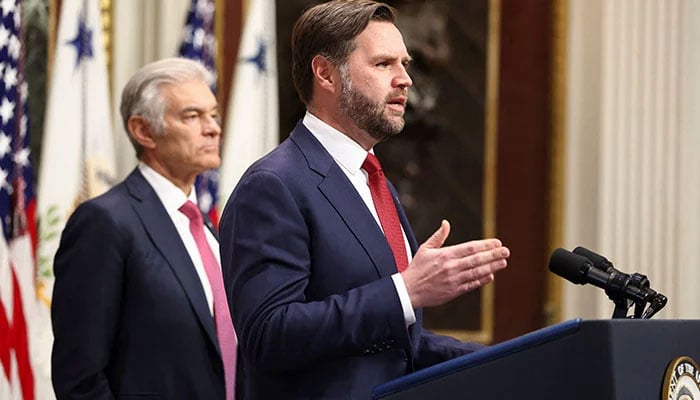
BUDAPEST: US Vice President JD Vance on Wednesday slammed European leaders for not doing enough to try to end the Ukraine conflict, adding that it has been the “hardest” to solve.
Kyiv on Wednesday called on the United States to pressure Russia into ending its invasion of Ukraine, saying Washington´s ceasefire agreement with Iran showed the success of US “decisiveness”.
“We´ve been disappointed by a lot of political leadership in Europe because they don´t seem particularly interested in solving this particular conflict,” Vance said during a visit to Hungary.
He said efforts to resolve the conflict had seen “significant progress” but it has been “the hardest war to solve”.
“We´ve got pieces of paper from the Ukrainians and pieces of paper from the Russians. We´ve actually got them to state their positions and over time their positions have gotten closer and closer together,” Vance said.
“And that´s why we´ve made some progress. We haven´t obviously made the final amount of progress, but I´m pretty optimistic about this, because fundamentally the war has stopped making sense,” he added.
But he said it “takes two to tango”. “We´re talking about haggling at this point over a few square kilometres of territory in one direction or another, is that worth losing hundreds of thousands of additional Russian and Ukrainian young men? Is that worth an additional months or even years of higher energy prices and economic devastation?” he added.
He hailed Hungarian nationalist Prime Minister Viktor Orban, who has maintained close ties with Moscow despite the invasion, breaking ranks with most other EU leaders, and who has been accused of fuelling anti-Ukraine sentiment in the run-up to Sunday elections.