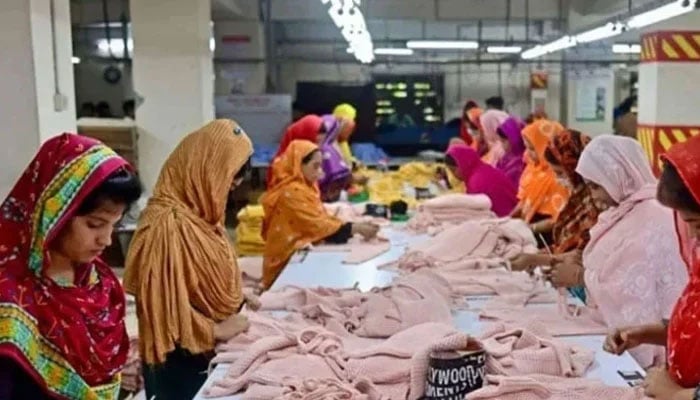
LAHORE: A high-stakes clash of crops has created tensions between textile and sugar industries as sugarcane cultivation expands into areas traditionally used for cotton.
The friction between these two sectors continues to grow as the All Pakistan Textile Mills Association (Aptma) cites reports of weak enforcement in cotton zones, which has enabled the establishment of new sugar mills in restricted areas. As sugarcane prices rise, the incentive for farmers to abandon cotton increases, further threatening the acreage in Punjab and Sindh, according to the textile body.
In a recent meeting, the chairperson of Aptma warns that without immediate corrective action and a commitment to agricultural zoning, the country’s efforts to revive the cotton sector will face irreversible setbacks.
This ‘crop war’ has sparked a debate over export priorities, water security and the future of agricultural zoning.The Aptma leadership, in a meeting with the minister for food security & research, has formally petitioned for intervention, citing a “cotton shortage” that threatens the country’s primary export engine.
Aptma strongly objects to what it calls any policy shifts, administrative support or zoning relaxations that encourage the expansion of sugarcane within designated cotton belts. According to the textile body, such market distortions are creating a critical and dangerous shortage of raw cotton, which serves as the essential backbone of Pakistan’s industrial sector and global trade presence. Aptma contends that sugarcane is a significantly more water-intensive crop than cotton, making its rapid spread across southern Punjab and Sindh particularly damaging to the region’s long-term ecological health and groundwater levels. The association emphasises that cotton is a strategic export crop, vital for maintaining Pakistan’s global market share and securing the livelihoods of millions of industrial and agricultural workers.
In contrast, the sugar industry has defended its position by focusing on the fundamental principles of a free-market economy and individual farmer autonomy. Commenting on the objection raised by Aptma, a senior member of the Pakistan Sugar Mills Association (PSMA) argues that farmers are rational economic actors who will naturally plant the crops that yield the highest profit margins for their families. He suggested that if sugarcane is currently more attractive to landowners, it is a reflection of genuine market demand rather than a result of unfair policy advantages or government interference.
Representatives for the sector has dismissed claims that their growth poses a direct threat to national water reserves. They argue that while a single sugarcane crop requires a large volume of water, farmers often grow three or four crops in the same period, which can lead to a comparable level of total water consumption over the year.
Ch Zaka Ashraf, chairperson of the PSMA, while commenting on the textile body’s opposition to sugarcane cultivation, said Aptma has no knowledge about the dynamics of the agriculture sector.