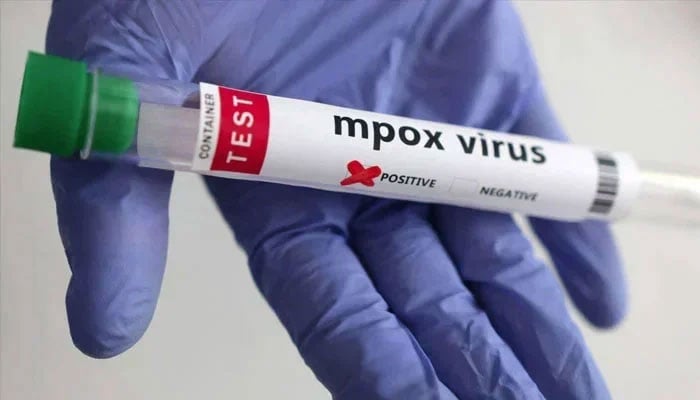
ISLAMABAD: A joint investigation into a suspected Mpox outbreak in Sindh’s Khairpur district has been launched by a high-level team of epidemiologists, laboratory scientists, and infection prevention experts.
This comes as federal authorities express concern provincial government remains in denial despite laboratory confirmations and a growing number of cases among newborns and adults.
Officials confirmed the team, comprising experts from National Institute of Health (NIH) Islamabad, Sindh Health Department, and Dow University of Health Sciences, has been sent to Khairpur and Sukkur. Their mission is to conduct field investigations, collect samples, assess infection prevention and control practices, and recommend urgent containment measures.
The visiting team includes epidemiologists to trace transmission patterns, virologists and laboratory specialists for diagnostic confirmation and genomic analysis, and infection prevention and control (IPC) experts to evaluate shortcomings in healthcare settings.
This action follows increasing pressure from federal health authorities after multiple suspected and confirmed cases continued to emerge in Khairpur and nearby areas, including infections among newborns. At least seven neonatal deaths have already been reported in the district, with several testing positive for Mpox in laboratory investigations conducted by two independent facilities, raising serious concern among national health officials.
Despite these confirmations, officials at Ministry of National Health Services stated Sindh government has yet to formally acknowledge outbreak. This stance has drawn criticism from federal authorities, who warn delays in recognition and reporting could worsen situation and weaken containment efforts.
A senior federal health official said the issue has been taken up at highest level, with Prime Minister Shehbaz Sharif directing immediate coordination between federal and provincial authorities, strengthening surveillance systems, and taking urgent measures to prevent further spread of the virus.
“The federal government has offered full technical support, including laboratory confirmation, genomic sequencing, and outbreak investigation, but timely data sharing and transparency from provinces is critical”, official said, adding withholding information could compromise both national response and international obligations.
A formal communication from NIH’s Centre for Disease Control had already warned Sindh authorities laboratory-confirmed cases in Khairpur indicate a potential outbreak requiring an urgent and coordinated response. The letter also highlighted unusual detection of infection in an infant, raising possibility of vertical transmission - a rare but serious development that requires detailed epidemiological investigation.
The NIH also reminded provincial authorities of Pakistan’s obligations under International Health Regulations (2005), which require timely detection and reporting of outbreaks to World Health Organiation. Officials cautioned delays or concealment could affect Pakistan’s global health standing and limit international support.
On the ground, local authorities in Sukkur and Khairpur have begun limited response measures. Commissioner Sukkur Division, Syed Abid Saleem Qureshi, visited Gambat, where officials briefed him on formation of rapid response teams.
According to district officials, three teams have been formed in each taluka under supervision of assistant commissioners, including health officers, veterinary doctors, and representatives from local government and education departments.
These teams have been tasked with conducting field visits, ensuring implementation of infection prevention protocols at public and private healthcare facilities, and submitting daily reports to deputy commissioner. Authorities have also been directed to set up emergency control rooms and increase public awareness through lady health workers and local administrative staff.
However, health experts warn these measures may be insufficient if full scale of outbreak is not acknowledged. Clinicians in Khairpur, Gambat, and surrounding areas have reported clusters of children showing symptoms consistent with Mpox over recent weeks, suggesting community-level transmission may already be underway.
A separate team from Dow University has also carried out independent field visits and sample collection, reinforcing concerns outbreak may be larger than officially reported. Federal officials privately admit gaps in disease surveillance, weak coordination, and reluctance to share data have allowed situation to worsen unchecked.
“There is clear evidence of ongoing transmission, including among highly vulnerable populations such as newborns. The priority now is to determine true scale of outbreak and contain it before it spreads further”, another official said.
With NIH-led team now in the field and international reporting obligations approaching, health authorities say coming days will be critical in determining whether Pakistan can contain what is increasingly being seen as a serious and potentially escalating public health emergency.