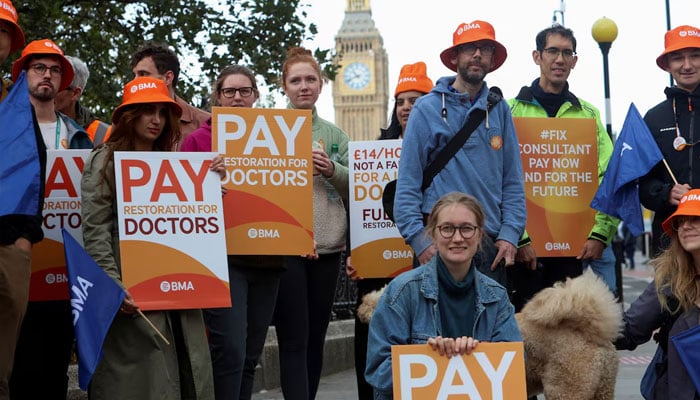
LONDON: Doctors in England walked out for the 15th time in just over three years on Tuesday in an increasingly bitter dispute with the government over pay and jobs.
The six-day stoppage by resident doctors -- those below consultant level -- comes after the doctors secured a 28.9 per cent increase over three years following previous strikes.
The government and the resident doctors are deadlocked over the medics´ demand for a further big pay hike to compensate for what they say is a real-time loss of earnings due to inflation.
Health Minister Wes Streeting condemned the decision by the doctors´ union to reject the government´s latest offer of 4.9 per cent amid an ongoing cost of living crisis. Streeting told BBC television the doctors had been the “standout winners of the entire public sector workforce when it comes to pay rises”. He accused the union of rushing to strike action despite the earlier “whopping” pay rise, adding the stoppage would cost the state-funded National Health Service £300 million ($3.9 million).
The British Medical Association (BMA), which represents the doctors, is demanding full pay restoration to 2008 levels.
The UK government has repeatedly said that in the current economic environment it is impossible to meet their demands.
Streeting has already agreed to the doctors´ union´s demand that UK-trained medics get priority for training posts over candidates from overseas.
Health Secretary Wes Streeting said 95 per cent of appointments were still in place and apologised to those affected by cancellations, saying they “deserve better”.
He said the government had negotiated with the BMA “in good faith” and criticised the decision not to accept its latest offer - calling resident doctors “by a country mile the best winners of the entire public sector workforce when it comes to pay rises”.
The government said the strikes were costing the NHS £50m a day, meaning the health service had lost around £3bn since industrial action started in March 2023 - but a detailed breakdown of costs has not been set out.Despite receiving pay rises worth 33 per cent over the past four years, the BMA argues doctors are still being paid a fifth less than they were in 2008 once inflation is taken into account.