KARACHI/LAHORE: Pakistan’s business community has issued a stark warning over the unprecedented surge in petroleum prices, cautioning that the move could cripple industrial activity, accelerate inflation and threaten economic stability, while urging the government to provide immediate tax relief.
President of the Federation of Pakistan Chambers of Commerce & Industry (FPCCI) Atif Ikram Sheikh expressed deep concern over the sharp increase, proposing a temporary suspension of the petroleum development levy (PDL) to provide relief to the industrial sector until global oil supplies stabilise.
He said the surge in fuel costs has gone beyond a routine operational challenge and now poses an existential threat to the economy, risking de-industrialisation, disrupting supply chains and fuelling inflationary pressures.
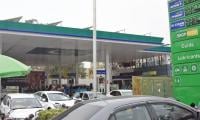
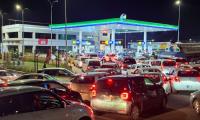
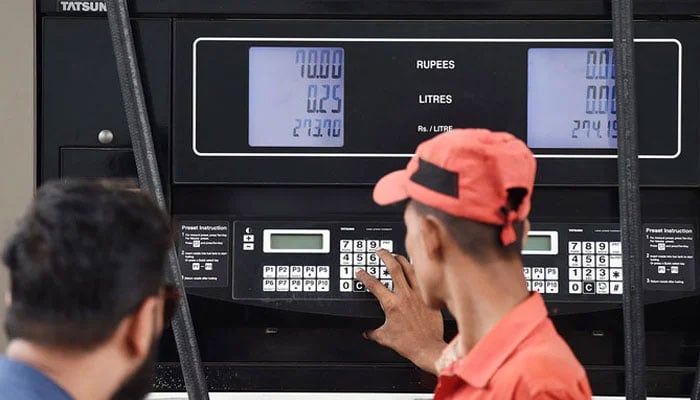
Petrol prices have risen by Rs137.23 to Rs458.4 per litre while high-speed diesel (HSD) has jumped by Rs184.49 to Rs520.35 per litre. Factoring in earlier adjustments in March, the cumulative rise stands at around 77 per cent within a month.
Sheikh warned that the hike would severely impact industrial output and exports, adding that passing on such a steep increase to consumers and businesses overnight is unsustainable despite global oil market volatility driven by Middle East tensions. Echoing similar concerns, the Pakistan International Business Forum (PIBF) termed the increase a devastating blow to businesses and the already struggling economy. In a joint statement, PIBF President Dr Mushtaq Mangat, Secretary General Muhammad Ejaz Tanveer and Chief Organiser Lahore Muaz Qazi said the hike has sharply raised transportation and production costs, placing additional strain on industries.
They noted that small and medium enterprises (SMEs), already burdened by high energy tariffs and taxes, are facing acute financial stress, with risks of reduced output across multiple sectors. The increase in transport costs has also pushed up prices of essential goods, adding to inflationary pressures on consumers.
Industrial representatives in Karachi also voiced strong criticism. Abdul Rehman Fudda, president of the SITE Association of Industry, said the hike would have a “360-degree impact” on the economy, driving up costs across sectors and damaging export competitiveness.
He argued that the increase was largely driven by domestic policy decisions rather than global oil prices, citing the withdrawal of the Price Differential Claim (PDC) subsidy and the imposition of additional levies as key factors. According to him, levies and taxes now account for a significant portion of fuel prices, despite a decline in ex-refinery costs.
Fudda warned that the surge would erode foreign exchange earnings, accelerate unemployment and place an unbearable burden on consumers, particularly low- and middle-income groups.
Similarly, Korangi Association of Trade and Industry (KATI) President Muhammad Ikram Rajput described the increase as an “economic shock” that could push the country towards financial instability. He warned that higher fuel costs would trigger a fresh wave of inflation, erode purchasing power and potentially lead to industrial closures and capital flight.Rajput noted that fuel prices in Pakistan are now significantly higher than in several regional countries, placing local businesses at a competitive disadvantage. He urged the government to reduce its own expenditures, implement austerity measures and reconsider the price hike to prevent further economic deterioration.
Business leaders also warned of widespread consequences for employment and industrial sustainability. Mashhood Ali Khan, a businessman and auto sector expert, said manufacturers and SMEs are struggling to cope with rising transport and input costs, forcing many to consider reducing operations or shutting down altogether.
“High fuel prices are killing us,” he said, adding that millions of jobs are at risk if the government fails to intervene. SMEs have called for urgent measures, including a reduction in fuel levies and energy costs, to sustain operations and prevent large-scale layoffs.