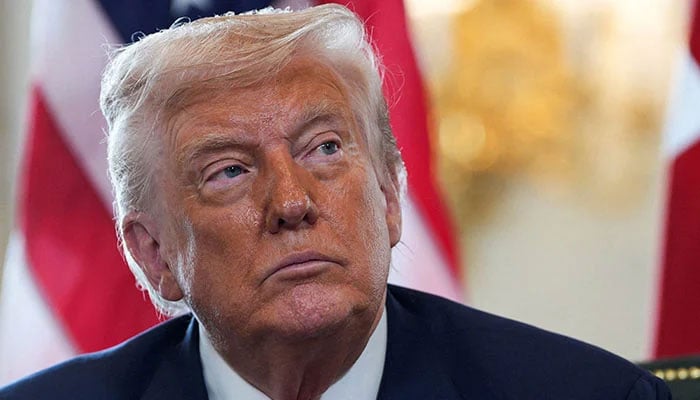
WASHINGTON/ TEHRAN: President Donald Trump said on Tuesday that US military action against Iran is “coming to an end”, as Pentagon chief Pete Hegseth said talks on ending the conflict were “gaining strength” and that the upcoming days will be decisive.
Trump told NBC News in an interview, “We’re doing great,” adding, “And it’s coming to an end.”
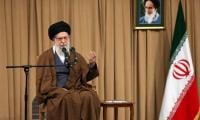
While Iranian President Masoud Pezeshkian said his country had the “necessary will” to end the ongoing war with Israel and the United States, but was seeking guarantees that the conflict would not be repeated. “We possess the necessary will to end this conflict, provided that essential conditions are met—especially the guarantees required to prevent repetition of the aggression,” Pezeshkian said in a phone conversation with the president of the European Council, according to a statement from his office, reiterating a key demand of Tehran’s.
“The solution to normalising the situation is the cessation of their aggressive attacks,” Pezeshkian said on Tuesday.
Pentagon chief Hegseth said that the next days of the Iran war will be “decisive” while refusing to rule out US ground forces playing a role in the conflict.
Hegseth also revealed during a news conference—his first in nearly two weeks—that he had visited US troops in the Middle East over the weekend, and said that talks on ending the conflict were “gaining strength.” “The upcoming days will be decisive. Iran knows that, and there’s almost nothing they can militarily do about it,” Hegseth said.
Asked about concerns among some of President Donald Trump’s base about the possible use of ground troops in Iran, Hegseth declined to tip his hand. “You can’t fight and win a war if you tell your adversary what you are willing to do, or what you are not willing to do, to include boots on the ground,” he said.
“If we needed to, we could execute those options on behalf of the president of the United States and this department. Or maybe we don’t have to use them at all—maybe negotiations work,” Hegseth said.
The Pentagon chief said talks on ending the war were making progress even as the more than month-long US-Israeli military campaign against the Islamic republic continued. “They are very real. They are ongoing, they are active, and I think, gaining strength,” Hegseth said of the negotiations. He also said he had made an unannounced trip to visit US troops taking part in operations against Iran.
“We were on the ground in CENTCOM on Saturday for about half the day. For reasons of operational security, so those troops are not targeted, the places and bases will not be named,” Hegseth said, referring to the US command responsible for the region. “Suffice it to say, the trip was an honor. I had a chance to bear witness, and I witnessed the best of America,” he said.
General Dan Caine—the top US military officer—spoke alongside Hegseth, saying that US forces have struck more than 11,000 targets so far.
The United States “continues to destroy Iran’s ballistic missile and (drone) capabilities. We remain focused on interdicting and destroying the logistical and supply chains that feed these programs,” he said. And “we continue to assert dominance over the Iranian navy. We remain focused on targeting their mine laying capability, their naval assets,” Caine added.
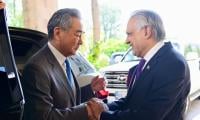
Iranian Foreign Minister Abbas Araghchi said he has been receiving direct messages from US special envoy Steve Witkoff but they do not constitute “negotiations”, Qatar’s Al Jazeera TV cited him as saying on Tuesday.
The messages include threats or exchanged views delivered through “friends”, he added.
Araghchi rejected as “completely baseless” reports that the Islamic republic had fired missiles at Turkiye and offered to jointly investigate the issue. In a phone call with his Turkish counterpart Hakan Fidan, Araghchi warned against “false-flag operations by enemies”. Prime Minister Benjamin Netanyahu said that Israel would press ahead with its military campaign against Tehran, declaring that it would continue to “crush Iran´s terror regime”. “The campaign is not over,” he said in a televised statement. “We will continue to crush the terror regime.”
While the Israeli military said it was prepared for weeks more fighting, after Prime Minister Netanyahu earlier announced that the war with Iran was beyond the halfway point.
Netanyahu told the conservative US broadcaster Newsmax that the war was “definitely beyond the halfway point,” but declined to give a timeframe. He added that the halfway point referred to missions, “not necessarily in terms of time.”
When asked for the military’s stance at an online media briefing, spokesman Lieutenant Colonel Nadav Shoshani said decisions on timing belonged to the political echelon. “We are prepared to keep operating for weeks to come,” he told journalists.
Israel’s emergency services said that eight people with minor injuries were evacuated to hospitals in the Tel Aviv area, where police reported falling munitions fragments after an alert for incoming Iranian missiles. The military’s Home Front Command said it had received “reports of damage” in the central parts of the country. Earlier on Tuesday, at least 10 blasts were heard in the Jerusalem area after missile launches from Iran were detected though no injuries were subsequently reported.
Wall Street stocks added to gains after Iran’s President Masoud Pezeshkian said his country had the “necessary will” to end the war. Near 1720 GMT, the Dow Jones Industrial Average was up 2.1 percent at 49,164.55. The broad-based S&P 500 gained 2.5 percent to 6,503.08, while the tech-rich Nasdaq Composite Index jumped 3.6 percent to 21,533.15.
US President Donald Trump said the countries that have not joined the Middle East war but are struggling with fuel shortages should “go get your own oil” in the Strait of Hormuz.
In a Truth Social post, Trump said countries “that refused to get involved” should “build up some delayed courage, go to the Strait, and just TAKE IT,” adding that the United States would not help them.
US Defense Secretary Pete Hegseth echoed that message during a news conference on Tuesday.
”This is an international waterway that we use less than most, in fact dramatically less than most,” Hegseth said.
The White House said that the US military was prepared to thwart any attacks by Iran, responding to threats by the Islamic Revolutionary Guard Corps against US companies in the region. “The United States military is and was prepared to curtail any attacks by Iran, as evidenced by the 90 percent drop in ballistic missile and drone attacks by the terrorist regime,” said a White House official, who did not wish to be named.
The IRGC said earlier that they would target leading US technology firms like Apple, Google and Meta if more Iranian leaders were killed in “targeted assassinations”.
The Guards’ statement said the US government and tech giants had “ignored our repeated warnings regarding the necessity” of halting operations targeting top Iranian officials, alleging that the tech firms are the “main element in designing and tracking assassination targets”. As a result, these 18 companies—who also included Intel, Microsoft and Oracle, as well as electric car company Tesla, analytics firm Palantir, and chip giant Nvidia—risk retaliation, the statement said.
French President Emmanuel Macron’s office said it was “surprised” by Donald Trump’s criticism of France, stressing the country’s position on US military overflights had not changed. Taking to his Truth Social platform, the US president lashed out at France, saying it did not let “planes headed to Israel, loaded up with military supplies, fly over French territory.” “We are surprised by this tweet,” the French presidency said, referring to Trump’s post in which he accused France of being “very unhelpful” in the US-Israeli war on Iran.
“We confirm this decision, which is consistent with France’s position since the start of this conflict,” the Elysee Palace said.
Israel will reduce its military imports from France “to zero” in retaliation for French policies it deems hostile towards its interests, a defence ministry spokeswoman told AFP on Tuesday.
Iran’s Revolutionary Guards confirmed the killing in a US-Israeli airstrike of a brigadier general sanctioned by the US in 2025 over an international network shipping oil to China and using profits to fund Tehran-backed regional proxies. Revolutionary Guards commander-in-chief Ahmad Vahidi issued a message of condolences for Jamshid Eshaghi, the head of the budget and financial affairs at Iran’s armed forces general staff.
An Iranian attack sparked a fire on a Kuwaiti oil tanker at Dubai Port, state media reported on Tuesday, as Tehran continued its campaign in the Gulf in response to US-Israeli strikes. There were no injuries, according to the report, and Dubai authorities later said firefighters had extinguished the blaze. Kuwait’s military also said on Tuesday its air defences were responding to “hostile missile and drone attacks”, according to an X post.
The health of Iranian Nobel Peace Prize winner Narges Mohammadi is extremely poor and her life in danger after she suffered a suspected heart attack earlier this month for which she received inadequate treatment, supporters said on Tuesday.
Mohammadi, who won the peace prize in 2023 in recognition of more than two decades of campaigning, was arrested on December 12 in the eastern city of Mashhad after speaking out against Iran’s clerical authorities at a funeral ceremony.
Iranian media reported that a wave of US-Israeli strikes hit military bases, a religious site and a cancer drug plant. Two massive explosions shook Iran’s central city of Isfahan, seen in video footage verified by AFP, and Iranian state media reported damage to the Shia religious centre of Grand Husseiniya in Zanjan in the northwest. Iranian media also said airstrikes have put a desalination plant on Iran’s Qeshm island in the strategic Strait of Hormuz out of service, though the report did not specify when the attack took place. Multiple explosions rattled the Saudi capital Riyadh on Tuesday, according to an AFP journalist, the latest apparent barrage targeting the city. An AFP journalist heard at least two blasts echo over the city
The US State Department said it was monitoring threats to Americans in Saudi Arabia and warned all US citizens in the country to shelter in place. “We are tracking reports of threats against locations where American citizens gather,” the U.S. Embassy in Saudi Arabia said in a travel advisory.
Four people were injured by debris from an interception that fell on residential houses in southern Dubai Tuesday, authorities said.
A strike on Tuesday in western Iraq killed three fighters from the former paramilitary coalition Hashed al-Shaabi, the alliance said in a statement, blaming the US and Israel for the attack.
EU chief Antonio Costa on Tuesday urged Iran’s President Masoud Pezeshkian in a phone call to stop attacks on regional neighbours and engage with diplomatic efforts to reopen the Strait of Hormuz.
The EU urged member states Tuesday to try to push down domestic demand for fuel and prepare to secure oil supplies, warning of potentially prolonged effects of the Middle East war on energy prices. “It is clear that the more you can do to save oil, especially diesel, especially jet fuel, the better we are off,” EU energy commissioner Dan Jorgensen told a press conference in Brussels.
Iran executed on Tuesday two more members of a banned opposition group, a day after hanging two other men convicted in the same case, as activists warn Tehran is intensifying the use of capital punishment.
The judiciary’s Mizan Online website said Babak Alipour and Pouya Ghobadi were hanged on charges of rebellion over membership of the banned People’s Mujahedin of Iran (MEK) after their sentences were upheld by the Supreme Court.
The Gulf states are unified in calling for a de-escalation of the Middle East war, Qatar said on Tuesday as Tehran launched new strikes against its neighbours.
“Our understanding is that there is a very unified position in the Gulf on calling for the de-escalation and an end to the war,” Qatar’s foreign ministry spokesman Majed al-Ansari told a regular news briefing.
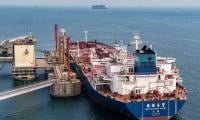
Beijing expressed “gratitude” on Tuesday for coordination that enabled three Chinese ships to transit the Strait of Hormuz, the crucial waterway which Iran has all but closed during the war in the Middle East.
Two of the vessels, belonging to state-owned shipping giant Cosco, passed through the strait while exiting the Gulf on Monday morning, data from the MarineTraffic monitor showed. A third ship, a Hong Kong-flagged oil and chemical tanker called the Egret, crossed earlier on March 25 sailing from east to west, according to maritime analytics firm Kpler.
A member of Iran’s Bahai minority arrested over January protests is in imminent danger, according to community representatives, who say he has been subjected to a forced confession, mock hangings and torture.
Ethiopia will prioritise vehicles transporting essential goods and those in the public transport sector at fuel stations as the country grapples with shortages caused by the Middle East war, authorities said Tuesday.
Indonesia on Tuesday announced fuel rationing and mandated work from home for civil servants as it seeks to conserve energy stocks amid global price hikes due to the Middle East war.
South Africa lowered its fuel tax for a month to offset a global oil price surge driven by the Iran war, even as pump prices rose in one of the steepest increases on record.
Sri Lanka announced plans to urgently set up battery storage for solar energy and use it during the nighttime peak demand currently met by coal and diesel powered generators.
The average price of gasoline at US pumps has soared past $4 a gallon, the American Automobile Association (AAA) reported Tuesday, the highest for nearly four years on the back of the Iran war. Spiking gas prices, up from less than $3 at the end of February, represent the latest bad news for President Donald Trump after he ordered strikes on Iran in a war that has threatened to drag down the global economy. The average price was $4.018 per gallon as of Tuesday morning, the AAA data said on its website. The last time prices were above $4 was in August 2022, according to the US Energy Information Administration.
Malaysian tankers permitted to pass through the Strait of Hormuz will be exempt from paying any prospective tolls imposed by Iran, Transport Minister Anthony Loke said on Tuesday. Dubai-based carrier Emirates said Iranian nationals aren’t allowed to enter and transit through the Gulf state, Wall Street Journal reported. It added third US aircraft carrier, USS George H.W. Bush, has deployed to Middle East. Italy last week denied permission for US military aircraft to land at the Sigonella air base in Sicily before heading to the Middle East, sources said. According to the Corriere della Sera daily, which first reported the news, “some U.S. bombers” had been due to land at the base in eastern Sicily before flying on to the Middle East. Italy’s Defence Minister Guido Crosetto later denied any rift with Washington or any change in policy.
Meanwhile, Spain defended its decision to fully close its airspace to US planes involved in attacks on Iran. Prime Minister Pedro Sanchez has been among the most vocal critics of the US and Israeli strikes and Defence Minister Margarita Robles said Spain will only allow for the use of its bases for the collective defence of Nato allies.
Two-thirds of Americans believe that the US should work to end its involvement in the Iran war quickly, even if that means not achieving the goals set out by the Trump administration, a Reuters/Ipsos poll found.
Some 66 per cent of respondents to the poll, conducted Friday through Sunday, voiced that view, while 27 per cent said the U.S.
should work to achieve all its goals in Iran, even if the conflict goes on for an extended period. Six percent did not answer the question.
Among Trump’s Republicans, 40 per cent supported ending the conflict quickly even if it did not achieve U.S. goals, while 57 per cent supported a longer involvement.
A total of 60 per cent of respondents said they disapproved of U.S. military strikes on Iran, while 35 per cent approved in the survey of 1,021 people.
Two in three respondents said they expected gas prices to worsen over the next year, including 40 per cent of Republicans.
More than half of respondents thought the conflict will have a mostly negative impact on their personal financial situation, including 39 per cent of Republicans surveyed.