ISLAMABAD: Prime Minister Muhammad Shehbaz Sharif on Tuesday chaired a high-level meeting to review the petroleum products supply chain and assess the ongoing austerity and conservation measures in view of the evolving regional situation, directing authorities to finalise proposals aimed at providing further relief to low-income segments of society.
Emphasising strict enforcement, the PM directed authorities to take tough action against petroleum smuggling and illegal hoarding to maintain market stability and protect consumers. The prime minister, while chairing the meeting here, instructed relevant ministries to submit final recommendations after consultation with the provinces to strengthen supply management and ensure continued public relief amid global uncertainties, a Prime Minister’s Office news release said.
He said the government had already taken significant steps over the past three weeks to support vulnerable groups and would continue its efforts to shield the poor from economic pressures. The prime minister stated that through reductions in the development budget and implementation of austerity and savings measures, the federal government had provided relief amounting to Rs129 billion to the public by preventing an increase in petroleum prices. He added that timely government decisions ensured adequate availability of petroleum products to meet domestic requirements. “Our foremost priority is to provide relief to the people,” the prime minister reiterated.
During the briefing, participants were informed that implementation of austerity measures was progressing steadily and that demand and supply of petroleum products across the country were being monitored regularly through a digital dashboard to ensure uninterrupted availability and transparency in the supply chain.
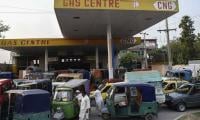
Meanwhile, Pakistan has hiked liquefied petroleum gas (LPG) prices by 35 percent for April, slamming households with a nearly Rs924 increase on the standard 11.8-kilogram domestic cylinder. The Oil and Gas Regulatory Authority announced the increase Tuesday, fixing the new consumer price at Rs304.15 per kilogram, up from Rs225.83 in March, as Saudi Aramco’s contract prices, the international benchmark to which Pakistan’s LPG costs are directly linked, surged 44 percent in a single month.
The monthly price jump is among the steepest in recent memory, translating to an additional Rs78.28 per kilogram for consumers. The cost of an 11.8-kilogram domestic cylinder now stands at Rs3,588.59, up from Rs2,664.88 in March. Commercial users face an even heavier blow: the 45.4-kilogram cylinder has risen by Rs3,554 to Rs13,808, a figure that will ripple through restaurants, small businesses and industrial operations nationwide. The increase lands with particular cruelty on low-income households for whom LPG is the primary cooking fuel, and who are already contending with inflation and stagnant wages. The Ogra notification attributed the spike almost entirely to international market forces. Pakistan’s LPG producer price, a blend of 40 percent propane and 60 percent butane benchmarked to Saudi Aramco contract prices and the US dollar exchange rate, jumped to Rs262,817 per tonne for April from Rs184,537 in March. A marginal 0.11 percent decline in the dollar-rupee exchange rate provided negligible relief.
Embedded in the final consumer price are a petroleum levy of Rs4,669 per tonne, an 18 percent general sales tax of Rs40,091 per tonne, up sharply from Rs26,553 in March, and a further 18 percent GST levied on marketing, distribution and transportation margins totaling Rs35,000 per tonne. The new prices took effect on April 1, 2026.