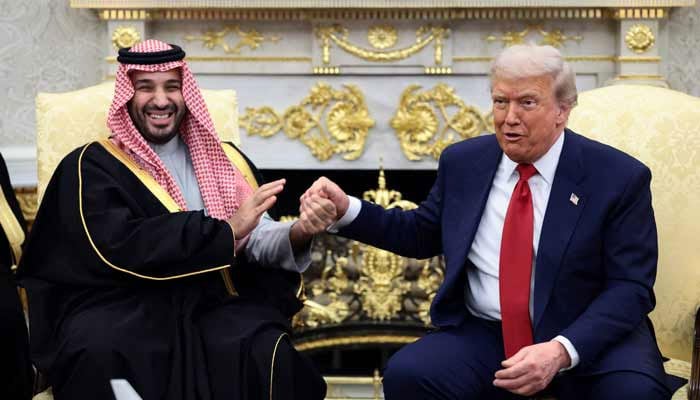
KARACHI: Speaking on March 27 at the Future Investment Initiative Priority summit in Miami, a Saudi-backed event tied to the kingdom’s investment apparatus, US President Donald Trump veered from triumphalism into mockery, describing Crown Prince Mohammed bin Salman in terms that would be extraordinary in peacetime and reckless in war.
In a transcript of the remarks published after the event, Trump said of the Saudi crown prince: “He didn’t think he’d be kissing my ass.” He followed it with another line that was no less revealing: “But now he has to be nice to me.”
The language was crude, but the larger significance lies elsewhere. Trump was not simply humiliating a partner in public. He was speaking as though Saudi dependence on Washington had become an open wartime fact, something to be flaunted rather than concealed.
He then moved from mockery to disclosure. In the same speech, Trump said Gulf states had been hit far more directly by the war than many had publicly acknowledged. He referred to missile fire on the UAE and spoke about the impact of the conflict on countries including Saudi Arabia, Qatar, Kuwait, and Bahrain, describing how the war had reached them directly.
In a single stretch of remarks, Trump sketched a regional battlefield that Gulf capitals have handled with far more caution in public.
That matters because the public Gulf line has been far more calibrated. Reuters reported this week that Gulf Arab states had repeatedly warned Washington against escalation and feared being dragged into a conflict they neither sought nor could control.