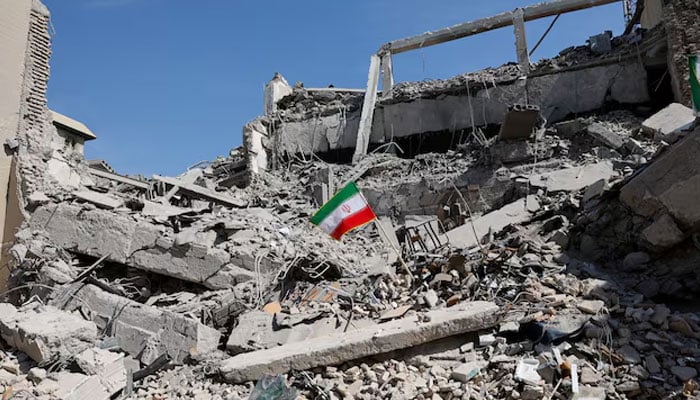
TEHRAN: The debate among Iranian hardliners over whether Tehran should seek a nuclear bomb in defiance of an escalating US-Israeli attack is getting louder, more public and more insistent, sources in the country say.
With the Revolutionary Guards, now dominant following the martyrdom of veteran supreme leader Ayatollah Ali Khamenei at the start of the war on February 28, hardline views on Iran’s nuclear approach are in the ascendant, two senior Iranian sources said.
Iran has maintained Khamenei had banned nuclear arms as forbidden in Islam and citing its membership of the Nuclear Non-Proliferation Treaty (NPT). Khamenei’s fatwa was made in the early 2000s, though never issued in written form. Khamenei reiterated it in 2019.
There was no plan to change Iran’s nuclear doctrine yet and Iran had not decided to seek a bomb, one of the sources said, but serious voices in the establishment were questioning the existing policy and demanding a change.
The US-Israeli attacks on Iran may have changed the equation, convincing Iranian strategists that they have little to gain by forswearing a bomb or staying in the NPT.
The idea of quitting the NPT that hardliners have previously threatened has been increasingly aired on state media along with the idea — once taboo in public — that Iran should go outright for the bomb. Tasnim News Agency, which is affiliated with the Guards, on Thursday published an article saying Iran should withdraw from the NPT as soon as possible while sticking with a civilian nuclear programme.
Hardline politician Mohammad Javad Larijani, brother of senior official Ali Larijani, who was killed in a strike this month, was quoted by state media this week urging Iran to suspend its membership of the NPT.
“The NPT should be suspended. We should form a committee to assess whether the NPT is of any use to us at all. If it proves useful, we will return to it. If not, they can keep it,” he said.
Earlier in the month, state television aired a segment with conservative commentator Nasser Torabi in which he said the Iranian public demanded: “We need to act in order to build a nuclear weapon. Either we build it or we acquire it.”
Nuclear policy has also been a subject of private discussion in ruling circles, said the two sources, adding that there was divergence between harder line elements, including the Guards and those in the political hierarchy over the wisdom of such a move.
The more public debate may represent just such a tactic. It is also far from clear how quickly Iran might be able to push for a bomb after suffering weeks of air strikes on its nuclear, ballistic and other scientific facilities and after a shorter air campaign by Israel and the US last year.
One of the two senior Iranian sources said that with Khamenei’s death and that of Ali Larijani, who the source said had also pushed back against hardliners, it was becoming more difficult to counter the more hawkish arguments.