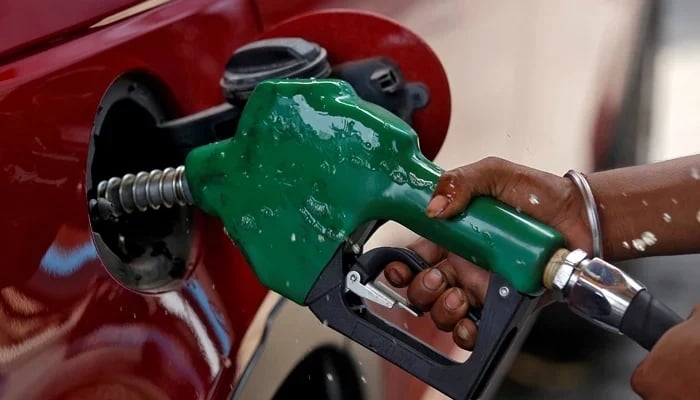
ISLAMABAD: Prime Minister Shehbaz Sharif on Sunday approved an increase of Rs200 per litre levy on high-octane fuel used in luxury vehicles, a move expected to generate Rs9 billion in monthly savings for the government.
The development emerged in a meeting virtually chaired by the premier, who had taken notice of the Rs100 per litre levy on high-octane fuel, read a statement issued by the Prime Minister’s Office.
During the meeting, PM Shehbaz stressed raising the high-octane fuel levy and approved an increase of Rs200 per litre, said the statement. With the fresh increase, the levy on the high-octane fuel has climbed to Rs300 per litre.
The government has increased the levy only on the fuel used in luxury vehicles, with no hike on fuel for ordinary or mid-range vehicles, said the statement.
It added that PM Shehbaz directed that the anticipated Rs9 billion in savings from the levy hike be used to provide relief to the public.
The statement further stressed that fares for public transport and airlines would not be affected, and that the measure ensures the country’s wealthiest segment bears a proportionate economic burden, easing pressure on the national economy.
The decision follows a directive by PM Shehbaz, who instructed relevant ministries to draft an implementation plan for the pricing of high-octane fuel.
Finance Minister Muhammad Aurangzeb, Information Minister Attaullah Tarar, Petroleum Minister Ali Pervaiz Malik and other senior government officials attended the meeting.
Meanwhile, Finance Minister Muhammad Aurangzeb stated on Sunday that the government was preparing a targeted relief package for vulnerable segments of society, saying measures were being taken to minimise the impact of rising fuel costs on the public.
Speaking to the media, he said that all ministries, including petroleum, IT and finance, were working on a joint strategy as Pakistan moves to shield public from the impacts of financial strain due to the Middle East conflict.
The finance minister said the government was reviewing potential impacts on the economic situation, trade and investment, adding that steps were being taken to improve the economic situation.
Referring to the deepening Middle East crisis, he warned that the ongoing regional tensions could affect Pakistan’s energy infrastructure.
Aurangzeb noted that the government had absorbed a burden of Rs69 billion on petroleum products to shield consumers from price shocks.
The finance minister stressed the need for sustainable and long-term solutions, given the country’s limited resources. He said that the government was considering demand management and energy conservation measures to address ongoing challenges, while expressing optimism that the energy supply situation would remain stable until April. However, he cautioned that Pakistan’s resources were not unlimited and must be utilised carefully.
Separately, Information Minister Attaullah Tarar and Petroleum Minister Ali Pervaiz Malik Saturday urged the public to adopt further austerity measures and cooperate with authorities to conserve energy amid a fuel crisis triggered by the Middle East conflict.
Addressing a press conference here, they called on citizens to play an active role in reducing fuel consumption. They also warned that further increases in fuel prices could not be ruled out, given volatility in global markets. “Future price increases may be likely,” they said, urging the public to use the existing fuel reserves responsibly.
“People should step forward and adopt austerity measures to support the govt’s efforts in conserving energy,” the ministers said, stressing the need for collective responsibility during the ongoing crisis.
“We must ensure oil conservation at all costs,” Tarar said, adding that petroleum product prices are determined in line with international market trends. Tarar said the government had taken steps to shield the public from the impact of global price increases. “This week, an increase of Rs150 in petrol and Rs250 in diesel was averted,” he said.
Petroleum Minister Malik said the region is currently facing heightened tensions, which are affecting global energy markets. “The prime minister brought his entire team together and adopted austerity measures,” he said, adding that the privileges of the government team had been reduced. He said the govt’s cost-cutting efforts helped prevent an increase in fuel prices during the current week. “Keeping in view the joy of Eid, the prime minister decided to maintain petrol and diesel prices,” Malik said.
Malik stressed that both the govt and the public must play their part in conserving energy. “The public must also fulfil its responsibility,” he said, adding that consultations with provincial governments would be held to establish a stronger system.