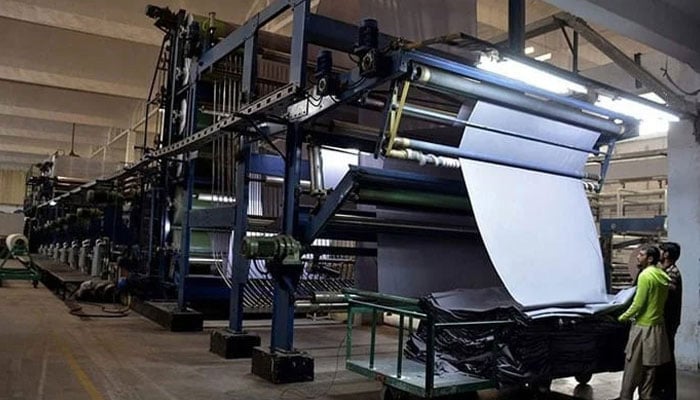
ISLAMABAD: Pakistan’s textile industry has warned that deep-rooted inefficiencies in the power sector continue to keep industrial electricity tariffs uncompetitive, despite recent government efforts to lower costs.
In a letter written on Monday to Power Minister Sardar Awais Ahmad Khan Leghari, Chairperson of the All Pakistan Textile Mills Association (Aptma) Kamran Arshads said structural distortions in the electricity system are effectively neutralising tariff relief measures announced for industry.
The textile body acknowledged the government’s recent move to eliminate cross-subsidies from industrial electricity tariffs, calling it an important step toward improving industrial competitiveness. However, it cautioned that the relief has already been partially eroded by subsequent adjustments.
According to Aptma, although industrial tariffs were reduced by Rs4.04 per kilowatt-hour, nearly half of the benefit has been offset by a Rs1.78 per kWh fuel cost adjustment and a Rs0.35 per kWh quarterly tariff adjustment, pushing electricity prices for industry to around 12 cents per kWh.
The association noted that this remains far above the 7-8 cents per kWh range considered regionally competitive, warning that competing economies such as China provide electricity to industry at rates as low as 4 cents per kWh.
Aptma argued that the problem is not that electricity generation in Pakistan is inherently expensive, but that structural bottlenecks and distorted incentives across the power value chain are inflating costs for consumers.
A major factor identified in the letter is the persistent south-to-north transmission constraint, which limits the ability to move lower-cost electricity generated in southern regions to demand centres in the north. Because of these bottlenecks, the power system is often forced to rely on more expensive fuels such as RLNG, residual furnace oil (RFO) and diesel-based generation.
“This significantly increases the fuel cost component of electricity tariffs,” the association warned. Citing findings from the National Electric Power Regulatory Authority (Nepra), Aptma pointed to the example of the 500 kV Lahore North Grid Station, a key transmission project that was originally scheduled for completion in September 2021 but only became operational in December 2025 after years of delays.
Even after its completion, the Matiari-Lahore HVDC Transmission Line remains heavily underutilised due to inadequate transmission capacity between key generation hubs such as Port Qasim and Matiari or Thar and Matiari.
The association said the resulting inefficiencies mean that cheaper generation sources remain underused despite consumers already paying billions of rupees in capacity payments. For example, coal-fired plants in Thar, including Thar Coal Block-1, Thar Energy and ThalNova, operated at capacity factors of only 60-70 per cent in FY2025, well below the 90 per cent level expected under optimal conditions. Wind power projects also recorded utilisation rates of just 20-30 per cent, largely due to transmission constraints.
Aptma said this situation effectively forces consumers to bear the financial burden of inefficiencies within the system. “Consumers are paying for generation infrastructure through tariffs and circular debt surcharges, yet they are again being made to pay for its underutilisation through higher fuel costs,” the association said, warning that the current structure creates a serious lack of accountability in the power sector.
The industry body argued that the opportunity costs arising from transmission delays should be borne by the entities responsible, including the national grid operator and other relevant institutions, rather than being passed on to consumers.
It cautioned that unless these structural problems are addressed, the economy will remain vulnerable and its industrial sector will struggle to compete globally. “Affordable and internationally competitive electricity is the single most important enabler required to stimulate Pakistan’s industrial growth and export expansion,” the letter stated.
Aptma urged the government to ensure that the costs associated with these systemic inefficiencies are not transferred to industry, which it said is already under severe pressure from high energy prices.