KARACHI: With global energy markets and supply chains reeling from heightened volatility amid the US-Iran conflict, experts have urged the government to accelerate efforts to reduce reliance on imported fuels by tapping the full potential of indigenous Thar coal.
Currently, more than 40 per cent of Pakistan’s primary energy supply is met through imported crude oil, refined petroleum products, LNG and coal. This heavy dependence leaves the country highly exposed to global price shocks, with serious implications for inflation and the current account deficit.
Experts estimate that for every $10 increase in oil prices, the current account deficit widens by roughly $1.5-2 billion, while inflation typically rises by about 0.5-0.6 percentage points. These macroeconomic risks, they say, could be mitigated through greater reliance on Thar coal-based power generation and increased injection of indigenous gas into the system.
In recent weeks, imported coal prices have risen sharply to around $110 per tonne (FOB), approximately 22 per cent higher than 2025 levels. The power and cement sectors, both heavily reliant on imported coal, are expected to be the most affected by the increase.
“As seen during the Russia-Ukraine war and the ongoing Middle East crisis, greater utilisation of Thar coal across the energy and industrial sectors remains key to reducing economic vulnerabilities, lowering production costs and enhancing Pakistan’s global competitiveness,” said AAH Soomro, an economic and investment analyst.
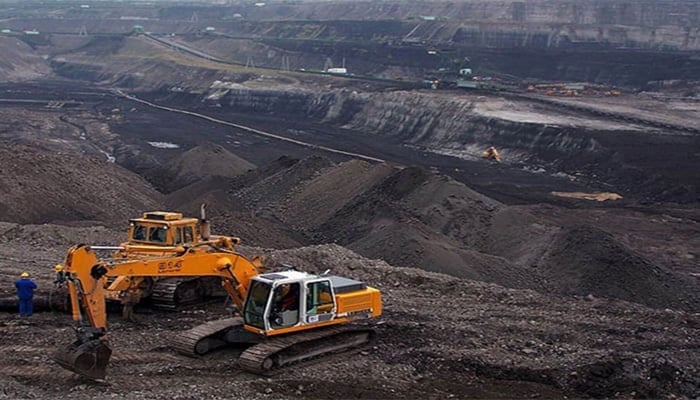
Currently, Thar Block I and Block II have a combined production capacity of around 15 million tonnes per annum, supplying 2,640MW of electricity to the national grid. By the second half of 2026, Thar Block II is expected to expand its mining capacity to 11.2 million tonnes per annum to ensure supplies for the 660MW Lucky Power Plant.
Meanwhile, the government is working to begin blending Thar coal at three imported coal-based independent power plants with a combined capacity of 3,960MW: the Sahiwal Coal Power Project, Port Qasim Coal Power Project and Hub Coal Project.
Soomro noted that imported coal-based power has historically carried a premium of around Rs4 per kilowatt-hour over Thar coal, a gap that is likely to widen as global coal prices rise. Based on current spot RLNG prices, he added, electricity generated from RLNG costs around Rs30 per unit, compared with roughly Rs13 per unit for local coal.
“The latest merit order shows that four of the top six power plants are now based on Thar coal. Therefore, a shift to Thar lignite could significantly reduce generation costs and help achieve substantial foreign exchange savings,” he said.
Coal demand in Pakistan is expected to reach 50 million tonnes by 2030, necessitating a robust local supply chain. Beyond the power sector, the cement industry alone has a demand of around 5 million tonnes and is planning to blend up to 20 per cent Thar coal, for which successful trials have already been conducted.
By switching power generation, cement and other industries from imported coal to local Thar resources, the government expects to save around $2 billion annually on the national import bill. The Thar Coal Rail Connectivity Project, expected to become operational in late 2026, will be critical in enabling bulk coal transportation to power plants and industrial consumers across the country.
Soomro added that Pakistan’s minerals sector also offers opportunities in downstream processing through investment in refineries and value-added industries. He said it may be feasible to establish a copper smelting plant and a special economic zone near Thar coal projects to spur industrial activity and the production of higher value-added goods.
He further stressed that the State Bank of Pakistan (SPB) should mandate local commercial banks to increase financing for the expansion of Thar Block I and Block II projects. In addition, government-backed financing or SBP green and energy transition credit lines for cement kiln modification, power plant retrofitting and the planned $1.1 billion Thar coal gasification project would be crucial to encouraging greater utilisation of Thar coal.
To support further investment in mine expansion, he said the government should also consider exemptions or reductions in duties and taxes on imported heavy equipment.