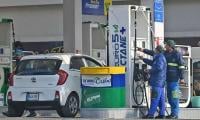
In Pakistan, the state runs on fuel. Some estimates suggest that government vehicles account for roughly 2.0 per cent of the country’s non-motorcycle fleet, about 100,000 vehicles. Together, per the estimates, they consume 101 million litres of petrol and 204 million litres of diesel every year. Going by these calculations, last year alone, the fuel bill may have stood at roughly Rs95 billion. After the latest price increase, that bill rises to about Rs114 billion.
Lo and behold, that is not merely a transport budget — that is a national convoy. The government does not just run the country — it also runs one of the largest motor pools in the republic. And every time fuel prices go up, the metre of governance goes up even faster.
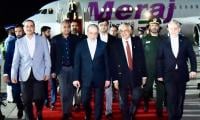
Chief ministers need luxury Gulf Streams. Their deputies need Land Cruisers. The security detail needs a dozen cars. And someone, somewhere, needs a car to follow the car that follows the minister’s car. Pakistan does not have a government — it has a motorcade with a parliament attached to the motorcade.
One presumes the second car is for the ego and the third for the protocol. In a country where 40 per cent of the population cannot afford three meals a day, the state is busy negotiating its fourth bumper sticker.
In a country where 47 per cent of the population cannot afford three meals a day, the chief minister requires a bulletproof Mercedes-Maybach S 680 (around $200,000) — or at the very least a Mercedes-Maybach GLS 600 (about $185,000). One car, of course, is for security.
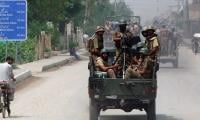
The second is for protocol. The third is for reserve. Then come the escort SUVs, the spare SUV, the decoy vehicle, the advance vehicle, the protocol sedan, the staff car and the communications van.
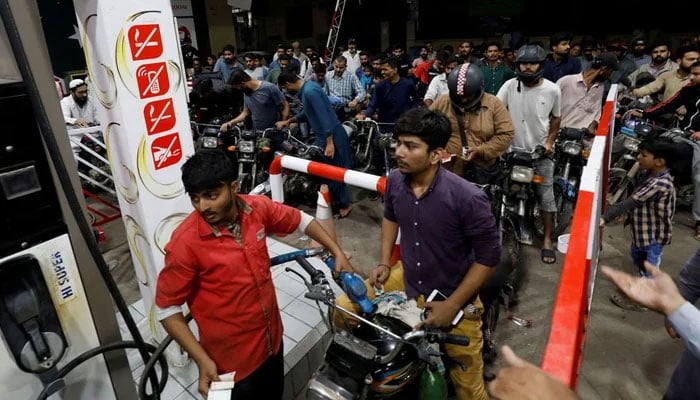
Now imagine this: the government collects Rs105 per litre in petroleum development levy from every citizen who fills a tank — and then turns around and spends Rs114 billion filling its own. The citizen funds the levy. The levy funds the budget. The budget funds the fuel. The fuel moves the minister’s Mercedes to the meeting where the minister announces the next levy.
Imagine this poor motorcycle rider who buys Rs321 worth of petrol of which Rs105 goes to the government. The government uses that Rs105 to fill the tank of a minister’s Mercedes. The motorcyclist then rides past the minister’s motorcade, inhales the exhaust fumes of his own tax money, and arrives home to an empty kitchen. The minister, meanwhile, arrives at a press conference to announce an austerity drive. The generator hums approvingly. And lest we forget the judges and the generals. Do the judges require luxury vehicles to deliver justice? Do the generals require motorcades to deliver memos?
Here is a conservative audit of a single minister’s official transport needs: one primary vehicle, one backup vehicle, one decoy vehicle, one advance vehicle, one protocol sedan, two escort SUVs, one staff car, one communications van, and one pickup truck carrying the people whose job it is to carry things. Eleven vehicles arrive. The meeting is held. A committee is formed. The eleven vehicles depart. The next agenda item is fuel prices.
The writer is an Islamabad-based columnist.