KARACHI: Pakistan is moving towards a major shift in its transport sector as the government prepares to introduce the country’s first fully indigenous electric four-wheeler priced at less than Rs1 million, with a planned launch by July.
Officials at the Engineering Development Board (EDB) say the affordable electric vehicle (EV) is designed to help millions of middle-class families move from motorcycles to cars at a manageable cost. The initiative forms part of the government’s broader strategy to accelerate the transition to electric mobility while expanding domestic manufacturing.
Talking about the upcoming Automotive Policy during an interaction with a group of journalists, Engineering Development Board (EDB) Chief Executive Officer Hamad Ali Mansoor said the government has launched a Rs100 billion subsidy programme to support the adoption of electric vehicles over the next four years. The scheme initially targets electric bikes and rickshaws, with plans to subsidise around 2.5 million two- and three-wheelers across the country.
“Our vision is that every person riding a motorbike should have the opportunity and capability to own a car,” Hamad said, noting that the sub-Rs1 million price could make car ownership accessible to a much wider segment of the population.
A key factor behind the low price is the rapid localisation of EV components. He said that the three most expensive parts of an electric vehicle, the lithium-ion battery, charger and controller, are now being manufactured locally. Two battery production plants in Karachi are expected to start operations in May and October, while two additional factories are planned in Lahore.
Officials estimate that localisation in EV manufacturing could reach nearly 99 per cent in the coming days, significantly reducing dependence on imports and lowering production costs.
The government is also reshaping its automotive policy to encourage exports and competitiveness. Instead of penalising companies that fail to meet export targets, authorities plan to introduce performance-linked incentives similar to those used in India. Under this model, manufacturers will be rewarded for export growth and local production.
To ensure safety and quality standards, Pakistan has adopted 62 international automotive safety standards with the support of World Bank consultants, adapting them to suit local road conditions.
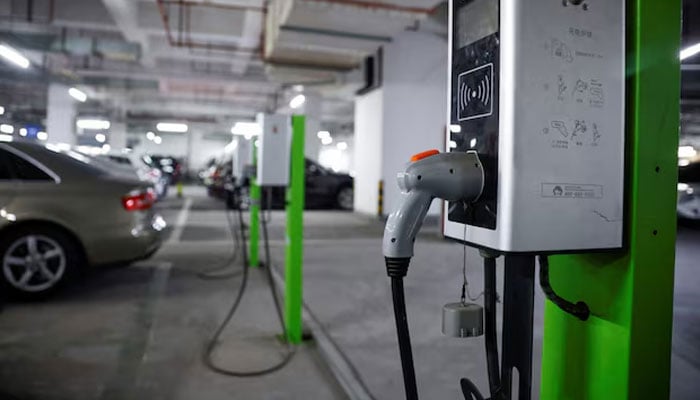
Infrastructure development is also underway. The government plans to establish around 3,000 EV charging stations across the country through a funding model known as Variable Gap Funding. Hamad Ali said the network will support the rapid expansion of electric vehicles on Pakistani roads.
Meanwhile, collaboration with Chinese companies is expected to bring technology transfer and workforce training. Under a proposed business-to-business arrangement, Chinese firms will establish training centres alongside manufacturing facilities to help develop local technical expertise.
Mashood Ali Khan, director at the Small and Medium Enterprises Development Authority (SMEDA), said the success of Pakistan’s industrial transition depends heavily on the strength of its small and medium enterprises.
He noted that SMEs employ nearly 25 million people and play a vital role in the country’s economic activity and exports. According to Khan, the sector demonstrated strong resilience during the Covid-19 pandemic by localising production and sustaining supply chains despite limited resources.
He stressed that consistent policies, easier access to finance and stronger export support would allow SMEs to grow into globally competitive industries, creating jobs and driving economic stability.