LAHORE: The world is being reshaped by artificial intelligence, automation, clean energy, advanced manufacturing and digital finance. Entire industries are being redefined. Nations that fail to adapt are economically erased. Unfortunately, Pakistan is drifting towards that risk.
The global economy is no longer driven by cheap labour or raw materials. It is driven by data, algorithms, precision engineering, biotech innovation and green technology. Pakistan, by contrast, still relies heavily on low-value textiles, basic agriculture and commodity exports. While the world debates semiconductor strategy and AI regulation, Pakistan is struggling to ensure stable electricity and internet reliability for businesses which is a widening technological divide.
Global manufacturing has entered the era of Industry 4.0 -- robotics, smart sensors, predictive maintenance and AI-driven production lines. Factories in China and Germany operate with minimal downtime and real-time supply chain integration.
In Pakistan, most small and medium manufacturers still rely on decades-old machinery. Automation levels are extremely low. Data collection from factory floors is rare. Energy inefficiency remains high.
Yet there are bright spots. Some exceptions include few export-oriented textile groups in Faisalabad and Karachi that have installed automated cutting machines, digital printing systems and enterprise resource planning (ERP) software to compete with buyers from Europe. A few surgical instrument manufacturers in Sialkot are upgrading precision standards to meet stricter EU requirements.
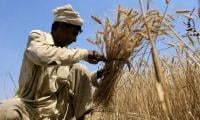
Globally, agriculture is shifting toward precision farming -- satellite mapping, AI-based crop monitoring, climate-resilient seeds and drip irrigation. Pakistan still largely depends on flood irrigation, outdated seed varieties and limited mechanisation. Water scarcity is intensifying, yet water-use efficiency remains poor. However, some hybrid seed producers and agri-tech startups are introducing modern seed genetics and digital advisory tools to farmers. Corporate dairy farms are adopting automated milking systems and data-driven herd management. These efforts show potential -- but they remain fragmented and under-scaled.
Our IT exports have grown, and freelancers are gaining global recognition. Fintech startups have expanded digital wallets and branchless banking. The State Bank’s digital initiatives have improved payment ecosystems. Most tech firms focus on outsourcing rather than building scalable global products.
Artificial intelligence adoption in core industries -- banking, logistics, and healthcare remains limited. Data governance frameworks are still evolving. Pakistan may become a consumer of foreign digital platforms rather than a producer of digital value.
The global shift towards renewable energy is not only an environmental transition but an industrial revolution. Electric vehicles, battery storage, green hydrogen and solar panel manufacturing are creating new value chains.
Pakistan imports solar panels and electric vehicles instead of developing manufacturing ecosystems around them. There is little domestic research into battery technology or grid modernisation.
Still, some local companies have begun assembling electric bikes, and solar installation firms are expanding rapidly. If supported by coherent industrial policy, this could become a growth sector rather than a purely import-driven trend.
Pakistan’s spending on research and development as a percentage of GDP is extremely low compared to regional peers. University-industry collaboration remains weak. While elite institutions produce capable engineers and IT professionals, the broader technical workforce lacks advanced digital skills. Vocational training has not been aligned with automation and smart manufacturing needs. Without rapid skill upgrading, even imported technology will remain underutilised.
As multinational corporations automate production in their home countries or relocate to more technologically advanced developing economies, Pakistan risks losing export markets. As artificial intelligence reduces demand for routine outsourcing tasks, even the IT sector could face pressure.
The country could become increasingly dependent on imports of high-tech goods while exporting low-value commodities -- a recipe for chronic trade deficits and currency instability. Pakistan does not lack entrepreneurial talent. It lacks coordinated technological ambition.
Pakistan needs a national technology strategy aligned with Industry 4.0. Plus the private sector must also shift mindset -- from short-term survival to long-term competitiveness. Pakistan still has time -- but not much. The next decade will determine whether Pakistan becomes a serious participant in the technology-driven global economy or remains trapped in low-value cycles of debt and dependency.