LAHORE: A new strategic plan and updated DLTL limit has been released to increase rice exports to major markets in a short period. Dubbed as the gamechanger move, the plan addresses financial and policy challenges that previously slowed growth.
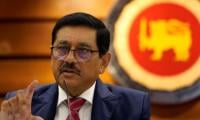
In a presentation to Finance Minister Muhammad Aurangzeb, Chairperson of the Sectoral Council of Rice, Ministry of Commerce Shahzad Ali Malik shared a strategic roadmap aimed at increasing rice exports to Iran, Saudi Arabia and China.
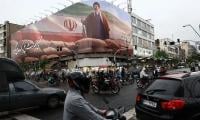
Malik highlighted the potential for Pakistan to replace India as Iran’s primary Basmati supplier. To overcome current payment barriers, the council proposed a rupee-settlement mechanism. Under this arrangement, Pakistan is to purchase Iranian commodities and deposit payments into a designated clearing bank, which Iran would then use to buy Pakistani rice and medicines. This food-for-commodity structure ensures seamless trade between the two countries.
In another development, the rice sector achieved a significant domestic breakthrough regarding the Duty Drawback of Local Taxes and Levies (DLTL) scheme, in tandem with international market expansion. Following formal representations by Malik and the Federation of Pakistan Chambers of Commerce & Industry (FPCCI) on Monday (February 16), the Ministry of Commerce issued a revised notification on Wednesday (February 18).
This amendment has removed the restrictive $1,275 FOB price cap that had previously penalised high-end exporters. In a letter of gratitude addressed to the commerce minister on Thursday, Malik shared that the “removal of the price cap reflects the government’s vision of promoting high-value, brand-driven exports in global markets,” noting that the previous cap inadvertently favoured bulk exports over premium, branded products that earn higher foreign exchange.
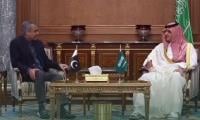
Regarding boosting exports to the Saudi Arabian market, the proposed strategy focuses on aggressive branding and infrastructure investment. The roadmap suggests a ‘Pakistan Basmati’ campaign, co-funded by the Export Development Fund (EDF), to cover international shelf rentals and listing fees. Furthermore, the Special Investment Facilitation Council (SIFC) is expected to lead a dedicated scheme to attract Saudi investment into domestic rice parboiling and milling facilities, enhancing Pakistan’s processing capacity.
For China, the roadmap identifies a massive untapped opportunity in the hybrid rice segment. According to Shahzad Ali Malik, who is also CEO of Guard Agricultural Research & Services, 70 per cent of Chinese rice consumption is hybrid-based but Pakistan currently holds only a fraction ($80.5 million) of China’s $1.4 billion rice import market. Malik proposed positioning Pakistani produce as “authentic Chinese-style hybrid rice” through direct engagement with COFCO, China’s state-owned agriculture giant.
The plan involves assigning trade and investment officers to facilitate high-level B2B meetings between the Rice Exporters Association of Pakistan (REAP) and Chinese importers to secure preferential procurement status.
The roadmap concludes that the synergy between these market-specific strategies and recent policy corrections will diversify export destinations and strengthen the agricultural sector's global competitiveness. By shifting from volume-based to value-driven exports, Pakistan aims to secure a more sustainable and profitable position in the global food supply chain, he observed.