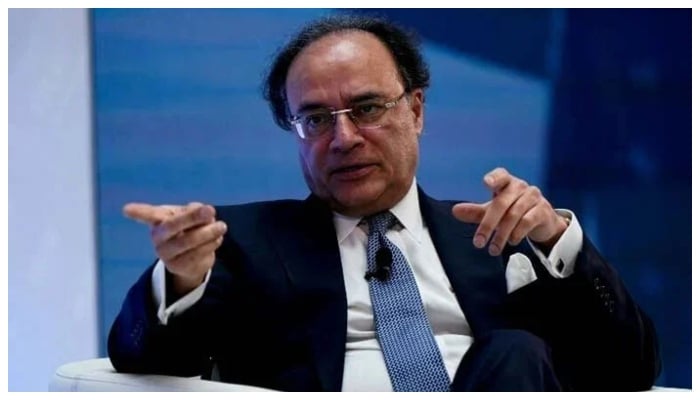
LAHORE: Finance Minister Muhammad Aurangzeb said on Saturday that the economy has moved on to a more stable footing after navigating a severe external financing crunch. However, he acknowledged that structural challenges persist as industry leaders pressed the government on taxation, energy costs and policy consistency during an interaction with the business community.
Addressing a conference organised by the Federation of Pakistan Chambers of Commerce and Industry, Aurangzeb recalled that in early 2023 the country faced acute foreign exchange shortages that made it extremely difficult to import most goods, apart from essential edible oil.
“We had reached a point where reserves were dangerously low and the journey out of that crisis was extremely tough,” he said. “We have since brought stability to the economy and hope such a situation does not return.”
Aurangzeb said the external position had improved, enabling the country to meet its foreign payment obligations on time. He described the macroeconomic outlook as being on a “satisfactory track”, while emphasising that engagement with multilateral lenders was a policy choice rather than a compulsion.
“The IMF does not come to us asking us to borrow,” he said. “We approach them to manage our financial requirements and maintain stability.”
The minister reiterated that job creation cannot rest solely with the state. With a population of around 250 million, he said employment opportunities must primarily come from the private sector. “The government’s role is to enable — through policy, facilitation and stability — while businesses create jobs,” he added.
Highlighting potential growth drivers, Aurangzeb described information technology exports as a key pillar. He estimated official IT exports at $3-4 billion but suggested actual volumes could be closer to $10 billion if undocumented flows were included. He urged exporters to repatriate earnings, arguing the sector has the potential to generate $8-10 billion annually.
He also added that he will travel to the US next week to deepen economic engagement, as Pakistan reassesses its trade strategy following recent US agreements with India and Bangladesh that have unsettled local industry.
He said stakeholders’ recommendations would be taken up during discussions in Washington and urged businesses to review their revenue models and improve productivity, adding, “We are in a new world order.”
He also outlined efforts to curb smuggling, expand the tax base through digitalisation and provide relief to salaried taxpayers, whom he said shoulder a disproportionate share of direct taxes. Measures targeting the illicit cigarette trade and steps to broaden documentation were cited as part of revenue reforms.
On sector-specific issues, Aurangzeb said the government was reviewing property-related tax rates and examining concerns raised by the textile industry, promising progress within weeks. He linked rising domestic cement consumption to improved activity in construction, noting the sector’s multiplier effect across allied industries.
“We look at real estate and construction separately,” he said. “Construction connects dozens of sectors and its momentum is encouraging.”
Business leaders, however, voiced unease about the tax burden and operating costs. Former commerce minister Gohar Ejaz said excessive taxation erodes competitiveness, warning that investors may seek alternatives abroad where fiscal regimes are lighter. He pointed to multiple levies on property transactions and corporate earnings, arguing that these weaken incentives for domestic investment.
President of the FPCCI Atif Ikram Sheikh called for a stronger partnership between the government and the business community, cautioning that account freezes, compliance pressures and additional taxation undermine confidence. He said easing tax complexities and restoring trust would help sustain the recovery.
APTMA Chairperson Kamran Arshad highlighted the need for durable policies and closer institutional coordination, while United Business Group representative SM Tanveer criticised high industrial power tariffs and legacy RLNG pricing structures, arguing that they weaken exporters’ competitiveness.
Responding to the concerns, the finance minister said proposals were being noted and consultations would continue. “Wherever there are difficulties, we will work towards solutions,” he said, while urging businesses to reassess their models in a changing economic environment.
Despite differences, participants broadly agreed that sustained collaboration between policymakers and industry will be essential to translate stabilisation into durable growth — a process that remains under way.