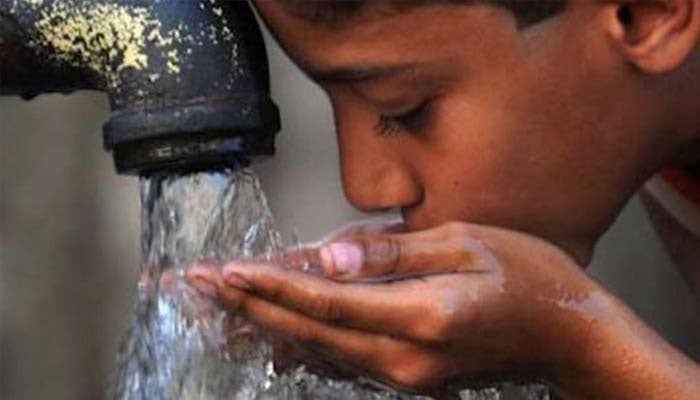
The world has entered an era of ‘global water bankruptcy’ that is harming billions of people. We are seeing whiplashes between extremely dry and extremely wet weather. Water bankruptcy is becoming a driver of fragility and migration.
The first global implication is that water is a conflict multiplier. Water scarcity is now a trigger, not just a stressor. 153 countries share rivers and aquifers. Over 60 per cent of global freshwater flows are transboundary. Water disputes hit a record high in 2024. Scarcity turns borders into flashpoints.
The second implication is that water is a displacement engine. Groundwater collapse plus climate shocks equals forced movement. Drought, crop failure, and urban water stress push people out. The third implication is a governance failure test. Water bankruptcy exposes weak institutions. States fail first on water before failing elsewhere. Fair allocation is now central to peace, stability and cohesion. Water governance is essentially security governance.
This is why India–Pakistan water stress cannot be treated as a technical issue. It is water mixed with politics. India increasingly uses water leverage as a form of pressure. Control upstream becomes a geopolitical power. Water is used without firing a shot. India does not need to ‘stop’ Pakistan’s rivers to weaponise water. What it can do is play with timing. Release water suddenly during high pressure to worsen flooding. Hold back flows during low periods to deepen scarcity. This manipulation exploits regulatory power, not absolute control. The Indus Waters Treaty was designed to prevent exactly this. That is why I believe it is on the ventilator now. Undermining it increases Pakistan’s long-term vulnerability, even if the immediate threat is limited. For Pakistan, the danger is not today’s cut-off, but tomorrow’s uncertainty created by India using water as a weapon rather than in cooperation.
The treaty is under strain because infrastructure can exploit grey zones. Kishanganga diverted the Neelum’s flows. Ranbir Canal expansion risks cutting Chenab by up to 20 per cent. This undermines trust and treaty spirit, not just legality. Regional destabilisation adds pressure from multiple fronts at once, including dams on the Kunar River in Afghanistan. Let’s not forget the controversial Shahtoor dam in Afghanistan, which may reduce water inflow in Pakistan by 16-17 per cent through the Maidan River.
The legal position is not complicated. Unilateral suspension of the Indus Waters Treaty is illegal because the treaty contains no exit or suspension clause. Under pacta sunt servanda, treaties must be performed in good faith. India cannot lawfully hold it in abeyance, and it cannot interfere with Western Rivers because Articles III and IV guarantee Pakistan’s rights, and upstream storage, flow manipulation, and altered release timing breach these provisions. Withholding hydrological data is also a breach of the treaty.
Data denial itself can cause harm. Even outside the treaty, customary international law principles reflected in the 1997 UN Watercourses framework still matter: equitable and reasonable utilisation, no significant harm, prior notification and consultation. Water weaponisation attracts greater legal scrutiny because the deliberate manipulation of essential water resources threatens civilian survival and engages human rights and environmental law. International organisations, including the World Bank, the UN system and arbitration forums, have been part of the architecture protecting transboundary water governance, yet this has not shifted New Delhi’s posture. India already has other long-standing sources of instability and conflict with Pakistan. It should not add one more by politicising the Indus, which is Pakistan’s lifeline.
But Pakistan’s crisis is not only external. Pakistan’s internal water crisis is already severe. Groundwater is in freefall. Aquifers are collapsing across Punjab and Sindh. Extraction far exceeds recharge. This is silent and irreversible damage if it continues. There is also a public health disaster. Arsenic contamination in Sindh is chronic, and major research estimates that roughly 50-60 million people in Pakistan may be exposed to arsenic-contaminated groundwater. This is slow violence, not a natural disaster. Climate amplification makes it worse. Droughts, floods and heatwaves hit harder each year. Climate change multiplies every existing weakness. Water stress is no longer seasonal. It is structural. People in coastal belts are among the most vulnerable to water stress.
That is why the way forward must begin at home. Water diplomacy begins at home. End the inter-provincial blame games. Optics over cooperation is fatal. Stop the ‘who takes the lion’s share’ narrative. When provinces sit together, water security becomes win-win. Rules, not rhetoric, must govern sharing. External threats exist, but internal resilience decides survival. Unity strengthens Pakistan’s position externally, not weakens it. Water bankruptcy management requires honesty, courage and political will.
Pakistan also needs data to monitor and early warning systems. Meter groundwater extraction nationwide. Publish aquifer-level data, not estimates. If you cannot measure it, you cannot manage it. Reviving wetlands to recharge aquifers naturally should be treated as a serious tool, not a slogan. Nature-based solutions work. Mangrove restoration and urban green infrastructure are UNFCCC-aligned adaptation tools, low-cost compared to the losses they prevent, and fast to scale. They protect water quality, reduce flooding and build climate resilience simultaneously. These are infrastructure choices that save money and lives.
We already have examples of what works. For groundwater recovery, North China shows decline is reversible. At Baiyang Lake, strict control of industrial and agricultural pollution, managed transfers of higher-quality surface water to reduce pumping, and active ecosystem restoration contributed to improved conditions and recovery signals. In cities, green infrastructure reduces runoff, recharges groundwater, and lowers flood risk. Washington DC’s RiverSmart Homes programme uses incentives for rain gardens and rain barrels to reduce stormwater runoff entering the Potomac River.
For coastal resilience and water quality, Indonesia’s Demak district shows how mangrove restoration can reverse erosion and improve water conditions. The Building with Nature approach used semi-permeable bamboo barriers to reduce wave action and trap sediment, allowing mangroves to return and communities to become more resilient.
Desalination should also be part of the discussion, especially for coastal cities, if it is approached strategically. People in power corridors cannot dismiss it with ‘desalination is expensive’ when the cost of climate and environmental losses already dwarfs what serious resilience would cost. The world is already paying hundreds of billions every year in drought and water-related damage, and South Asia is on the front line. The UAE and Saudi Arabia are leaders in desalination. Pakistan does not need to copy their model blindly, but can learn from their scale, planning and integration into national resilience. Desalination is not a cure-all, but it can be a buffer when climate variability and upstream uncertainty collide.
Externally, Pakistan should keep the treaty track alive while also framing it in wider terms. The Indus Waters Treaty was designed for a stable climate and predictable flows. It did not anticipate glacier retreat, extreme floods, prolonged droughts or data-driven water regulation. Revisiting the treaty is not revisionism but adaptation. Any future framework must integrate climate variability, transparent data sharing and risk management, not just fixed allocations.
The world must exert more pressure on New Delhi to refrain from mixing water with politics and to stop violating the treaty, because breaching the Indus Waters Treaty will have serious economic and security consequences not only for the two countries but also for other international transboundary water pacts.
Pakistan does not just face a water shortage. It faces a governance choice: cooperate internally or stay permanently vulnerable.
The writer is a consultant for the United Nations Office for Disaster Risk Reduction’s (UNDRR) PreventionWeb platform.