What’s the nexus between AI, data centres (DC) and Micronuclear Reactors (MNR)? Aren’t they very different monsters? Well, one of them is definitely central to your life, while the other may soon be. Do the rivers of AI data centres and micronuclear reactors have anything in common?
Well, with over 12,000 data centres worldwide, many operated by major cloud and AI infrastructure providers such as Amazon, Microsoft, Google, Meta and Alibaba, the electricity they consume accounts for about 1.5 per cent of global electricity consumption. By some estimates, this could double to about 1000 TWh in the next ten years. If we look just at Google, its global data centres consumed about 31 TWh last year, which was about a quarter of Pakistan’s electricity generation. Thus, for Google alone, you would need 6000MW installed generation running at 100 per cent annual capacity. That is about double of Pakistan’s nuclear infrastructure fleet of two large (1100MW) Nuclear Power Plants (NPPs) in Karachi and five NPPS at Chashma. Here’s the nexus.
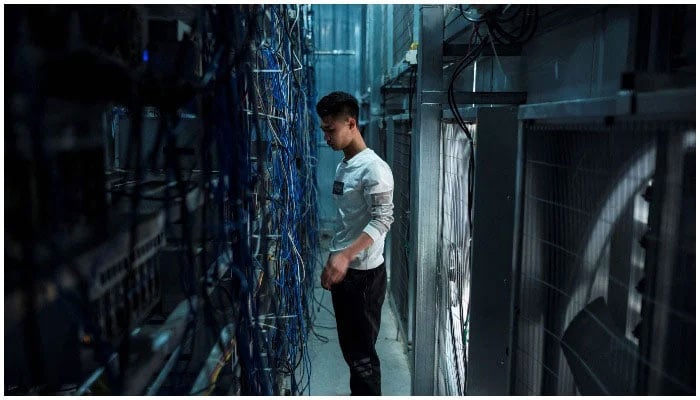
But why nuclear, you might think? What’s their power supply at the moment? Surprisingly, it’s the same old fossil fuel that’s currently powering these huge servers, which manage storage, number-crunching, data processing and networking while maintaining adequate cooling via water or air circulation or, in some cases, advanced cryogenics. And that means there’s a huge associated carbon footprint as well, to the tune of about 200 million metric tons of carbon dioxide annually (around 1.5 per cent of total).
The business of operating a data centre is profitable as not every company would build its own centre. Some examples are Netflix, Spotify and OpenAI, which purchase services from Amazon Web Services, Google Cloud Platform and Microsoft Azure DCs respectively – probably to the tune of hundreds of millions of dollars.
Another great opportunity for data centres is cryptocurrency, where bitcoin mining facilities or compute-intensive blockchain infrastructure could be specialised applications. An example is Riot Platforms, Inc, one of the largest bitcoin mining companies in the US, which uses purpose-built data centres that consume hundreds of megawatts annually. So, AI, cloud computing and data centres are here to not only stay but to drive rapid growth, becoming drivers of innovation for energy providers. Ideally, the best source of energy would be reliable, compact and carbon-free. That points straight enough to nuclear. But, nuclear with a difference. Not the big, typical 77MWe or 1200MWe NPPs, but the small modular reactors (SMR) or even smaller micronuclear reactors (MNR). Does that mean a nuclear revival, a renaissance of sorts? That’s worth an effort.
Today, we think of nuclear technology as ‘big’ because nuclear power plants (NPPs) are typically huge. The world has over 450 NPPs across 30 countries, generating over 10 per cent of the total electricity and typically in large sizes, meaning over 700MWe, primarily for the obvious advantages of economies of scale. But this has also meant high capital costs, lengthy construction times, public safety perceptions and concerns over long-term storage of spent fuel. However, all that has changed with the new outlook. The technology is simplified and the safety concerns have been well addressed. But in the last few years, nuclear has seen a revival of sorts with MNRs being considered by several industries for the use of remote operating centres (ROCs) for mining, military installations, DCs and university campuses.
The best candidates for hyperscale DCs would typically be ‘nuclear batteries’ in the range 1 MWe-20 MWe with different operating concepts favouring remote locations, factory-build and modularity and high availability. In a paper based on a 2021 study, 'Global Market Analysis of Microreactors', conducted under the US DOE Microreactor Program, microreactor designs will typically be based on high-assay, low-enriched uranium (HALEU) fuels with enrichments above 5.0 per cent but below 19.75 per cent 235 U.
With higher enrichment, their performance will extend refuelling intervals from several years up to the life of the reactor. Currently, American and Canadian national energy laboratories are conducting microreactor technology demonstrations leading to commercial and/or defence applications, while several programs in China, Russia, Europe and Japan are highly developed. In the US, the American stock exchange NASDAQ, an indicator of innovation and economic growth, now lists several companies such as NANO Nuclear Energy Inc and NuScale Power Corp, as actively developing MNRs for DCs and off-grid electrification. These are in addition to advanced programs of General Atomics and Westinghouse designs, which are towards maturity and market deployment.
In summary, MNRs are moving closer towards regulatory modernisation and the demonstration of pilot projects. It is thus time for public engagement focused on standardised reactor designs, and, of course, on resolving cost and supply chain maturity. As a business opportunity, especially for a country like Pakistan, which stands to gain financially from the establishment of AI-driven data centres, there is little reason to close our eyes to this glaring confluence for which we are so ‘naturally’ placed.
The writer is a retired professor and has a PhD in nuclear engineering and is author of the book 'Nuclear Engineering'. He can be reached at: [email protected]