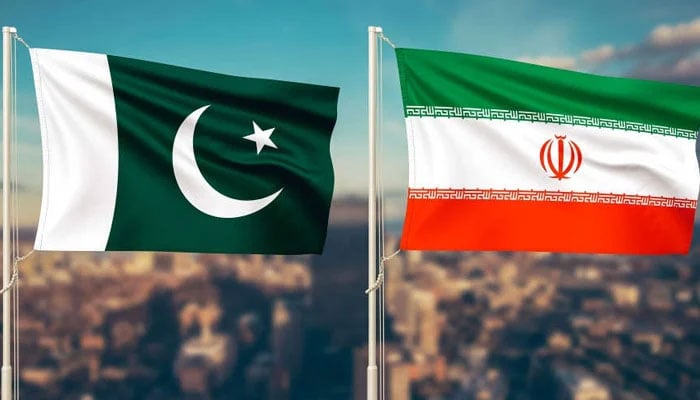
A sanction-free Iran could save Pakistan $10-15 billion a year in energy costs and add 2-3 percentage points to GDP. More importantly, it would flip Pakistan from an energy price-taker into an energy corridor. A sanction-free Iran would unlock Iran’s 157 billion barrels of proven oil reserves (fourth globally) and 33 trillion cubic meters of natural gas (second globally). For Pakistan, few geopolitical shifts offer this scale of asymmetric upside.
Iran’s South Pars field could supply 750-1,000 million cubic feet per day (mmcfd) of natural gas to Pakistan, addressing 20-30 per cent of its shortfall. A sanction-free Iran could finance the remaining 781km Pakistani segment ($2-3 billion), stalled since 2014 due to US threats. This would slash Pakistan’s LNG import bill by $5-7 billion annually (at current prices), boost industrial output in Punjab and Sindh.
A sanction-free Iran could offer Pakistan crude oil at 10-20 per cent below Brent benchmarks ($60-70/bbl in early 2026), leveraging Iran’s excess capacity. Pakistan, importing 70 per cent of its 20 million tons annual oil needs, could save $3-5 billion yearly. Joint refineries — upgrading Parco, for example — with Iranian technology and investment could process heavy Iranian crude, creating 5,000-10,000 jobs and reducing refined product imports by 15-20 per cent.
How about cross-border electricity imports? Iran already exports 100-200 MW to Balochistan border districts — this could scale to 1,000-2,000 MW. For Pakistan’s grid (facing 15-20 per cent losses and blackouts), this means reliable, low-cost power ($0.05/kWh vs. domestic $0.10+). A sanction-free Iran could mean grid expansion, long-term PPAs (power purchase agreements) and competitive pricing. Yes, immediate relief for Balochistan, lower diesel generation and reduced outages.
If Iran becomes sanction-free, Pakistan’s geography turns into an energy toll gate. Pakistan can become a refining and transshipment hub — storage at Gwadar, crude swaps and blending. Iran-Pakistan-China annual transit revenue: $2-$3 billion. Pakistan becomes a connector, not a client.
Downstream petrochemicals is where real money lies. Access to cheap Iranian ethane, LPG, and naphtha would unlock fertiliser expansion, plastics, and polymers — $8-12 billion in new petrochemical investment over 7—10 years. Annual exports could reach $3-5 billion, with import substitution of another $2—3 billion.
Potential transit revenue $2-3 billion. Refinery utilisation $1.8-2.5 billion. Downstream petrochemicals $5-8 billion. Total $9-13.5 billion. Imagine, lower power tariffs, reduced circular debt, and improved energy security.
A sanction-free Iran means rupee-rial trade, energy for rice and textiles and local currency swaps. A sanction-free Iran doesn’t just cheapen Pakistan’s energy — it rewires Pakistan’s balance of payments, industrial base, and geopolitical leverage. Energy stops being a liability and becomes an income stream.
The writer is an Islamabad-based columnist.