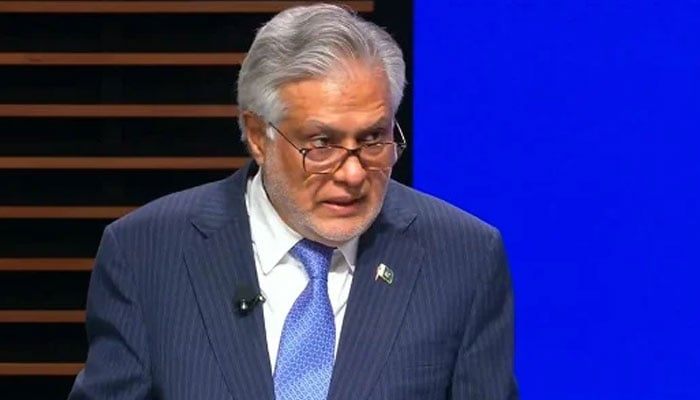
ISLAMABAD: Pakistan will offload stakes in key Fauji Foundation Group companies to the United Arab Emirates (UAE) under an investment deal that will wipe out a $1 billion external liability and potentially roll over another $2 billion in maturing loans, a major boost to the country’s strained finances, Deputy Prime Minister and Foreign Minister Ishaq Dar said Saturday.
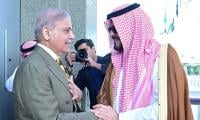
The arrangement was agreed during the recent visit of the UAE president, marks a shift from short-term borrowing toward equity-backed investment.
Under the arrangement, a $1 billion UAE deposit will be converted into an ownership stake in Fauji Foundation-linked firms, eliminating the liability from Pakistan’s books once the transaction is completed by March 31.
Dar said discussions are already at an advanced stage, with multiple meetings held to finalise the structure of the share transfer. Once executed, the amount will no longer be treated as debt, easing pressure on Pakistan’s balance of payments and foreign exchange reserves.
Beyond the equity deal, Pakistan almost secured firm assurances on continued financial support from Abu Dhabi. Dar confirmed that a separate $2 billion loan due in January 2026 is expected to be rolled over, following high-level engagement led by Prime Minister Shehbaz Sharif.
Dar also acknowledged parallel support from other key partners, noting that Saudi Arabia and China’s state deposits shore up Pakistan’s reserves.
Ishaq Dar said that Pakistan has sent a strong message to the comity of nations, that due to its principled, proactive and result-oriented diplomacy, it has turned the tide from being a ‘diplomatically isolated country’ to one where it is “heard and acknowledged at international forums”.
Addressing the media at the Foreign Office, Dar shared the annual achievements and role of the Ministry of Foreign Affairs in 2025, saying, “Our international standing has improved due to principled, proactive and result-oriented diplomacy. We now have to make Pakistan an economic power. Allah made us a nuclear power and a missile power. What you need now is economic power as the country possessed great natural resources, such as mines and minerals, gas, and hydrocarbons. The government works as a team (with the military leadership). We compliment the Field Marshal who together with our air force and navy chiefs have raised Pakistan’s status with their partnership. Agenda is Pakistan,” he said.
In his opening statement, Dar referred to Friday’s visit of UAE President Sheikh Mohammad bin Zayed Al Nahyan.
Commenting on the May conflict with India, Dar pointed out, “We did not ask anyone to mediate between us. It has been established that Pakistan’s armed forces, its technology and its capacity for defence is very solid. We only did in self-defence according to what was done to us; otherwise, it could have been much greater than this too”.
He commended the armed forces’ technology for intercepting 79 out of 80 drones sent by India to Pakistan in 36 hours.
He said that Pakistan firmly believes whether it was Pahalgam and other such incidents and this has been shared with world capitals, that till the time the Jammu and Kashmir issue is not resolved, perpetual and permanent peace cannot be established in the region.
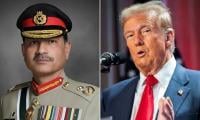
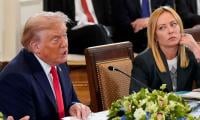
Reviewing bilateral relations with the United States as during the administration of President Biden the two countries were not engaged, he said, “This changed in the recent (Trump) administration. Trade, investment and bilateral ties are heading to positive trajectory. Trade with the US had reached $13.28 billion and is currently in surplus. President Trump trumpeted the drum of May conflict success the most. Around 60 times, he reiterated that Pakistan shot down six fighter jets of India. Then he praised the prime minister and Field Marshal. Relations have started again towards a positive trajectory.”
This is the reason, he added, Pakistan nominated Trump for the Nobel Peace Prize 2026.
Also when it came to counter terrorism, collaboration in this area has also strengthened, and the US had designated BLA and Majid Brigade as global terrorist organisations.
Giving details about his visit to Bangladesh, Dar assured that Islamabad would engage Bangladesh in talks following the latter’s general elections scheduled to be held in February next year.
“During my 36-hour visit, I saw great gestures of goodwill for Pakistan. Pakistan’s diplomacy during the crisis demonstrated our proactive approach and it showed our ability of transforming challenges into opportunities and our thought of effective narrative projection with principled engagement,” he said.
On Afghanistan, the foreign minister said he remained optimistic and had not lost hope, especially after a fatwa from Afghan clerics, and the acting Afghan Interior Minister Sirajuddn Haqqani’s reach out. “We welcome it. We have one ask. Stop terrorist attacks on Pakistan from inside Afghanistan. Let us see if there is any difference. We will monitor the situation. Even efforts by Saudi Arabia, Qatar and Turkiye did not reach any logical conclusion”, he said.
If Pakistan sees any change from Afghanistan, it would be willing to re-visit its policy, he assured.
To a query on Pakistan sending its troops to Gaza, the foreign minister once again said, “This is a sensitive issue. Pakistan would be happy to join the ISF only if its mandate is not peace enforcement and to disarm Hamas, we are happy to do peace-keeping.
Commenting on keeping a balance on bilateral relations with China and the United States, Dar explained, “Our relation with China is independent to our relations with the US. China-Pakistan relationship is ideal and exemplary”. There is no match to Pak-China relations, as it is an ideal example of relations, he added.
The foreign minister also highlighted renewed engagement with the European Union through a strategic dialogue in Brussels after a four-year hiatus.
Turning to the Middle East, Dar highlighted the strategic mutual defence agreement signed with Saudi Arabia on September 17, covering cooperation in defence, energy, technology and mining, adding that ties with Turkiye, Iran, Gulf States and Central Asian countries remained strong. He added that contacts with Iran had increased and that Pakistan had condemned the attack on Iran on June 13. He further said Pakistan enjoyed close ties with Bahrain, Iraq, Kuwait and Qatar, reflecting what he described as a broad-based and balanced foreign policy approach. About PTI’s protest in the United Kingdom, he termed it a sheer provocation in which the protesters hurled threats to kill, which was not acceptable at any cost.
The DPM/FM stressed that the UK government should take responsibility to prevent such provocations. If such incidents took place in other countries, the government would take up the issue, adding that they had served a demarche, which was a right move.
Meanwhile, the Ministry of Foreign Affairs in a statement said that Pakistan expressed support for efforts for peace and stability in Yemen. Pakistan, closely following the recent developments in Yemen, expressed its full support for the diplomatic efforts being undertaken by the Kingdom of Saudi Arabia for ensuring peace and stability in the Republic of Yemen. “We also commend the efforts of the UAE in this regard,” the statement said.
“We underscore the need for upholding the unity and territorial integrity of Yemen, and express the hope that the Yemeni stakeholders will avoid any unilateral steps that may result in further escalation of the situation. We also call on all Yemeni parties to engage constructively and in good faith towards an inclusive, negotiated political solution based on the agreed parameters,” the statement said.
Pakistan expresses its hope that the ongoing diplomatic efforts will result in concrete steps towards achieving lasting peace in the country, and in bringing an end to the suffering of the Yemeni people, it said.
Meanwhile, Pakistan denounced Israel’s announcement recognising the independence of the so-called Somaliland region of the Federal Republic of Somalia, terming the move a violation of international norms. In a statement, the Ministry of Foreign Affairs (MoFA) condemned what it said were “attempts to undermine the sovereignty, unity and territorial integrity of Somalia”.
The MoFA said that Israel’s announcement not only threatened the “peace and stability of Somalia but also that of the entire region”.
Islamabad urged the international community to reject any such actions, and prevent and deter Israel from undermining the ongoing efforts for peace and stability in the region.
MoFA reiterated Pakistan’s complete support for the sovereignty, unity and territorial integrity of Somalia, as well as for all efforts aimed at achieving lasting peace and stability in the country. The statement comes a day after Israel became the first country to formally recognise the self-declared Republic of Somaliland as an independent and sovereign state. Prime Minister Benjamin Netanyahu said Israel would seek immediate cooperation with Somaliland in agriculture, health, technology and economy. In a statement, he congratulated Somaliland’s president, Abdirahman Mohamed Abdullahi, praised his leadership and invited him to visit Israel.
Netanyahu said the declaration was “in the spirit of the Abraham Accords, signed at the initiative of President Trump”. Abdullahi said in a statement that Somaliland would join the Abraham Accords, calling it a step toward regional and global peace.
Meanwhile, Islamabad rejected any steps aimed at the forced displacement of Palestinians from their land under any circumstances. Since decades, the country has supported Palestinian people in their just struggle for self-determination and for a sovereign, independent Palestinian state based on pre-1967 borders, with Al-Quds Al-Sharif as its capital.