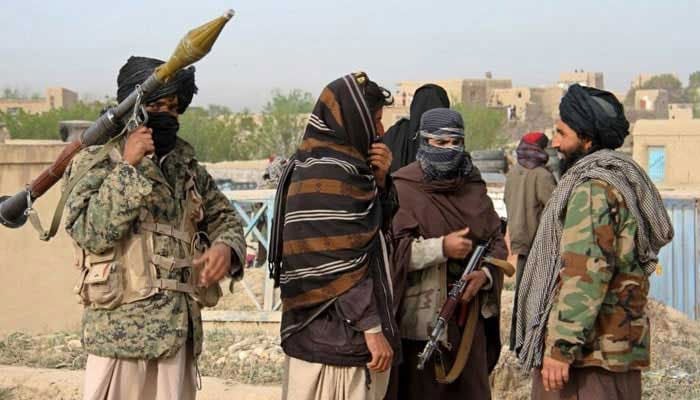
There has been a paradigm shift in Pakistan’s Afghan policy in 2025. Unlike the first Afghan Taliban regime from 1996–2001 and their return to power in 2021, when Pakistan was supportive of them, Islamabad changed its policy in 2025 by openly accusing Kabul of not preventing the TTP from carrying out cross-border attacks. Pakistan also accused the Taliban regime of collaborating with India in destabilising restive parts of Balochistan and Khyber Pakhtunkhwa (KP).
The refusal of the Taliban regime to participate in the recently held meeting in Tehran, including Afghanistan and Russia, means Kabul is not interested in discourse to establish peace and stability in war-torn Afghanistan, which is central to promoting regional cooperation. The Istanbul Process and the SCO Contact Group on Afghanistan, however, included representatives from the Taliban regime.
In December this year, a meeting of 1,000 Afghan clerics was held in Kabul, which resolved that Afghan soil should not be used for promoting terrorist activities elsewhere, particularly against Pakistan. While Islamabad has welcomed the resolution of the meeting of Afghan clerics, it has made it clear that unless the Taliban regime restrains the TTP from operating against Pakistan, Kabul will be held responsible for not controlling groups involved in cross-border terrorism. Pakistan has also called upon Kabul to give
in writing that it will not allow its soil to be used against its eastern neighbour.
This year, relations between Pakistan and Afghanistan also reached their lowest ebb. Pakistan had to also use force to target terrorist hideouts in Afghanistan. Pakistan–Afghanistan trade came to a halt and Islamabad deported thousands of Afghan refugees back to their country. As the year is ending, questions arise about the prospects of better ties between Kabul and Islamabad in 2026 and how far the Taliban regime will adhere to the resolution of the meeting of Afghan clerics who called for stopping the use of Afghan soil against neighbours, including Pakistan.
A two-pronged security threat to Pakistan augmented in the year 2025, reflecting hostile Pak–India and Pak–Afghan borders. A week-long visit of Afghan Taliban Foreign Minister Amir Khan Muttaqi to India in October this year was termed a ground-breaking event reflecting a paradigm shift in Delhi–Kabul ties since the Taliban seized power in August 2021.
These growing ties were not limited to the Afghan interim foreign minister calling for strengthening economic relations with New Delhi, as he also supported the Indian policy on Occupied Kashmir. The joint statement issued after Muttaqi’s visit to New Delhi referred to Jammu and Kashmir as part of India. This prompted Pakistan’s Ministry of Foreign Affairs to express its reservations to the Afghan ambassador. Pakistan’s Foreign Office also stated that the joint statement was highly insensitive to the sacrifices and sentiments of the people of Indian Illegally Occupied Jammu and Kashmir in their just struggle for the right to self-determination. Pakistan also strongly rejected the Afghan acting foreign minister’s assertion that terrorism is Pakistan’s internal problem.
The year 2025 also witnessed an Afghan–Indian nexus against Pakistan in the form of using water as a weapon. This includes not only India's suspension of the Indus Waters Treaty following its brief war with Pakistan from May 7–10, but also Afghanistan’s resolve to construct dams along the Kabul and Kunar rivers. This means Pakistan will face double jeopardy in the form of Indian and Afghan pressure over its water resources, seriously impacting its agriculture and industry. What are the options for Pakistan to deal with an Indo–Afghan nexus reflecting security pressure and the use of water as a weapon? If India has suspended the Indus Waters Treaty, it makes the challenges in Pak–Afghan relations more problematic.
The growing Afghan predicament and its implications for the region require examination across three dimensions. First, despite facing a legitimacy crisis, the Taliban regime has been able to widen its diplomatic space by expanding ties with India, China and Russia. However, its relations with Pakistan reached their lowest ebb in 2025. Regrettably, countries which took an anti-Taliban stance during the first Taliban regime are now in the good books of Kabul, while Pakistan, which has a track record of supporting the Taliban despite diplomatic isolation, is facing hostility from the regime.
Pakistan has repeatedly requested Kabul to control the TTP and other terrorist organisations involved in cross-border terrorist operations inside Pakistan. According to Islamabad, there is a nexus between the Afghan and Pakistani Taliban.
Why Kabul deepened its hostility with Pakistan in 2025 is not difficult to gauge. The Taliban regime wants to exert pressure on Pakistan through its supported elements to prevent the deportation of Afghan refugees and to gain space in Pakistan’s Pashtun belt. Despite repeated requests made to both the first and second Taliban regimes to formally recognise the Durand Line drawn during the British era, the Taliban have not accepted Islamabad’s request and consider the Pak–Afghan border controversial.
Second, Afghanistan’s predicament over the last several decades is largely of its own making. Under the Taliban regime, severe human rights violations such as depriving girls and women of education, employment and travel raise questions about Afghanistan. Even so, countries such as China, India and Russia maintain normal relations with the Taliban regime due to their economic and security interests. The Taliban claim they have changed and want to join the mainstream world, but in practice their approach remains as ultra-conservative and dogmatic as that of the first Taliban regime.
Despite its internal fault lines, Afghanistan holds a strategic position because without peace and stability in the country, it will continue to negatively impact Central, South and West Asia. For Pakistan, Afghanistan is a gateway to Central Asia. The same holds true for India, which would benefit economically if it were able to trade with Central Asia through Pakistan and Afghanistan. Central and South Asia connectivity passes through Afghanistan.
Finally, for peace, stability and economic development in Afghanistan, the Taliban regime must reform its mode of governance. An inclusive form of governance, rather than an exclusive one, would benefit Afghanistan economically, politically and strategically. Unleashing a process based on democracy and political pluralism would have a positive impact not only on Afghanistan but also on its neighbours.
The writer is a meritorious professor of International Relations and a former dean of the Faculty of Social Sciences, University of Karachi. He can be reached at: [email protected]