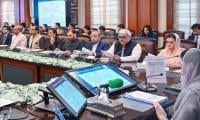
ISLAMABAD: The opposition alliance, at its national two-day consultative conference on Sunday, demanded immediate appointment of a new impartial Chief Election Commissioner (CEC) and holding of clean, transparent elections to ensure proper transfer of power.
The conference, organised by Tehreek Tahaffuz Aiyeen-e-Pakistan and attended by representatives from political and civil society groups nationwide, concluded with a declaration addressing key national issues. It called for an independent investigation into what it termed the “worst and blatant” rigging in the February 8, 2024 elections, demanding that those responsible be identified and punished.
The declaration criticised the erosion of judicial independence, noting the removal and forced transfers of conscientious judges, including Justice Mansoor Ali Shah, Justice Athar Minallah, Justice Shams Mahmood Mirza and Justice Tariq Jahangiri. The opposition condemned these actions as unconstitutional and politically motivated.
Highlighting the link between political and economic stability, the conference pointed to widespread poverty, unemployment and corruption. Citing World Bank and IMF data, it noted that over 44 per cent of Pakistan’s population lives below the poverty line, with corruption losses estimated at Rs5,300 billion. The declaration criticised the government’s failure to address inflation, unemployment and poverty, calling for immediate relief measures and the abolition of burdensome taxes on agriculture, businesses and salaried workers.
The opposition also condemned enforced disappearances and the listing of political activists under the Fourth Schedule, terming these measures illegal, unconstitutional and politically motivated.
Stressing the foundational role of transparent elections in democracy, the declaration warned that public confidence in the political system could only be restored through fair polls under a new, impartial Election Commission. It stressed that economic and political stability are intertwined and essential for national development.
The conference made a call for urgent measures to protect citizens’ rights, ensure justice, and uphold the independence of state institutions.
The opposition alliance expressed solidarity with Justice Tariq Jahangiri, condemning the actions taken against him and demanding the restoration of judiciary in accordance with the original Constitution of 1973.
The declaration strongly criticised sentences handed down in alleged false cases to PTI chief Imran Khan and his wife, as well as the ill-treatment of Khan’s sisters, including incidents of being dragged by their hair and alleged use of chemical water cannons. The alliance demanded the release of all political prisoners, including Imran Khan, Bushra Bibi, Shah Mehmood Qureshi, Ijaz Chaudhry, Yasmin Rashid, Sarfaraz Cheema, Mian Mahmoodur Rashid, Sahibzada Hamid Raza, Ali Wazir, Haji Abdul Samad and Wali Mohmand.
The conference also called for lifting the ban on meetings with Imran Khan, condemned false cases against Murtaza Jatoi of GDA and Zain Shah of Sindh United Party, and denounced police brutality on political protests in Moro.
The alliance voiced strong opposition to the Pakistan Electronic Crimes Act (PECA), claiming it stifles critical voices and curtails media freedom. It condemned the economic pressures on Dawn TV and the case against journalist Matiullah Jan, expressing solidarity with journalists who have lost jobs under what it termed a system of oppression. Cases against human rights activist Iman Mazari and her husband were also denounced.
The declaration stressed the need for transparency regarding the participation of Pakistani forces in the Gaza peace force, rejecting unilateral decisions and calling for public consultation on such matters.
Expressing concern over deteriorating law and order in Sindh and Balochistan, the alliance condemned coercion and enforced disappearances by security and law-enforcement agencies, demanding the release of Baloch prisoners, including Mahrang Baloch. The situation of terrorism in Khyber-Pakhtunkhwa was also highlighted, with calls to implement the unanimous demands of the provincial Jirga, release of pending federal arrears, lifting the ban on Pashtun Tahafuz Movement and freeing missing persons.
Looking ahead, the opposition announced plans to observe February 8, 2026 — the two-year anniversary of what it called an illegitimate system — as a black day, with nationwide protests including wheel jams and shutter-down strikes to highlight demands for constitutional restoration and accountability.
The opposition alliance announced the formation of a central committee to mobilise the public and strengthen its organisational structure. The committee comprises Vice Chairman Mustafa Nawaz Khokhar, Dr Amjad, Ali Asghar, Haleem Adil Sheikh and Zain Shah, and will oversee the creation of sub-committees at provincial and district levels.
The alliance also decided to hold national consultative conferences in all provincial capitals and intensify engagement with bar councils, civil society organisations and the public to pursue the restoration of the Constitution, rule of law and democratic norms.
Addressing the closing session of the national conference, alliance head Mahmood Khan Achakzai said the opposition was open to dialogue but questioned the credibility of those in power, declaring that the alliance would not accommodate what he termed ‘seasonal birds’ in its ranks. He warned that those responsible for plunder and abuse of authority would be held accountable.
Recalling past grievances, Achakzai lamented that political leaders and entire families had suffered arrests, disappearances and executions, yet had remained committed to Pakistan. He said historic injustices had never been acknowledged or apologised for, adding that the country had not been granted as a gift but secured through struggle. He cautioned that any attempt to suppress a peaceful movement through force would invite a response.
Pakistan Tehreek-e-Insaf (PTI) Chairman Barrister Gohar Ali Khan, speaking on the occasion, said the prevailing situation demanded comprehensive negotiations. He assured full support to Mahmood Khan Achakzai’s leadership and announced that PTI would stand with the alliance in any democratic movement.
He said the army and the country belonged to the people, stressing that PTI respected the armed forces regardless of leadership. Urging Achakzai to launch a movement, Barrister Gohar said PTI would remain alongside the alliance in its struggle for rights and democracy.
Khyber-Pakhtunkhwa (KP) Chief Minister Sohail Afridi highlighted that foreign debt is tied to the rising dollar, noting that foreign aid from friendly countries remains idle in the State Bank. He warned that if the government does not control the dollar, it could cross Rs400, undermining defence and economic stability. Afridi pledged full support to the opposition alliance, stating that if sacrifices are required to restore the Constitution, they will be willingly made.
Afridi criticised the recent regime changes, stating that economic decline, inflation, and unemployment had increased, while public frustration grew. He said a collective dialogue with stakeholders could have mitigated the crisis, but mismanagement had led to worsening conditions.
Senator Allama Raja Nasir Abbas Jafri, vice chairman of the alliance, stressed that justice and fairness are the foundation of a society. “The root of all evils in the country is the absence of justice and accountability,” he said, calling on citizens to pursue righteousness and uphold the rule of law.
Ex-premier Shahid Khaqan Abbasi underscored the importance of constitutional implementation, noting that the country cannot progress politically or economically without restoring the rule of law. He stressed that only Pakistan-specific models can address national challenges and urged dialogue to solve the country’s problems.
Balochistan National Party chief Sardar Akhtar Mengal highlighted the suffocating political environment, where questioning authorities or expressing dissent has become risky. He criticised the past regimes for misusing power and religion, warned against blaming individuals rather than systemic corruption, and called for strengthening the Senate and Council of Common Interests with clear timelines for implementation.
Former NA speaker Asad Qaiser warned that extreme oppression could make resistance obligatory, declaring the nation’s democratic rights under threat. Former governor Sindh Zubair Omar echoed these concerns, urging continued efforts to restore the Constitution and hold the government accountable. The alliance collectively called for urgent political and economic reforms, protection of citizens’ rights, and a sustained struggle to ensure democracy, justice and constitutional governance.