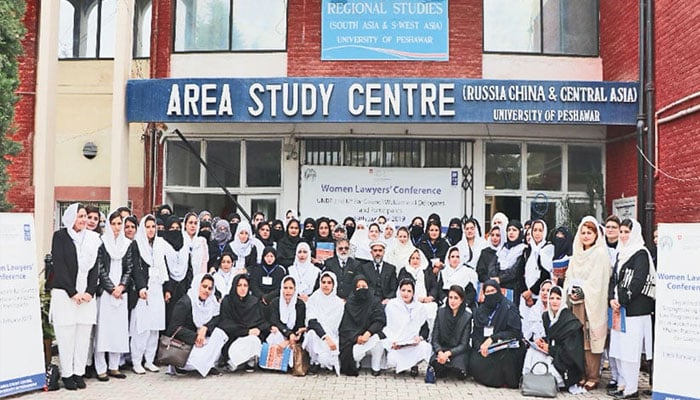
Recent remarks from the Supreme Court in the Noor Mukaddam murder case have once again reminded us why women on the benches matter and why women in black coats stand not only for themselves but for every woman in Pakistan.
They are also reminders of why representation matters in every sphere: in courtrooms, hospitals, police stations, workplaces and the corridors of policymaking. When women are present, especially in systems historically shaped by patriarchy, they tend to have each other’s back, not out of bias, but because they understand the lived reality of gendered stereotypes and violence.
Take, for instance, Justice Ayesha Malik’s powerful dissent in a rape case (2024), where she rejected deeply entrenched expectation of “perfect victim” in rape cases. She denounced expecting standardised response from a rape victim. Or recall her groundbreaking judgment outlawing the two-finger test (2021), a practice that dehumanised survivors and had no place in a modern legal system. Or her advocating for gender sensitive language in judicial discourse. These interventions were not ‘pro-woman’ in the reductive sense. They were pro-justice. And they came from a judge who could see what centuries of male-dominated jurisprudence had failed to recognise.
Representation matters because it changes the texture of institutions. A young female lawyer walking into a firm headed by a woman feels a different kind of safety, an unspoken assurance of dignity and fairness, compared to walking into a patriarchal, male-dominated space where she is often either underestimated or hyper-scrutinised. Many women in law can vouch for that lived dichotomy.
Or consider Fauzia Viqar, the federal ombudsperson for protection against harassment. She not only strengthened harassment laws through robust FOSPAH decisions but also pushed for meaningful amendments in the legal framework. Her recent order holding that dismissive references to “hormonal changes” constitute workplace harassment is a masterclass in understanding gendered humiliation, something women have long endured but few officials had ever acknowledged.
And then there is the deeply painful case of Noor Mukaddam, a murder so brutal that many still remember exactly where they were when they first heard the news. I was in my first year of law school, and it took my breath away. To now hear Noor’s murder blamed on ‘live-in relationships’ is a disservice to both the spirit and the letter of the law.
When the UN recently reported that in 2024, every 10 minutes a woman was killed by her partner or family member, 137 women every single day, were all of them in such relationships? No. Many were wives, daughters, sisters, and even mothers. Femicide does not discriminate based on a woman’s perceived virtue. Patriarchy kills with equal cruelty.
Such sentiments ignore the countless women murdered by their husbands within the very homes meant to protect them. So what do we tell a woman killed by her husband? “Don’t marry”? What do we tell a girl murdered by her brother? “Don’t exist”? What do we tell a child raped in a religious institution? What about the woman raped by her professor? “Stop studying”? Or the young woman assaulted after a job interview? “Don’t work”?
Any system that turns on victims instead of offenders has lost sight of why it exists.
Femicide victims, in any kind of relationship, deserve equal protection and treatment before the law, whether we agree with their choices or not. They do not deserve moral lectures, insinuations or sermons about personal choices. They deserve accountability. And yes, they deserve heads to hang in shame, because the state failed to protect them.
Human beings are imperfect and bound to err. The law exists precisely because of that imperfection. If courts insist on searching for a ‘perfect victim’, they will dispense no justice at all.
From the era of the infamous Bradwell case, when women could not practice law, to the fierce Pakistani women who resisted their way into the legal profession, we have come a long way. Justice Ayesha Malik’s ascent to the Supreme Court, once thought impossible, marked the milestones of this journey. But the road ahead remains long.
This piece is dedicated to all victims of femicide and to all women in law, known or unknown, who resist every day, walk into intimidating courtrooms, endure misogyny, hold their ground, have each other’s back and carve pathways for generations of women who will follow.
The writer is a student of law.