Women in Luni Kot and adjacent villages in the Jamshoro District of Sindh are learning renewable energy methods in the absence of traditional energy sources. You! takes a look…
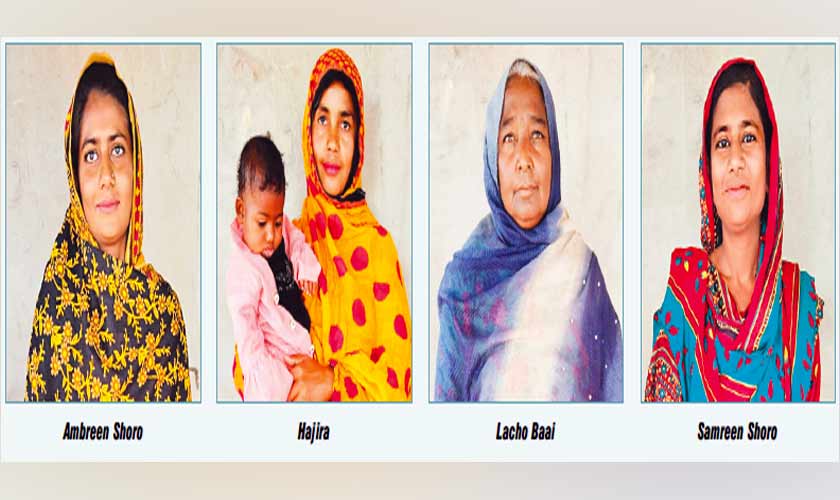
People living in cities, who are accustomed to having clean water for drinking, gas for cooking and electricity for light, have no idea what is life like without water, gas and electricity,” says 16-year-old Samreen Shoro, a residence of Makhai Parro village near Luni Kot in the Jamshoro District of Sindh.
“In our village women have to go miles on foot in search of clean water, carrying heavy pots on their heads which is a sheer hard labour. Then they have to collect wood from fields to prepare food as there is no gas in our village. We also have to complete our household chores before sunset, as darkness reigns in our houses in the absence of electricity,” elucidates Samreen, who along with hundreds of other women in Luni Kot and adjacent villages, is living in absolute poverty.
Women in rural Sindh face severe challenges, including a lack of basic necessities such as electricity, clean water and gas. Their lives are full of struggles; they wake up early, go miles to fetch water, do households chores, help their husbands and raise children. Healthcare and education remain out of reach for many rural families. In short, they are compelled to live compromised lives.
To address the fundamental issue of the non-availability of water, gas and electricity, several NGOs are active in rural Sindh, focusing on providing clean water, integrating renewable energy solutions to ensure sustainable access. NGOs like Fast Rural Development Program (FRDP), Sindh Community Foundation (SCF) and HANDS are working on providing clean drinking water and solar-powered water wells to underprivileged communities across various districts in Sindh. They are also exploring the development of renewable energy solutions. Then there is Gharo-Jhimpir wind corridor - stretching from Gharo to Jhimpir - which hosts numerous operational wind farms, contributing significantly to Pakistan’s renewable energy goals by harnessing powerful wind resources for national grid power.
SHE-POWER
SWoRD (Society for Women Rights & Development Trust) is a women-led organisation working for women’s rights, especially in Sindh. The organisation has been working on their flagship project ‘SHE-POWER’ - She Powers the Future: Advancing Gender-Just Energy Transition in Luni Kot - since April 2025.
This project aims to promote renewable energy and environmental justice in the communities of Luni Kot, where several renewable energy initiatives - such as wind and solar power projects - are already underway. Despite this progress, local communities, especially women, remain largely excluded from energy planning, decision-making and the benefits of clean energy investments.
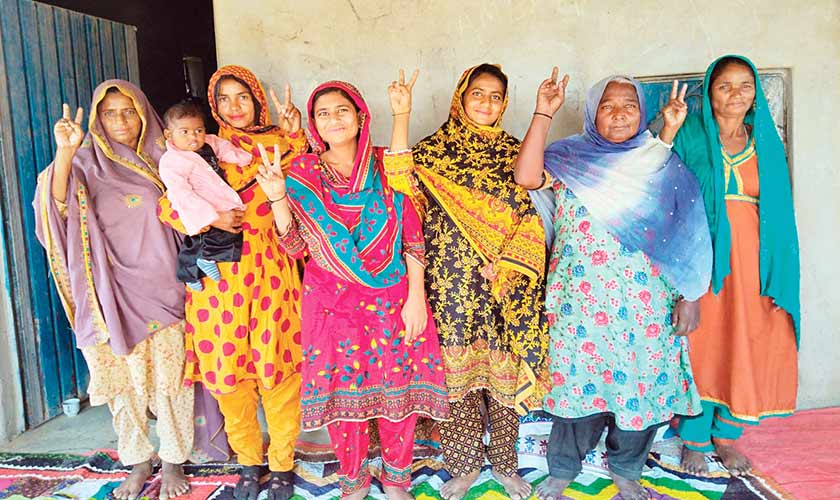
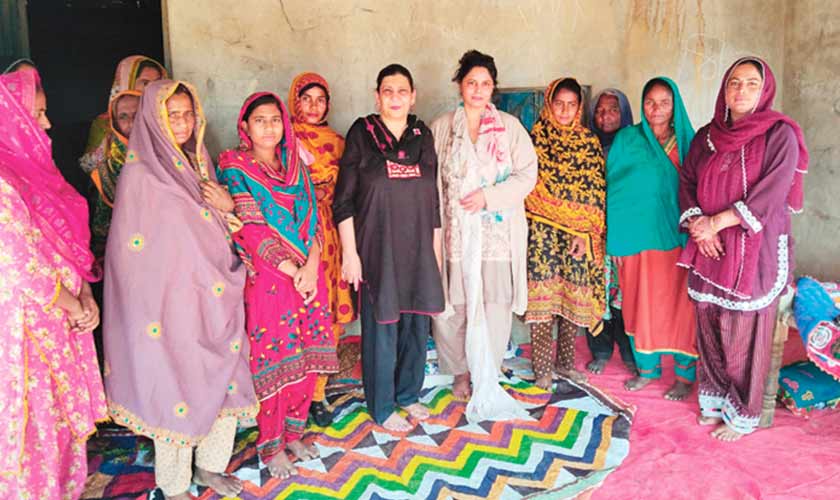
The initiative seeks to empower local women as Energy Champions, equipping them with the skills and platforms needed to advocate for inclusive energy solutions. Recently, a two-day training was given to selected 30 local women from Luni Kot and adjacent villages near Jamshoro and Hyderabad, in a bid to provide them knowledge about renewable energy methods in the absence of traditional sources of energy. These women are now called Energy Champions.
I heard about this initiative and I was curious to know what was actually happening there. Luckily, I got in touch with the president of SWoRD Nazeer Qureshi who arranged my trip to Jamshoro. One chilly winter morning, I booked a ride to Jamshoro. Upon reaching the M-9 Motorway (Karachi–Hyderabad Motorway), I was welcomed by the project coordinator, Farzana Airy, who informed me all the key points of the project.
The most valuable aspect of the project and training was its emphasis on inclusivity. The organisers made a deliberate effort to involve the Hindu community as well, ensuring that no one felt excluded. According to Farzana, the training was structured so that women from Muslim, Sheedi and Hindu communities sat together, promoting a supportive and positive learning environment.
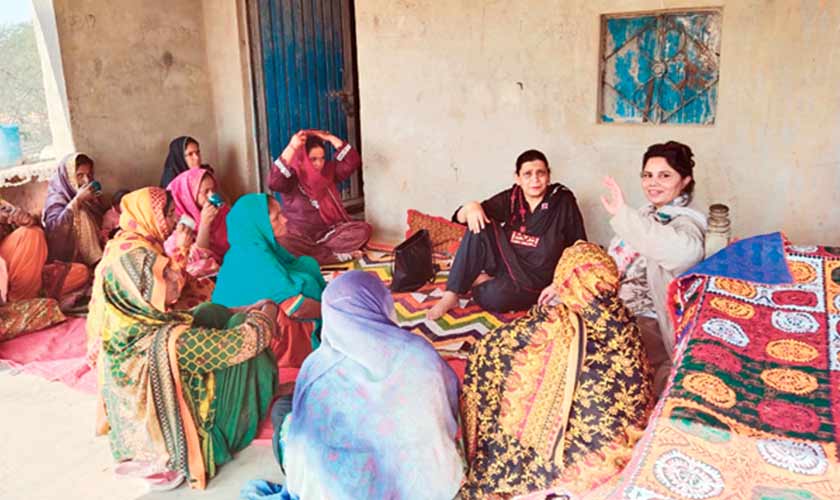
“So far, we have trained 30 women and each of them will train another 10 women. In this way, we have established a chain of agents of change. By connecting community members to ongoing renewable energy developments in Luni Kot, it will help ensure that the region’s clean energy transition is just, inclusive and community-driven,” explains Farzana.
The Energy Champions
Farzana took me to Luni Kot and adjacent villages where I got a chance to talk to the Energy Champions on one-on-one basis.
Talking about the benefits of the training, Samreen, one of the Energy Champions, shares, “This training, though short in duration has taught me a number of things. I was unaware that we could generate our own electricity from renewable energy that comes from a source that won’t run out like the sun. I was happy to learn that solar power generates electricity by capturing sunlight on solar panels in a joint chemical and physical reaction, known as the ‘photovoltaic effect’ (or PV).”
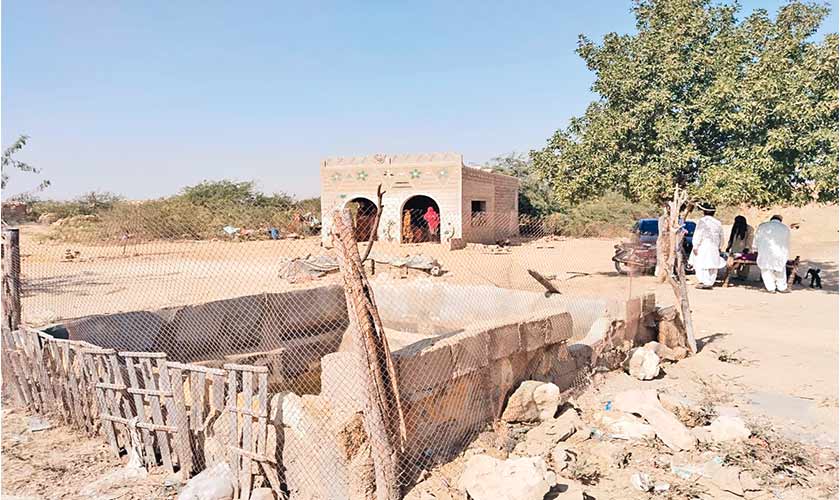
It has also been a learning experience for me to learn about their lives and challenges. I am impressed by their positivity. Though their lives are a constant struggle, I have found in all of them a desire to changes their lives for the better despite their hardships.
“Our life is tough. We work round the clock - house cleaning, fetching drinking water, dish-washing, laundry, preparing food for the family, caring for children, tailoring and sewing clothes etc. In the midst of all, I got this fantastic opportunity through this training to learn about alternative options for gas, water and electricity besides the traditional modes,” expresses Lacho Baai, who hails from the village of Mohammed Bux Shoro near Luni Kot. “I got to know about different types of renewable energy - wind energy being one of them. It’s a very clean energy source. Wind power uses turbines to turn moving air into electricity, creating no pollution while running. Hopefully, we will be able to use wind power to our advantage soon,” she adds.
“Honestly speaking, I was not very excited to be a part of this training; however, I was pleasantly surprised to learn that there are ways to obtain water and gas through renewable energy sources, which can bring some comfort to our lives,” says 16-year-old Ambreen Shoro, another Energy Champion from Makhai Parro village. “But the big question remains: who is going to implement it,” utters Ambreen.
Then there is Hajira, another Energy Champion from Makhai Porro village near Luni Kot. From her looks and confidence, it is evident that she is educated and she has turned out to be the most educated among the lot. “Actually, I completed my intermediate in Balochistan and shifted to Sindh after I got married,” says Hajira. “I have been living in this village for seven years. There is a stark difference between Balochistan and Sindh. In Balohistan there is water, gas, electricity and education but Sindh lacks all this,” laments Hajira. “However, this training has given me some hope that things can be improved. I got to learn that renewable energy is affordable and produces little or no pollution, unlike fossil fuels, which heat the planet, destroy the environment and harm communities. When done right, renewable energy can help create a prosperous future for people worldwide,” expresses Hajira.
Whereas Hajira is hopeful that things can be improved, Mehrunisa, another Energy Champion, has many grievances. “I have so many complaints. Our leaders come at the time of elections to get vote; they make false promises and then disappear. Nobody comes to listen to our problems. We live in miserable conditions. We don’t have any healthcare facility. There is a hospital in our vicinity but it has no lady doctor. There is severe shortage of drinking water in our area,” whines Mehrunisa, a resident of Nabi Bux Khoso village near Luni Kot.
When asked what she has learned from this training, she says, “Yes, I have learned quite a few things. Thanks to organisations like SWoRD, who are trying their best to give us some relief in the form of teaching us different methods of survival. For example, we can use the sun’s heat to evaporate contaminated water (from groundwater or salt water). The vapour condenses on a cooler surface (like plastic) and drips into a clean container, leaving impurities behind,” explains Mehrunisa.
16-year-old Umbreen Asghar Shoro, another Energy Champion from Kundo Khoso village near Luni Kot, also shares her experience with this scribe, “Almost all of us live in poverty. I studied till class five, but then my parents stopped me from studying further as there is no separate school for girls. At least I can read and write.
This training by SWoRD has opened my eyes. I learned that instead of relying on traditional sources of energy, we can use renewable sources of energy such as biogas, which results from the breakdown of organic matter. We also have clean cooking options like solar stoves, which are safer and much cheaper,” describes Umbreen.
A Deplorable State of Affairs
Gul Jan Shoro and Ria Bai, two more Energy Champions from Luni Kot, share experiences similar to others. They are more interested in talking about the problems they face in their daily lives.
It has been observed that, in addition to limited access to clean and affordable energy for many households, particularly in remote or under-resourced parts of Luni Kot, women also face severe health issues. Health facilities are inadequate. Although there is a hospital, it lacks proper staff and there is no female doctor. In case of a health emergency, women have to go to Hyderabad for treatment. There is no maternity home and women suffer greatly during pregnancy: if complications arise, pregnant women and their babies die due to the unavailability of medical treatment.
For the inhabitants of Luni Kot and adjacent villages, there is no concept of luxury or entertainment. They lead a very simple life. Most men do labour jobs and their average income is merely PKR 15,000 to 20,000 per month. Women usually don’t work; they take care of the household chores. They hardly go shopping and don’t demand extra money from their husbands. Their food is also very basic, usually consisting of daal, chawal, potatoes and vegetables. They only eat meat and chicken at weddings.
In our patriarchal society, females are usually ignored, same is the case with women of Luni Kot and other villages, they are generally not allowed to go outside and instead of attending school, they work and sew clothes at their homes. Moreover, poverty restricts poor and low-income families to invest in their children’s education. Generally, preference is given to boys. Therefore, it keeps many girls away from school.
Despite Jamshoro being a major university hub in Sindh - home to the University of Sindh (UOS), Mehran University of Engineering & Technology (MUET), and Liaquat University of Medical & Health Sciences (LUMHS), which offer a wide range of programs in arts, sciences, engineering and medicine - the surrounding villages remain deeply affected by illiteracy. The majority of the population in these villages is uneducated due to the absence of schools and colleges, making it a stark example of “darkness under the lamp.”
A Ray of Hope
But all is not lost. There are empowered girls like Samreen, a ninth-grade student in a co-educational school, who are willing to challenge the status quo. “Most girls in my village are not allowed to study with boys. But I plan to continue my education and become a doctor. I know the path won’t be easy, yet I dream of returning to my village one day to open a clinic for women,” pledges a determined Samreen.
Girls like Samreen are a ray of hope - they are a silent force to reckon with!
Erum Noor Muzaffar is the editor of You! magazine. She can be reached at [email protected]