Print Story
X


The government is taking steps to enhance minority representation in all walks of life

| P |
akistan’s constitution promises its citizens the right to profess, practice and propagate their religion and the freedom of conscience. The country’s approach to religious minorities is linked to the vision of its founder, Quaid-i-Azam Muhammad Ali Jinnah, who stated that minorities will be free to practice their religions and that the state will not interfere in the religious affairs of individual citizens.
Over the years, a range of constitutional, legislative, administrative and welfare measures have been taken to promote the rights of religious minorities and strengthen interfaith harmony. These initiatives cover political representation, employment, education, protection of religious places, religious tourism, security and mechanisms for addressing grievances.
An important aspect of mainstreaming minority communities is their representation in elected institutions. They have four reserved seats in the Senate of Pakistan and ten reserved seats in the National Assembly, in addition to representation in the provincial assemblies.
The government has also provided opportunities for members of minority communities in public-sector employment and senior positions. More than 2,000 minority individuals are stated to be working in Grade 17 and above in various government departments. Minority citizens have equal rights to education, jobs and business opportunities.
A 5 percent job quota has been allocated for people from religious minorities in federal government services in addition to open merit. The National Commission for Minorities has called for strict monitoring of the implementation of this quota by provincial governments, federal ministries and divisions and the Federal Public Service Commission. The provision has not materialized, partly due to limited educational opportunities.
The National Commission for Minorities has been reconstituted with greater representation from minority communities. Chela Ram Kewlani, a member of a minority community, has been appointed chairman of the commission.
A school curriculum for seven non-Muslim communities—Christian, Hindu, Sikh, Kalash, Bahai, Buddhist and Zoroastrian—has been introduced at the primary level in consultation with religious scholars.
Several welfare initiatives have been started for minority communities. An Endowment Fund for Minorities was created following the passage of legislation by the Khyber Pakhtunkhwa Assembly in December 2020. Minority students’ scholarship rates were doubled with effect from March 2014. Vocational education for Hindu and Sikh children has also been approved at government expense.
Financial assistance is provided to the poor among minority communities. The scholarships are awarded on merit. The Minorities Welfare Fund supports small development schemes, including the repair and maintenance of religious and worship places belonging to minority communities.
The Ministry of Religious Affairs has undertaken various initiatives to promote interfaith understanding. These include the declaration and celebration of Minorities Day to recognise the contribution of religious minorities to nation-building.
Religious feasts and festivals of the minority faiths are also recognised through public holidays. Holi, Diwali and Easter are listed as public holidays for minority communities. Christmas is a general public holiday. Police Departments provide security during religious festivals and special prayers.
Efforts to ensure minority rights and interfaith harmony encompass constitutional guarantees, political representation, employment quotas, education, welfare programmes, legislation, religious tourism, protection of worship places, security arrangements and institutional mechanisms for addressing grievances.
At the official level, 10 religious functions associated with minority communities are celebrated. These include Christmas and Easter for Christians; Holi and Diwali for Hindus; Baisakhi and the birthday of Guru Nanak for Sikhs; Nauroze for Zoroastrians; Eid-i-Rizvan for the Bahai community; the Festival of Lights for Buddhists; and Chelum Jhust for the Kalash community.
District interfaith harmony committees have been established and interfaith harmony conferences are organised to promote understanding and interaction among different segments of society.
The Evacuee Trust Property Board looks after several religious places belonging to Sikh and Hindu communities and provides facilities to pilgrims visiting these sites.
The Pakistan Sikh Gurdwara Parbandhak Committee was constituted in April 2019 to facilitate Sikh pilgrims from India and other parts of the world who visit sacred places in Pakistan during religious festivals.
Pakistan has also undertaken initiatives aimed at promoting religious tourism. The opening and operation of the Kartarpur Sahib Corridor provided an important facility for Sikh pilgrims. Other measures listed in the document include the opening of Shewala Teja Mandir and Gurdwara Choa Sahib in Jhelum, maintenance-related work at Katas Raj and the publication and distribution of material highlighting Sikh and Hindu heritage in Pakistan.
Pakistan regularly hosts religious tourism from abroad. A delegation of Korean Buddhist monks visited Pakistan recently. The Gandhara Conclave 2023 also brought prominent Buddhist monks and influential figures from various countries.
Legislative measures have also been introduced concerning minority personal laws. The Hindu Marriage Act 2017 was enacted at the federal level and applies throughout Pakistan except Sindh. Sindh has its own Hindu Marriage Act, passed in 2016 and amended in 2018, with rules framed in 2019.
The document states that the Hindu Marriage Act is intended to protect Hindu women and address discrimination and abuse relating to marriage.
The Punjab government has also implemented the Sikh Marriage Act, allowing followers of the Sikh faith to register their marriages under their own religious law.
A Christian Marriage and Divorce Act has been prepared by the Ministry of Human Rights in consultation with Christian minorities. Some factions within the Christian community have sought further deliberation on the draft before its introduction in the parliament.
An agreement between the Pakistan Hindu Council and Muslim scholars is aimed at addressing concerns surrounding forced conversion. It states that any law approved by the parliament after consultation with the Council of Islamic Ideology will be followed.
Until such legislation, procedures are proposed under which information about a Hindu seeking conversion will be shared with the local Hindu community leader, followed by a meeting with the individual’s parents. If the person still wished to convert after the meeting, the conversion could proceed according to the stated arrangement.
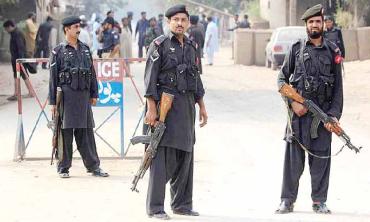
Security measures have been strengthened in areas where minority communities have faced threats. In Peshawar, authorities have maintained contact with Sikh communities, particularly after incidents of target killings that created fear among community members.
Quick Reaction Minority Task Forces have been formed in several Sindh districts, comprising members of peace committees, law-enforcement agencies and minority community leaders. The One-Man Commission on Minority Rights, comprising Dr Shoaib Suddle, has created district committees in Mirpurkhas and Umerkot in January 2024 to address minority issues at the grassroots level.
Awareness programmes have been initiated in schools, colleges and universities to highlight the rights of minorities in Islam. Religious scholars have also been mobilised to discourage misuse of blasphemy laws and to encourage people to refer such cases to law-enforcement agencies rather than resorting to violence.
The efforts to ensure respect for minority rights and interfaith harmony encompass constitutional guarantees, political representation, employment quotas, education, welfare programmes, legislation, religious tourism, protection of worship places, security arrangements and institutional mechanisms for addressing grievances.
These initiatives reflect an approach that seeks to integrate religious minorities into national life while protecting their religious identity and freedom of worship. The establishment of interfaith committees, celebration of minority festivals, support for religious heritage and efforts to strengthen legal protections demonstrate the importance attached to social harmony.
The author works for The News International.He can be contacted at [email protected]