Print Story
X




Inzamam-ul-Haq stands as Pakistan’s most prolific ODI scorer with 11,739 runs in 378 matches. Wasim Akram remains leading wicket-taker, claiming 502 wickets in 356 ODIs.
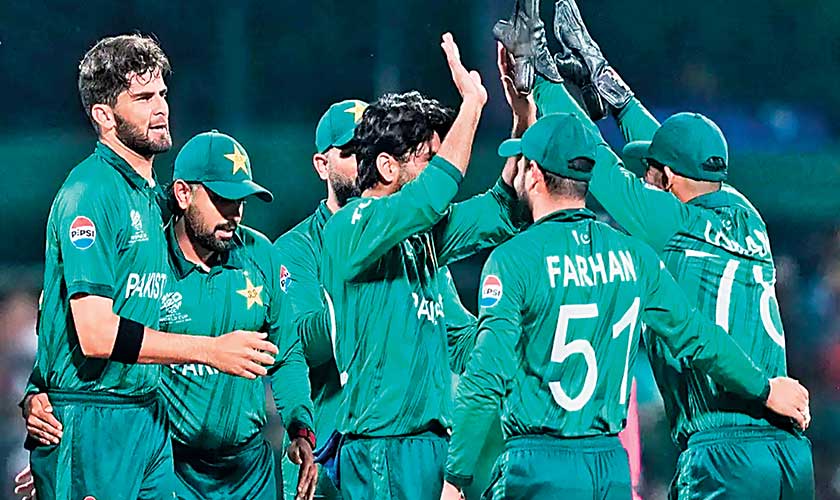
Pakistan strengthened their dominance over Australia in ODI cricket by clinching the three-match series 2-1, sealing the achievement with a confident four-wicket win in the decisive final game at Lahore’s iconic Gaddafi Stadium. The victory reflected Pakistan’s growing consistency, composure under pressure, and ability to perform in high-stakes matches against a strong Australian side.
More importantly, the result marked Pakistan’s third consecutive bilateral ODI series success over Australia. It followed their earlier 2-1 triumph at home and another memorable 2-1 series victory on Australian soil, further highlighting Pakistan’s recent edge in this competitive rivalry.
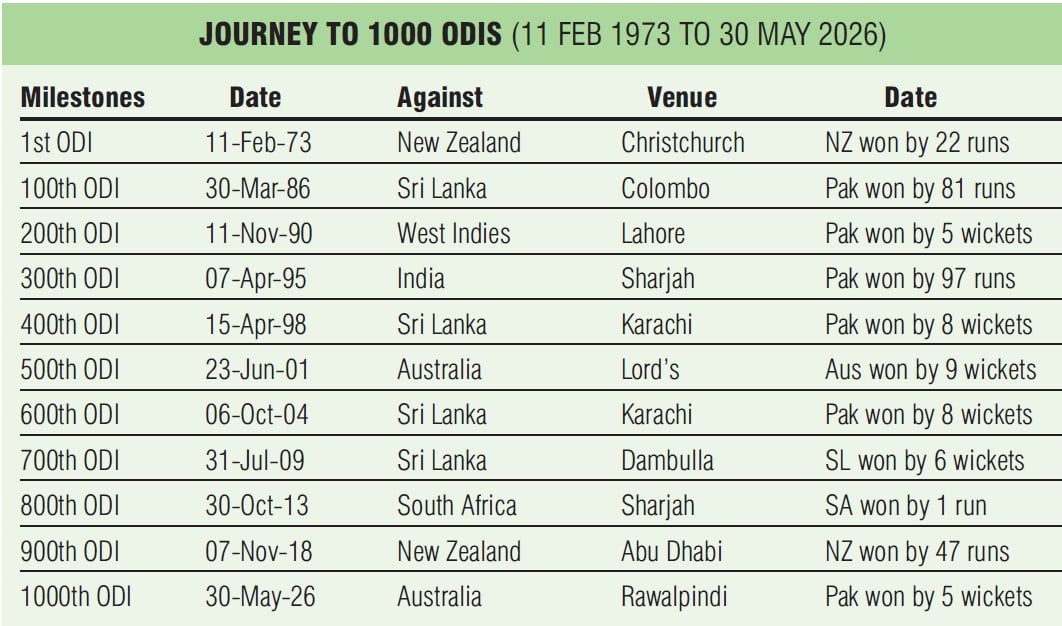
Pakistan cricket team registered its name in history by winning its 1000th One Day International (ODI) match, defeating Australia by five wickets on May 30, 2026. The landmark victory not only added another memorable chapter to Pakistan’s rich cricketing legacy but also highlighted the team’s enduring presence in the 50-over format.
In the deciding encounter, bowlers again bowled well and restricted Australia for just 157 runs. Skipper Shaheen Afridi taken 3-30 while, Abar and Shadab shared two wickets each.
With the achievement of playing 1000 ODIs, Pakistan became only the third team in the history of cricket to feature in 1000 ODIs, joining the elite company of Australia and India. Men in Blue currently leads the tally with 1,075 matches, followed by Australia with 1,020 appearances.
Pakistan’s entry into this exclusive club reflects decades of consistency, resilience, and passion for the game.
Out of the 1000 matches played, Pakistan has secured 528 victories while suffering 442 defeats.
Nine matches ended in ties, and 21 produced no result. These numbers underline a competitive record, demonstrating Pakistan’s ability to perform consistently against top cricketing nations over the years.
The historic occasion was marked with a special gesture at the toss, where Australia captain Josh Inglis presented Pakistan skipper Shaheen Shah Afridi with a commemorative souvenir—a symbolic bat adorned with bails, representing the significance of the 1000th ODI. The moment captured the spirit of sportsmanship and respect between the two sides.
Pakistan’s ODI journey began decades ago with their first match against New Zealand at Lancaster Park in Christchurch under the captaincy of Intikhab Alam. Since then, the team has experienced numerous highs and lows, producing unforgettable moments that have shaped cricket history.
Among the most iconic achievements remains Pakistan’s triumph in the 1992 ICC Cricket World Cup under the inspirational leadership of Imran Khan. That victory not only brought global recognition but also ignited a cricketing revolution in the country. Another defining moment came in 2017, when Pakistan, led by Sarfraz Ahmed, clinched the ICC Champions Trophy by defeating arch-rivals India in a dominant final.
Leadership has played a crucial role in Pakistan’s ODI journey, with 32 players captaining the side in this format. Misbah-ul-Haq and Inzamam-ul-Haq jointly hold the record for leading Pakistan in the most ODIs, each captaining the team in 87 matches. Their leadership eras were marked by stability and notable performances.
In batting, Inzamam-ul-Haq stands as Pakistan’s most prolific ODI run-scorer, amassing 11,739 runs in 378 matches between 1991 and 2007. He remains the only Pakistani batsman to surpass the 10,000-run milestone in ODIs, with an impressive average of 39.53, including 10 centuries and 83 half-centuries. His calm demeanor and match-winning abilities made him one of Pakistan’s greatest players.
Following him is Mohammad Yousuf, who scored 9,720 runs in 288 matches at an average of 41.71. Known for his elegant stroke play, Yousuf registered 15 centuries and 64 fifties during his career, with a highest score of 141 not out.
Among contemporary players, Babar Azam has emerged as a modern-day great. The former captain has already accumulated over 6,626 runs in just 143 matches, maintaining an outstanding average exceeding 53. With 20 centuries and 37 half-centuries, Babar continues to be a pillar of Pakistan’s batting lineup and a symbol of consistency in international cricket.
On the bowling front, Wasim Akram remains Pakistan’s leading wicket-taker in ODIs, claiming 502 wickets in 356 matches between 1984 and 2003. Renowned as the “Sultan of Swing,”
Akram was the first bowler in cricket history to reach the 500-wicket milestone in ODIs. His exceptional average of 23.52 and match-winning spells cement his legacy as one of the greatest bowlers of all time.
Waqar Younis follows with 416 wickets in 262 matches, forming one of the most lethal fast-bowling partnerships in cricket history alongside Akram. His remarkable best figures of 7 for 36 remain among the finest bowling performances in ODI cricket.
In the current era, Shaheen Shah Afridi is rapidly climbing the ranks. With 146 wickets in just 77 matches at an impressive average of 24.5, with the best figure of 6-35. He represents the future of Pakistan’s pace attack. His ability to strike early and deliver under pressure makes him a key asset for upcoming tournaments.
However, despite these achievements, concerns have emerged regarding Pakistan’s declining focus on ODI cricket. The rise of T20 Internationals and franchise leagues has significantly reduced the number of ODIs played by the national team. Until 2009, Pakistan typically completed 100 ODIs within a span of three to four years. In contrast, over the past decade, reaching the same milestone has taken nearly 10 to 12 years.
Compared to teams like India, Australia, England, New Zealand, and South Africa, Pakistan has played fewer ODIs and Test matches in recent years. This imbalance has raised questions about the long-term development of players, as the emphasis has largely shifted towards the shorter T20 format.
Looking ahead to the 2027 ICC Cricket World Cup in South Africa, Pakistan must adopt a strategic and disciplined approach. Success in the 50-over format requires technical proficiency, mental resilience, and the ability to adapt to different conditions—qualities that are best developed through regular exposure to ODIs and Test cricket.
While T20 cricket offers entertainment and commercial gains, it does not fully equip players for the demands of longer formats. Building innings, handling pressure, and maintaining consistency are essential skills that can only be honed through sustained participation in ODIs and Tests.
To prepare effectively for the World Cup, Pakistan must increase its involvement in bilateral ODI series and ensure that players gain experience in challenging overseas conditions, particularly in South Africa, where pitches favor pace and bounce. Additionally, strengthening the domestic structure and aligning it with international standards will play a crucial role in nurturing emerging talent.
Pakistan’s 1000th ODI victory is not just a celebration of past achievements but also a reminder
of the work needed for future success. By restoring balance across formats and investing in long-term development, Pakistan can once again rise as a dominant force in world cricket and aim for glory in the 2027 World Cup.