Print Story
X




Pakistan women’s sweep offers promise but it has also left unanswered questions
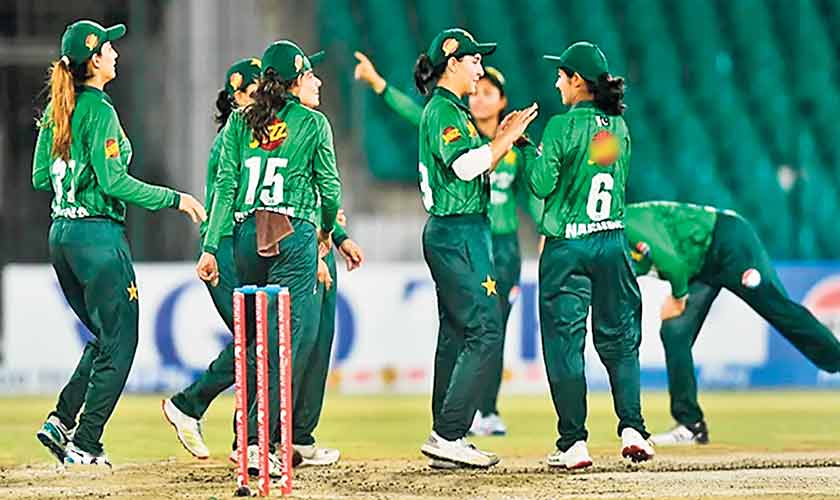
The results were emphatic, the margins overwhelming, and the confidence unmistakable. Pakistan women’s cricket team completed a flawless 6-0 clean sweep over Zimbabwe across the ODI and T20I series in Karachi, dominating with a level of authority rarely associated with Pakistan sides in recent years. Massive totals, record-breaking batting displays, disciplined bowling, and fearless captaincy combined to create what appeared, on the surface, to be the perfect preparation for the ICC Women’s T20 World Cup in England.
Yet beneath the celebrations lies a more complex story. Pakistan’s performances against Zimbabwe unquestionably showcased growth, depth, and ambition, but they also left unanswered questions about how this evolving side will fare against elite opposition. Zimbabwe provided momentum; England will provide reality.
What cannot be denied, however, is that Pakistan now possesses something they lacked for years: identity. Under captain Fatima Sana, this team has begun to play with intent rather than caution, aggression rather than survival and confidence rather than fear.
The clearest evidence came in the T20I series, where Pakistan’s batting reached levels previously unseen in women’s cricket in the country. Fatima Sana’s astonishing 62 not out off 19 balls in the third T20I was more than a statistical marvel. Her 15-ball fifty - the fastest in women’s T20 international history - symbolized a psychological shift in Pakistan cricket. For decades, Pakistan’s women’s side relied heavily on conservative accumulation, hoping bowlers would defend modest totals. Fatima’s innings shattered that template.
What made the knock remarkable was not simply the power-hitting but the authority with which it was executed. Zimbabwe’s bowlers were not merely attacked; they were strategically dismantled. Fatima targeted areas, manipulated field placements, and displayed the composure of an elite finisher. Pakistan has historically struggled to find players capable of accelerating innings in the death overs. In Fatima, they may finally have discovered a genuine match-winner capable of altering games within a few overs.
But the captain was not alone. Ayesha Zafar produced one of the greatest innings in Pakistan women’s T20I history with her unbeaten 102 off 47 balls in the opening match. Pakistan crossed 200 in women’s T20 internationals for the first time, eventually posting 237 for 5 before winning by a record 153 runs. The innings demonstrated a batting freedom rarely associated with Pakistan teams, particularly in pressure situations.
Equally significant was the emergence of younger players. Eyman Fatima showed maturity beyond her years with a composed 79 not out in the second T20I after Pakistan had slipped into early trouble. Her innings was crucial not because of the runs alone, but because it showed Pakistan now has players capable of rebuilding and accelerating - two skills essential in tournament cricket.
The ODI series revealed a different strength: structural consistency. Pakistan’s opening pair of Sadaf Shamas and Gull Feroza completely dominated Zimbabwe’s bowling attack. Their partnerships of 162, 189, and 220 exposed Zimbabwe’s lack of bowling penetration while also highlighting Pakistan’s improved batting planning.
Sadaf’s 289 runs in the series reflected technical discipline and mental patience, while Gull Feroza’s two centuries confirmed her growing reputation as one of Pakistan’s most reliable top-order players. Pakistan’s batting unit no longer appears dependent on one or two senior players. Contributions came from multiple sources, including Najiha Alvi, whose explosive lower-order hitting added another dimension to the side.
This newfound batting depth is perhaps Pakistan’s biggest achievement from the Zimbabwe tour. Modern T20 cricket demands flexibility, adaptability, and scoring power throughout the lineup. Pakistan’s previous squads often looked predictable once early wickets fell. Against Zimbabwe, however, the middle order repeatedly maintained momentum regardless of match situations.
Pakistan’s bowling, meanwhile, remained quietly efficient. While the batting attracted headlines, the bowlers ensured Zimbabwe never felt competitive. Left-arm spinners Sadia Iqbal and Nashra Sundhu controlled the middle overs superbly, while Fatima Sana continued to evolve into a genuine all-round leader with both ball and bat.
The captaincy itself deserves attention. Fatima showed tactical clarity throughout the series, consistently choosing to bat first and place scoreboard pressure on Zimbabwe. Her field placements were proactive, bowling changes timely, and overall approach refreshingly positive. Pakistan sides of the past often appeared reactive under pressure; this team increasingly looks like one capable of dictating terms.
However, critical analysis requires perspective, and this is where caution becomes necessary. Zimbabwe, despite their admirable effort, remain significantly below the level of the world’s elite women’s teams. Their bowling lacked pace, variation, and sustained discipline. They conceded too many extras, struggled with fielding consistency, and repeatedly collapsed under scoreboard pressure.
Pakistan’s dominance therefore came in relatively comfortable conditions against an inexperienced touring side. The real examination awaits against Australia, India, England, and South Africa - teams capable of exposing technical weaknesses and punishing tactical errors immediately.
Several concerns remain for Pakistan despite the whitewash. Their middle-order batting, though improved, still has limited exposure under genuine pressure against high-quality pace attacks. England’s seaming conditions will present challenges very different from Karachi’s batting-friendly surfaces. Pakistan’s aggressive intent will also be tested against bowlers capable of consistently executing yorkers and variations at the death.
Another concern is overreliance on momentum. Pakistan often thrive when confidence is high but struggle when early setbacks occur. Tournament cricket rarely follows ideal scripts. The ability to recover from pressure situations against stronger opposition remains uncertain.
There is also the question of bowling adaptability. Pakistan’s spin-heavy attack proved highly effective against Zimbabwe, but English conditions may require greater reliance on seam bowling and defensive variations. Teams like Australia and India possess batting depth capable of attacking spin aggressively in middle overs.
Still, dismissing Pakistan’s achievements because of Zimbabwe’s limitations would be unfair. International cricket is ultimately about domination when superiority exists, and Pakistan dominated completely. Strong teams are expected to overwhelm weaker opponents - Pakistan finally did so with professionalism and ruthlessness.
Most importantly, this series may have changed the team’s mentality. Pakistan now enters the T20 World Cup believing they can score above 180 consistently, defend aggressively, and compete with fearless cricket. That psychological transformation matters enormously.
Fatima Sana’s leadership encapsulates this evolution. At just 24, she represents a new generation of Pakistan cricketers unburdened by historical inferiority complexes. Her record-breaking innings was not merely entertainment; it was evidence of ambition.
The Zimbabwe series may not define Pakistan’s future, but it has certainly reshaped expectations. For the first time in years, Pakistan women’s cricket appears to possess not only talent, but direction. The challenge now is proving that this dominance was not simply a product of weak opposition, but the beginning of a genuine rise on the global stage.