Print Story
X

| “A |
ye munda nawan lagda ae!” (This boy appears to be a stranger.)
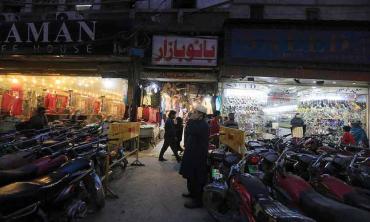
The whisper came from a little girl to her friend as they scurried past me, clutching a polythene bag loaded with salty snacks and sweetmeats. I was wandering through the labyrinthine localities just off Lahore’s iconic The Mall, and couldn’t help but smile at the little princesses’ fierce sense of belonging. It was as though I had inadvertently intruded upon their sovereign territory.
Far from being offended, I found comfort in the crisp Punjabi words flowing so naturally from their mouths.
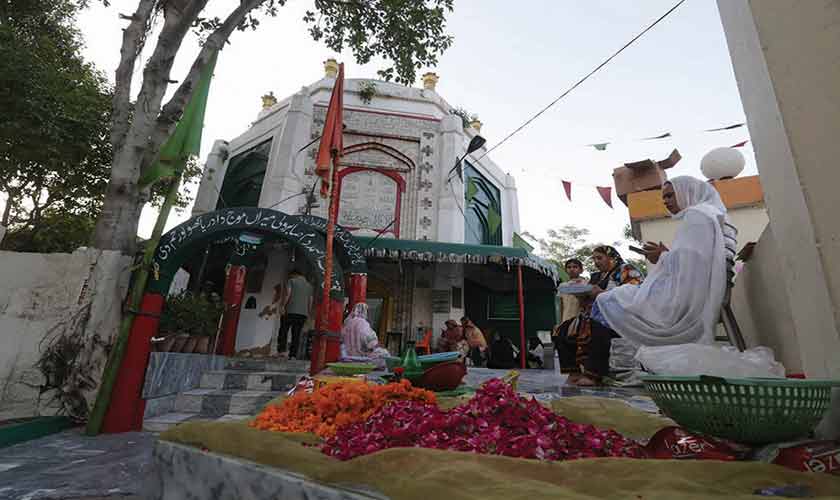
I walked on, letting the rhythm of the city guide me from AG Road onto Edward Road. Suddenly, a brilliant glow cut through the night. Nearly eighty metres away, a building stood resplendent, its façade and the adjoining street adorned with vibrant buntings and streamers. Beneath the illumination, the distinct contour of a green dome caught my eye. A shrine, I guessed.
As I drew closer, the juxtaposition of old and new Lahore became striking: the sanctuary was nestled right within the modern premises of the Orange Line train station. Near the entrance sat a man beside a shoe rack, guarding the footwear of the faithful. His appearance was mesmerising — streaming shoulders of long, henna-dyed red hair, a vibrant saffron kurta paired with a white shalwar and hands adorned with multiple gemstone rings. He looked like someone you would expect to encounter at a chaotic, crowded mela (fair), making his solitary presence on an ordinary night in the heart of the city feel beautifully surreal.
I attempted a brief greeting, but finding him tight-lipped, I removed my shoes, placed them on the rack and proceeded upstairs.
The main structure of the shrine stands on an elevated octagonal plinth, lifting it significantly above the hum of the city streets. To the left sits a quiet mosque; to the right, the shrine itself.
Though it was around nine at night, the compound was brilliantly lit. A serene stillness hung in the air; a cool, nocturnal breeze lent a distinctly mystic touch to the surroundings.
It didn’t take me long to realise where my feet had led me: the resting place of the Sixteenth-Century Sufi, Hazrat Miran Muhammad Shah Mauj Darya Bukhari. His name was elegantly rendered across the doors and walls of the place.
Legend has it that Baba Mauj Darya, who lived during the reign of Emperor Akbar, once miraculously diverted the tempestuous flow of the River Ravi to save Lahore from catastrophic flooding. This earned him his moniker — the man who controlled rivers.
Historical lore also suggests that he advised Akbar on the conquest of Rajasthan’s formidable Chittor Fort. In gratitude and reverence, the Mughal emperor ordered the construction of this shrine and granted 625 acres of land to his family. (The shrine of his spouse, Syeda Bibi Fatima Sani, lies barely a hundred metres away, directly opposite Jain Mandir).
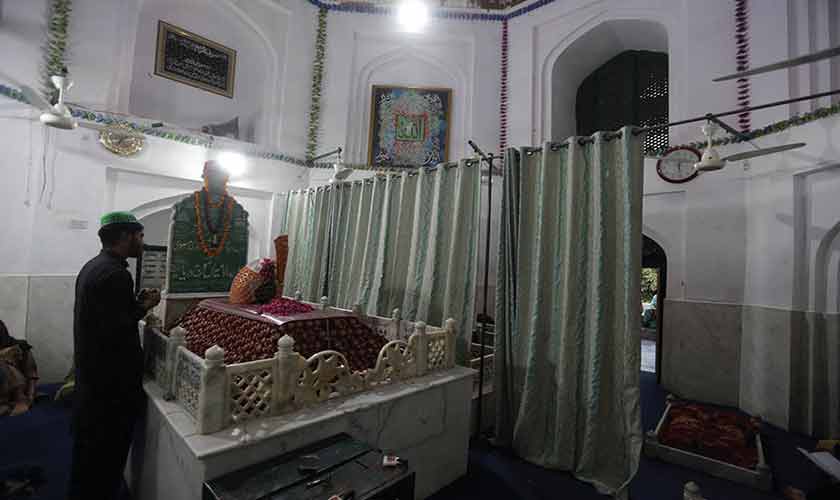
| I |
nside the darbar, I met Mian Faizan-ul Haq, a member of the shrine’s management committee, tall and dignified, wearing an embroidered kurta, white shalwar and a kufi cap. His neatly trimmed white stubble added to his commanding presence.
“I joined the committee four years ago, but I have been coming here for fifteen years,” he said.
Faizan-ul Haq is a true son of the soil; he lived near Chauburji for over four decades before circumstances forced him to sell his disputed family home and move to Allama Iqbal Town. The darbar, it seems, has remained his anchor.
As he was speaking with a group of devotees who had travelled all the way from Sindh, an attendant rushed towards us, beads of sweat glistening on his forehead. Out of breath but smiling, he carried a tray of piping hot tea and biscuits.
“Mian sahib, here is what you asked for,” the attendant said, distributing the cups.
Instead of merely gesturing for me to help myself, Faizan-ul Haq lifted a cup and handed it to me. When I politely protested, mentioning I planned on having tea later, he insisted with a warm, knowing smile: “Bao ji, ae tabarruk ai, enu naa nai karday!” (Gentleman, this is a blessed offering; one does not refuse it.)
Wondering if the saint himself had sensed my silent craving for a brew, I cupped my hands in reverence and accepted the tabarruk.
Once the Sindhi devotees stepped away, Faizan-ul Haq warmed up, letting his guard down to share more intimate stories. He shifted seamlessly between a calm composure and emotionally charged declarations. He spoke of personal financial hardships that had evaporated the moment he bared his soul at the shrine. He even peppered his speech with a bit of English, offering a brilliant, colloquial analogy of Lahore’s spiritual hierarchy: “Data Ganj Bakhsh is the chief minister of the Punjab; Mauj Darya is the finance minister.”
He patted my shoulder heartily. “My friend, if you ever face financial issues in life, just come here, pray to Allah, and your troubles will be over. These devotees from Sindh haven’t travelled all this distance for nothing. Allah fulfills their wishes, which is why they keep returning.”
I thanked him for his generosity and warmth and stepped out into the night.
Darkness had settled over Lahore and the hour was getting late. As I exited the gate, one final image arrested my attention. A man was standing in front of the shrine beside his motorcycle. The ignition was still on, and the single headlight cast a pale, cutting glow across the pavement. With his eyes tightly closed and hands clasped in deep supplication, he was praying silently against the hum of the idling engine.
I stood a few paces away, waiting for him to finish. I wanted to ask him how many of his prayers had been answered so far. But some questions are best left to faith.
Usama Malick is a storyteller with an MPhil in English