Print Story
X




Jamiat Ulema-i-Islam-Fazl protests over leader’s assassination in Khyber Pakhtunkhwa
| A |
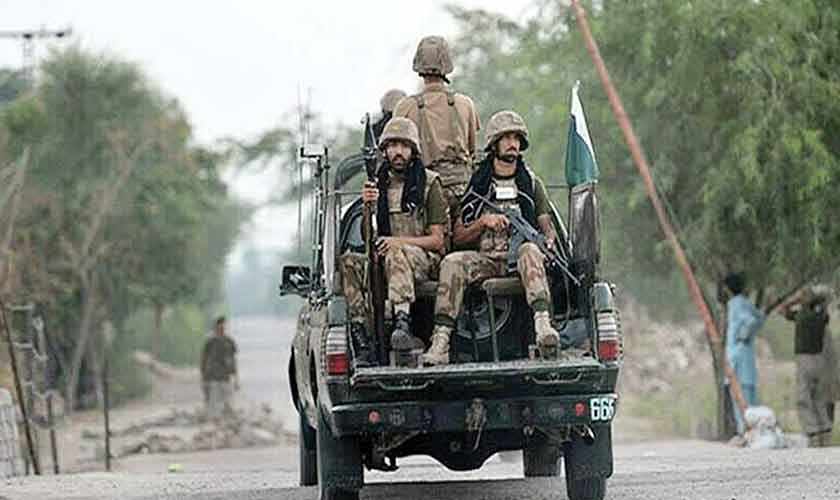
A fresh wave of militancy across Khyber Pakhtunkhwa in recent months has seen targeted killings, suicide bombings, abductions, improvised explosive device attacks and assaults on security personnel, health workers, polio vaccinators, police, teachers, religious scholars and political party leaders.
From Bannu and Lakki Marwat to Bara, Jamrud, Landikotal, Kurram, Bajaur, Mohmand, Hangu, Tank, Dera Ismail Khan and Peshawar, violence has intensified.
The latest wave of violence deepened public anxiety following the assassination of renowned religious scholar and Jamiat Ulema-i-Islam-Fazl leader Maulana Muhammad Idrees in Charsadda earlier this month, followed by similar killings in which religious figures were gunned down in various parts of the country.
According to police and JUI-F party leaders, unidentified gunmen opened fire on Maulana Idrees’ vehicle in the Utmanzai area in, what investigators describe, was a targeted killing. The killing sparked widespread outrage across Khyber Pakhtunkhwa. Jamiat Ulema-i-Islam-Fazl organised province-wide protests, rallies and demonstrations in Peshawar, Charsadda, Bannu, Lakki Marwat, Hangu, Dera Ismail Khan and tribal districts, accusing authorities of failing to protect religious scholars and political workers.
JUI-F leaders claimed that religious scholars and seminaries were increasingly being targeted, while the worsening law and order situation had created fear among political activists, clerics and members of civil society. Senior party leaders warned that continued inaction would further destabilise the province.
Just days after the Charsadda killing, Bannu witnessed one of the deadliest militant assaults in recent months. Militants reportedly targeted a police checkpoint in the Fatehkhel area through a coordinated attack involving explosives and heavy firing, leaving around 15 policemen dead, according to police officials and media reports.
In Lakki Marwat, a district repeatedly hit by militant attacks over the past two years, a powerful bomb explosion ripped through Sarai Naurang bazaar, killing several people, including traffic police personnel, while injuring dozens. Police officials said explosives had been planted in a motorcycle or a rickshaw parked in the busy market area.
The blast came after earlier attacks in Lakki Marwat, where police patrols and checkpoints had been targeted through IEDs and ambushes. In March, seven policemen, including a station house officer, were killed when a police vehicle was struck by an improvised explosive device during patrol duty.
In Landikotal, Bara and Jamrud, local elders and youth activists have repeatedly held peace demonstrations demanding decisive action against militants. Traders say business activity has sharply declined due to fears of attacks, extortion and worsening security.
Bajaur district, another sensitive border region, has witnessed some of the deadliest attacks in recent months. Earlier this year, militants reportedly rammed an explosives-laden vehicle into a security checkpoint near the Afghan border, killing security personnel and civilians. Officials blamed militants linked to the banned Tehreek-i-Taliban Pakistan.
Mohmand district has also experienced attacks targeting schools, police installations and security personnel. Residents say the insecurity has revived memories of the violent insurgency that devastated the tribal belt during the post-9/11 period.
In Hangu and Dera Ismail Khan, police officials survived multiple attacks in recent weeks while intelligence-based operations continue in surrounding areas.
Security forces claim several militants have been killed in raids conducted in Bannu, Lakki Marwat, DI Khan and adjoining districts.
Peshawar, despite being heavily guarded, has also remained under pressure as authorities continue to receive intelligence alerts about possible militant attacks. However, militants have carried out attacks on government installations and school buildings.
The federal government and military leadership have repeatedly stated that militant sanctuaries operating from Afghan territory remain a major challenge.
According to official security data and independent monitoring organisations, Khyber Pakhtunkhwa has remained the worst-affected province by militancy in recent months. A quarterly Khyber Pakhtunkhwa Police report states that at least 119 security personnel, including police and Frontier Corps officials, and 67 civilians were killed in terrorism-related incidents during the first three months of 2026, while hundreds more were injured.
According to the police and JUI-F party leaders, unidentified gunmen opened fire on Maulana Idrees’ vehicle in the Utmanzai area. Investigators are calling it a targeted killing. The killing has sparked widespread outrage across Khyber Pakhtunkhwa.
The Pakistan Institute for Conflict and Security Studies reported that during the first four months of 2026 alone, at least 190 civilians and 158 security personnel were killed in militant violence across Pakistan, with most attacks concentrated in Khyber Pakhtunkhwa and its merged tribal districts.
Officials say Bannu, North Waziristan, Dera Ismail Khan, Lakki Marwat and Khyber district remain among the hardest-hit regions, as attacks on police posts, military convoys and civilians continue to rise.
To cope with terrorism, Islamabad has repeatedly urged the Afghan Taliban administration in Kabul to stop militant infiltration and prevent Afghan soil from being used against Pakistan.
However, despite high-level diplomatic engagements, border meetings and security coordination efforts, attacks have continued.
Security analysts say Pakistan’s policy towards the Afghan Taliban after their return to power in Kabul in 2021 has produced mixed and often contradictory outcomes. While Islamabad initially expected the Taliban government to restrain the TTP, militant attacks inside Pakistan have instead increased significantly.
The collapse of peace talks between Pakistan and the TTP has further complicated the situation. Several analysts argue that militant groups exploited ceasefires and negotiations to reorganise networks, recruit fighters and expand operational capabilities in former tribal districts.
Local communities along the border complain that infiltration routes through mountainous terrain remain active, while border fencing alone has not fully stopped militant movement.
Police stations, checkpoints, military convoys, tribal elders, journalists, politicians, civil society members and religious scholars have all come under attack.
The rising casualties have once again exposed the burden being carried by the Khyber Pakhtunkhwa Police, especially in southern districts—Khyber, Bajaur and Mohmand—where police personnel remain on the frontline against heavily armed militants.
At the same time, criticism by the people has intensified. Locals, political activists and civil society groups argue that repeated peace marches and jirgas across the province have failed to produce meaningful policy changes.
In Khyber district, thousands of people participated in peace rallies in recent months, demanding an end to targeted killings, extortion and militant movement.
Similar demonstrations were held in Bajaur, Mohmand, Bannu, Swat, Lakki Marwat and other districts, where local communities demanded restoration of peace.
Tribal elders repeatedly warned authorities that militants were regrouping in remote mountainous regions and that local populations feared a return of the violent years that displaced millions and destroyed livelihoods.
Some analysts believe the security challenge has become more complex because militant groups are now fragmented into smaller networks capable of conducting rapid attacks before disappearing into difficult terrain.
Others argue that economic instability, governance gaps, joblessness and weak civilian institutions in merged districts have created conditions that militants continue to exploit.
Critics argue that decades of inconsistent approaches towards militant groups, shifting alliances and reliance on short-term arrangements have weakened long-term stability.
Others insist that Pakistan faces an extraordinarily difficult security environment due to political instability in the country, porous borders with Afghanistan and the presence of multiple armed groups operating across the region.
For ordinary citizens in Khyber Pakhtunkhwa, however, these strategic debates offer little comfort. Shopkeepers in several districts close markets early due to fear. Parents worry about sending children to schools located near sensitive areas. Policemen in Lakki Marwat patrol roads under constant threat of IED and suicide attacks.
This raises serious questions for those in power.
The writer is a freelance journalist and social worker.