Print Story
X




Balenciaga Spring 2026: A Measured Shift in a House Defined by Extremes
| B |
alenciaga’s Spring ‘26 collection arrived at a moment of change. While Paris Fashion Week continued with its usual scale, the house chose something quieter: a recalibration rooted in legacy, material intelligence and structural clarity. This season marked Pierpaolo Piccioli’s debut as creative director, following decades of directional design from Cristóbal Balenciaga, Nicolas Ghesquière and Demna. Rather than resetting the codes, Piccioli studied them and then applied his own discipline and sensibility.
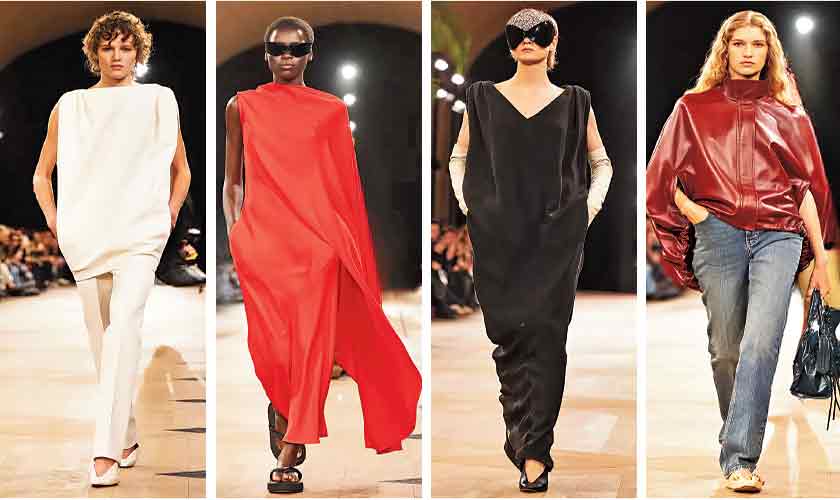
The collection opened with a clear intent. A monochromatic interpretation of the 1957 sack dress set the tone: a reminder that simplicity when engineered with meticulousness, can still be radical. Piccioli worked within Balenciaga’s original method based on body, fabric and air. He used gazar and other light materials that held volume without force. His approach emphasised proportion, movement and structure over decoration. Balloon skirts, sculpted evening dresses and coats that lifted away from the body formed a clean and focused line.
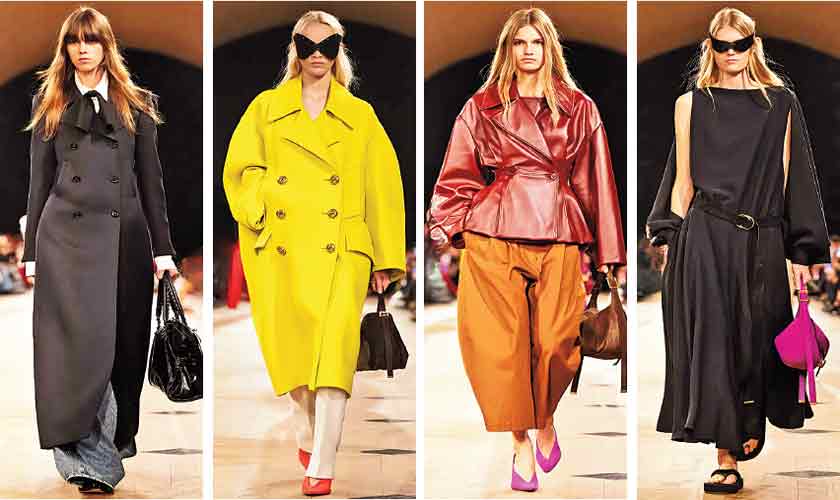
Heritage references threaded through the collection. Cristóbal’s 1967 wedding ensemble re-emerged through tees, capes and leather pieces. Ghesquière’s riding hats and egg-shaped outerwear appeared with subtle shifts, while Demna’s influence showed in long shirts, wide jeans and reworked proportions in chinos and leather outerwear.
Piccioli added his own approach through colour and silhouette. Yellow, magenta and deep-red broke the largely restrained palette, used scarcely to outline form. His eveningwear remained shaped and controlled, highlighted by curved seams and soft draping designed to move rather than cling. Tunics over narrow trousers built a new line for the house, with a focus on presence and cut.
Accessories returned to the house with oversized and reduced versions of the Le City Bag, reflecting the design logic of the early 2000s. They relied on proportion and material choices instead of trend-driven details. Footwear stayed practical and favoured refined shapes over experimental distortion.
The absence of spectacle set the tone for the show. Piccioli stepped away from shock value and moved towards coherence. The runway centred on design while each piece felt measured. The work pointed to the history of the house, where innovation came from construction rather than provocation. Piccioli’s debut signalled a move toward longevity. The clothes held value through form, technique and intention.
Balenciaga’s Spring 2026 collection continued the story of the house with a clearer direction. Piccioli aligned the house with its structural foundations: material research and silhouette while charting a more measured future. The result was a confident reset built on discipline and quiet change.
– Images: Giovanni Giannoni/WWD