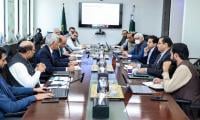
PESHAWAR: The Khyber Pakhtunkhwa Health Department organised a media orientation workshop at the District Health Officer (DHO) Office with the support of the Medical Emergency Resilience Foundation (MERF) and Gavi, the Vaccine Alliance, ahead of the second phase of the Cervical Cancer Prevention Campaign, scheduled to run from November 11 to 24.
According to a communication on Wednesday, the workshop aimed to enhance media professionals’ understanding of cervical cancer, Human Papillomavirus (HPV), its symptoms, prevention and the importance of HPV vaccination.
Participants were also briefed on global and national statistics, campaign objectives, the target population and vaccination arrangements.The technical sessions were conducted by Dr Muhammad Arif, EPI Coordinator, Peshawar; Dr Qazi Taimor, Divisional Officer, World Health Organization (WHO); Dr Saad, Disease Surveillance Officer, Peshawar; and Muhammad Shoaib from MERF.
According to global estimates, cervical cancer caused approximately 660,000 new cases and 348,000 deaths worldwide in 2022, making it the fourth most common cancer among women. In Pakistan, it ranks as the third most common cancer among women, with more than 5,000 new cases reported annually and a mortality rate exceeding 60 per cent.
The KP campaign aims to vaccinate 2.9 million girls aged 9 to 14 years, including school-going, madrassa-going and out-of-school girls.In Peshawar district, the vaccination target is 374,000 eligible girls. The vaccine will be administered free of charge at schools, madrassas, designated community locations and government health facilities.
Speaking on the occasion, Dr Muhammad Arif, EPI Coordinator, Peshawar, emphasised the importance of HPV vaccination and media engagement.“Cervical cancer is preventable, and HPV vaccination provides an important opportunity to protect our girls. Media professionals can play a vital role in spreading accurate information, addressing misconceptions and building community confidence in the vaccination campaign,” he said.