Pakistan’s migration story is written in many places: in the tragedy of a boat capsizing in the Mediterranean, in the apprehension of a family waiting for news of a family member working abroad, and in the pride of seeing a young Pakistani become a scholar, professional or entrepreneur overseas. It is written in billions of dollars sent home, in millions of lives lived beyond our borders, and in the growing number of Pakistanis seeking opportunities elsewhere.
But these are only fragments of a much larger human story. Since 1971, over 14 million Pakistanis have registered for employment abroad. In 2025, 762,439 Pakistani workers were registered as emigrants, followed by another 355,970 between January and July 2026. These numbers matter, but they don’t tell the whole story. Behind every number is a person, a family, an aspiration and a journey. And every time a Pakistani leaves, Pakistan travels with them – through their skills, their culture, their relationships and the way they represent their country in another society.
This is why migration cannot be reduced to remittances, irregular migration, or the increasingly familiar phrase ‘brain drain’. It is a much wider landscape, one that includes opportunity and vulnerability, mobility and displacement, success and loss.
Consider the environment. Migration is not always a choice made simply to earn higher wages. Pakistan’s geography is changing the circumstances in which people live. Communities facing environmental pressures and climate-related disruption may move first within their districts and provinces, even when the emotional distance they experience can feel much greater. Survey data collected over the last five years from Pakistanis living abroad found that around 3–5 per cent cited climate- or environment-related reasons as factors behind their departure.
Migration, therefore, is also a story about how people adapt when the places they call home begin to change.
The same complexity is visible in labour migration. Of those registered for overseas employment during 2026’s first seven months, 61.15 per cent were classified as unskilled, while only 4.02 per cent were highly qualified or highly skilled. These figures should not be mistaken for a hierarchy of human value. An ‘unskilled’ worker is not an unskilled human being. The real policy question is whether Pakistan can equip more workers with recognised skills, certifications, and language abilities so they can access safer, better-paid and more secure employment abroad.
At the other end of the spectrum is the debate over skilled migration. In 2025 alone, 1,061 Pakistani doctors secured residency places in the US. The departure of doctors, engineers, researchers and technology professionals can create real gaps in a country already investing heavily in human resources. Yet migration can also produce income, knowledge, professional networks and experience that can eventually flow back to Pakistan. The answer, therefore, is not simply to stop people from leaving. It is to develop enough talent for domestic needs, retain critical skills where necessary, and create pathways for talent to circulate, return, and stay connected.
There is another story in the geography of where Pakistanis go. Between January and July 2026, Saudi Arabia accounted for approximately 59 per cent of registered overseas work outflow, while the Gulf collectively accounted for around 88 per cent. The Gulf will remain central to Pakistan’s labour mobility, but concentration in a narrow set of markets and occupations creates vulnerability.
The question, then, is no longer simply whether Pakistanis want to migrate. It is whether Pakistan is preparing its people for where the world of work is going.
That makes migration policy inseparable from overall development policy. Training must respond to overseas demand. Certification must meet destination-country requirements. Language must be treated as an employability skill. Diplomacy must help create legitimate, skills-based pathways. Recruitment must be transparent, fair and affordable. Protection abroad and reintegration at home must be treated as parts of the same journey.
The National Emigration & Welfare Policy 2026 recognises this broader landscape through five pillars: safe and regular emigration; skills development; protection and welfare; diaspora engagement and formal remittances; and reintegration. Its significance lies not simply in having a policy, but in acknowledging that migration is a cycle rather than a single administrative event.
The record $41.58 billion in remittances received during FY2025–26 is an extraordinary contribution by overseas Pakistanis. But remittances should not be the only measure of their value. Pakistanis abroad are more than a source of foreign exchange. They are workers, professionals, students, family members, investors, cultural representatives and potential partners in the country’s development.
The same broader lens is needed in parliament. Migration often enters parliamentary debate through crisis – a boat tragedy, deportations, a stranded worker or a sudden visa restriction. Such incidents deserve scrutiny. But if these become the only moments when parliament discusses migration, the debate remains reactive. The larger system remains outside the conversation.
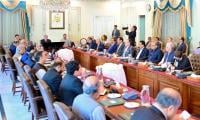
That is why the First Parliamentary Dialogue on Migration, held in the Senate on September 15, was timely. The dialogue brought migration into parliament not as a response to the latest crisis, but as a subject requiring a broader and more sustained national conversation. It widened the lens through which parliamentarians view migration, beyond remittances, irregular migration and the loss of life on dangerous journeys, towards the full landscape of migration governance and its implications for Pakistan’s future.
That conversation is important because Pakistan’s questions are no longer limited to how to respond when something goes wrong. They are questions of development policy: why six in ten emigrants continue to leave without recognised skills; why Pakistan’s prepared talent pool covers less than a tenth of identified potential demand; what workers pay to migrate; how effectively they are protected abroad; how climate and environmental pressures are shaping mobility; and whether the commitments of the 2026 policy are being implemented.
Pakistan is a country of origin, a transit hub and, in many contexts, a destination. Its migration story has routes and borders, planes and boats, opportunity and tragedy, displacement, and aspiration. Above all, it is human.
We do not need to discover migration. We need to understand it better.
The measure of success should not be how many Pakistanis leave, nor simply how much money they send home. It should be whether their journeys lead to safer work, better opportunities, stronger families, new skills, productive connections and greater national capacity.
Pakistan’s migration story is already being written by millions of its people. The task before the state is to ensure that it is not merely a story of people leaving, but a story of people moving, adapting, contributing and, wherever possible, remaining connected to the country they carry with them.
Mio Sato was the chief of mission for the International Organisation for Migration in Pakistan until September 2026.
Rida Qazi is the adviser to the Senate chairman on Special Initiatives and the Project Development Unit (Senate of Pakistan).