There’s not much to celebrate in emergency rule and the dismissal of an elected provincial administration. Such extraordinary measures carry serious political and constitutional implications and should never be treated lightly. The proclamation of emergency and governor’s rule in Khyber Pakhtunkhwa under Articles 232 and 234 of the constitution is therefore a sombre development. The federal government has cited the worsening security situation, shortcomings in the provincial government’s counterterrorism efforts and the breakdown of talks between the two sides as reasons for its decision. Governor Faisal Karim Kundi will assume charge with the help of an 11-member advisory council for an initial six months. There will be legitimate concerns about the political and constitutional consequences of this decision, but the existence of constitutional provisions for emergency and governor’s rule cannot simply be wished away. At the same time, the availability of these provisions does not make their invocation unproblematic. This is hardly a good precedent for any civilian government and raises questions about the circumstances under which an elected provincial administration can be removed from power. Concerns over the possible suspension of fundamental rights in areas where an emergency is proclaimed are equally valid. What safeguards will be in place, how long will any restrictions last and who will ensure that extraordinary powers are not abused? The more pertinent question is whether the circumstances justify these measures and whether they will deliver what the government claims they are intended to achieve.
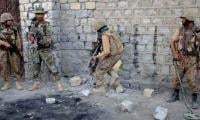
There can be little dispute that KP faces a serious security crisis, with the TTP continuing to threaten lives, livelihoods and the writ of the state. Terrorism in KP cannot be treated as an exclusively provincial concern when infiltration from Afghanistan raises questions of national defence and foreign policy, areas that fall within the federal government’s domain. No sustainable counterterrorism strategy can succeed without coordination between the two tiers of government. Political disagreements cannot take precedence over public safety, nor can provincial autonomy become an excuse for refusing cooperation on a national security challenge. Yet questions must also be asked about whether the federal government exhausted all avenues to secure the KP government’s cooperation on counterterrorism before resorting to such an extreme step. Was there really no way to reach an agreement? The timing is also worth examining. The PTI’s long march did not appear to be gaining much traction. Had the federal government not blinked first in this political contest, might the KP chief minister have been forced to reconsider his position within days? This is, of course, speculative, but it raises the question of whether the government moved too quickly towards an intervention with far-reaching constitutional consequences.
Having taken such an extraordinary and politically contentious step, the federal government must now deliver tangible results. Its immediate priorities must be to restore law and order, reclaim territories and areas that have fallen under TTP influence, clear them of militants and establish effective governance. The six-month arrangement must not become an open-ended exercise in political control, nor should it be used to settle scores with the PTI. Failure to improve security would make this decision difficult to defend and risk turning an already serious political crisis into a deeper constitutional one. The PTI, meanwhile, should rethink its political choices. There has been a recurring willingness in the party to place political confrontation above institutional continuity. Politics is not merely a contest to demonstrate popular support; it is also the exercise of responsibility towards those who have entrusted a party with power. The people of KP deserve security, functioning institutions and accountable government, not an endless cycle of confrontation between Peshawar and Islamabad. If emergency rule is to have any justification, it must be measured against these outcomes. Otherwise, what is being presented as a necessary intervention could become one of the most damaging decisions in the country’s political history.