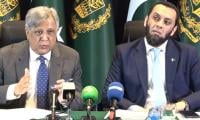
Sindh Chief Minister Syed Murad Ali Shah has directed the provincial school education department to ensure that all upgraded schools across the province are fully functional by April 2, 2027, with teachers, students, furniture and all necessary educational facilities available from the first day of academic activities.
He issued the directives while chairing a meeting of the school education department at the CM House on Friday. The meeting reviewed progress in the Sindh Secondary Education Improvement Project (SSEIP), the Select Schools Programme, ongoing admission campaign, appointment of teachers and proposals regarding the future involvement of education management organisations (EMOs) in the management of upgraded institutions.
The meeting was attended by Education Minister Syed Sardar Ali Shah, Special Assistant to the CM Syed Qasim Naveed, Chief Secretary Asif Haider Shah, Principal Secretary to the CM Agha Wasif, School Education Secretary Zahid Abbasi, Planning and Development Board Chairman Najam Shah, Public-Private Partnership Unit Director General Asad Zamin, SSEIP Project Director Rizwan Soomro and others.
The CM said the Sindh government’s objective was not merely to construct or upgrade schools, but to ensure that children were enrolled in those institutions and received quality education.
He directed the department to launch a vigorous province-wide admission campaign to bring out-of-school children and school dropouts back into the education system. He said the government wanted to provide quality education to children as close to their homes as possible.
Murad stressed that the development of educational infrastructure alone would not be sufficient unless schools were made fully operational. He directed the authorities to ensure that teachers, students and all required facilities were available in every newly upgraded school from the beginning of the academic session.
Sardar informed the meeting about the admission campaign and results of a nine-day pilot campaign conducted in five newly upgraded secondary schools in Thatta. According to the education minister, 702 students were enrolled in classes 6 to 10 during the pilot campaign between September 21 and 30. Of the total new admissions, 409 were girls, highlighting the focus placed on increasing girls’ participation in secondary education.
The campaign also succeeded in bringing 102 out-of-school and dropout children back into the education system. As part of the pilot exercise, community mobilisation teams visited 116 feeder schools and carried out an extensive public relations campaign to encourage parents to enrol their children in the upgraded schools.
The CM appreciated the encouraging results of the campaign and directed the education department to adopt the model across the province. He said special attention should be given to girls’ education and school dropouts.
The meeting was informed that a total of 1,133 schools across Sindh had been included under the SSEIP and Select Schools programmes. Of these, 838 schools were covered under SSEIP, while 295 were included in the Select Schools Programme.
The SSEIP project director briefed the meeting about the implementation schedule and said 552 schools were expected to be completed by December 2026. The target was to complete 801 schools by March 2027, while all 1,133 schools were planned to be completed by December 2027.
The chief minister, however, directed the authorities to ensure that schools scheduled for completion by March 2027 were ready in all respects by April 2, 2027. Murad directed the education department to formulate a transparent and sustainable system for the proposed EMO arrangements. He said the new administrative mechanism should be designed to improve educational outcomes and ensure accountability in the institutions.