The threat of Pakistan facing increasingly tough challenges in the immediate future is the proverbial ‘writing on the wall’.
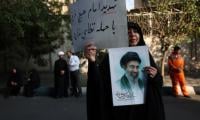
The increasing attacks by Yemen’s Houthis on Saudi Arabia have added another front to the Middle East conflict and the kingdom’s security challenges, which began with the US-Israeli attacks on Iran back in February.
Given US president Donald Trump’s unpredictable behaviour, seeking peace and dishing out threats in the same breath, the outcome of the ongoing conflict is impossible to predict.
With Pakistan sharing close security ties with Saudi Arabia, particularly after the Makkah accord, Islamabad has become exposed to joining the conflict sooner or later. Unless president Trump opts for a permanent ceasefire with Iran, the war will continue. Already, a global fallout has been witnessed in the form of international oil prices surging past $100 per barrel. Importers, including Pakistan, will inevitably feel a growing shock and, for the moment, the projections at the centre of the country’s budget for the ongoing financial year
have been upset.
The emerging scenario for a growing list of countries seems like a hike in inflation and lower economic growth. For Pakistan, the consequences of this deepening crisis bear close watching along with any necessary actions, particularly since Iran is a neighbouring country.
Aside from the fallout from a fast deteriorating global outlook, Pakistan’s also faces a host of domestic challenges, ranging from unresolved political issues to long ignored
economic pitfalls. Together, Pakistan’s failure to collectively solve three inter-related challenges will likely undermine the country’s outlook going forward.
On one front, there is the continuing political divide triggered after the February 2024 elections, which has caused wider and deeper political discord than witnessed before.
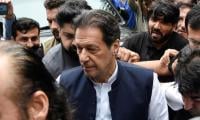
The opposition PTI has threatened to launch its next series of protests on September 27. Even if the party is forced to retreat by the federal and Punjab governments, the tumult at the centre of this storm will continue.
Unless some mechanism is found to address the controversy over the outcome of the last parliamentary elections and subsequent events, the discord will continue to undermine Pakistan’s journey. Actors beyond the PTI will also emerge to threaten Pakistan’s stability.
Then there is the country’s economic framework, which, regardless of the acknowledgement of Pakistan’s decision makers, remains surrounded by challenges on multiple fronts. On the face of it, Pakistan’s macro-economic numbers provide relative comfort compared to a few years ago, when the country was surrounded by warnings of a coming default on foreign debt repayments.
However, the overall framework remains anaemic, driven by a host of issues surrounding the main drivers of growth. The biggest challenge on this front remains the failure of a visible recovery across the agricultural sector, the consequences of which are increasingly visible in Pakistan’s increasing food insecurity.
In sharp contrast, the continuing push to devote the nation’s developmental resources to infrastructure projects, notably six lane motorways, has so far failed to catalyse a bold economic recovery. For the moment, it is essential to redirect resources to the uplift of the country’s agricultural economy to reduce food insecurity and contribute towards measures that will reinforce the battle against climate change.
If one has to devote finances on concrete-driven projects, these will be best spent on building dams across the country, helping ameliorate its growing shortage of water-storage facilities.
Finally, the future architecture of Pakistan will yield much better results through ensuring greater national unity. This is the exact opposite of what the recently launched discussion to build more provinces presents. If indeed this is carried through, there is a danger of igniting elements of disunity that may eventually weaken the country.
Pakistan is already a country that struggles to manage its vast linguistic and ethnic diversity. This reinforces centrifugal forces already determined to make their presence felt in region after region.
As war rages on Pakistan’s near horizon with the danger of harmful consequences, it is vital for the country to rise far above partisan lines and meet the challenges outlined above. Failure to do so will inevitably undermine the country’s already weakened outlook as its immediate neighbourhood becomes increasingly embroiled in growing conflicts.
The writer is an Islamabad-based journalist who writes on political and economic affairs. He can be reached at: [email protected]