The widening Middle East war is no longer a conflict whose consequences can be contained within the region. Attacks on vital energy infrastructure and threats to crucial maritime waterways are pushing the global economy towards a potentially devastating energy crisis. For countries such as Pakistan, already facing economic pressures, the stakes could hardly be higher. Pakistan has strongly condemned the drone attacks on the East-West oil pipeline in the Riyadh and Madina regions of Saudi Arabia, which damaged the pipeline and injured civilians. Saudi Arabia subsequently shut down the vital oil conduit, raising fears that further disruption could send energy prices even higher. Islamabad has reaffirmed its unwavering support for the kingdom’s sovereignty, territorial integrity, security and prosperity, and its solidarity with its leadership, government and people. It has also reiterated its commitment to efforts aimed at achieving lasting peace and stability in the region.
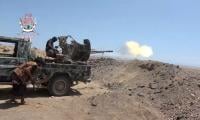
The threat is not limited to oil infrastructure. Yemen’s Houthis have captured another key coastal asset, Perim Island, at the mouth of the Red Sea. The island divides the Bab al-Mandab Strait, a gateway to one of the world’s most important shipping routes linking Asia and Europe. Although the Houthis claim that the strait is safe for all companies except for Saudi vessels, its capture raises serious concerns about the security of international shipping, particularly following the closure of the Strait of Hormuz. The possibility of both Hormuz and Bab al-Mandab being closed, or operating only partially, should alarm the entire world. If the disruption continues, the resulting energy crisis could reach catastrophic proportions within a month or two. Soaring oil and gas prices would feed into transportation, production and food costs, worsening inflation and putting enormous pressure on economies. Smaller countries would be particularly vulnerable, but even larger economies would struggle to absorb such an unprecedented energy shock.
This explains the urgency of Pakistan’s diplomatic efforts. The country’s top military and civilian leadership has been reaching out to all stakeholders, including the Iranian and American leadership. Recent visits by CDF-COAS Field Marshal Asim Munir and Interior Minister Mohsin Naqvi highlight how seriously Islamabad views the need to end the US-Iran conflict. Pakistan’s mediation efforts had helped secure a temporary lull in hostilities for several months, but fighting has resumed. US President Donald Trump’s statement that he believes the war with Iran could continue until after the US midterm elections in November, after which oil prices would fall, is deeply worrying. It effectively suggests that the world could face another two or three months of economic turbulence at a time when energy markets are already under severe strain. The international response must therefore move beyond statements of concern. Members of the 11-nation BRICS group, including China, Russia, Iran and India, have called for calm in the Middle East. Such calls need to be backed by sustained diplomatic efforts to end the conflict. Pakistan’s mediation efforts, alongside its support for Saudi Arabia as well as its close contacts with Iran, are commendable at a time when the regional security paradigm is changing rapidly. The Middle East and Gulf need a new security policy. The importance of the tripartite Makkah Defence Alliance cannot be overstated, and more such alliances may be necessary as regional instability grows. The cost of this war is already enormous. Allowing it to continue risks turning a regional conflict into a global economic catastrophe.