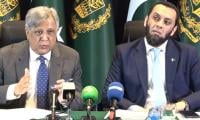
LAHORE: A two day leadership development programme for senior officials and decision-makers from the public and private sectors concluded at the Executive Development Institute (EDI) of the National School of Public Policy (NSPP), Lahore, on Thursday, with experts stressing the need for strategic thinking, emotional intelligence, innovation and technological awareness among present day leaders.
Titled “Leadership Development Programme: The Journey to the Next Level”, the programme was held on Sept 9 and 10 and was attended by 51 federal and provincial civil servants, private-sector executives and academics from across the country.
The programme sought to equip participants with contemporary concepts and practical insights into various dimensions of leadership, including team dynamics, leadership styles, emotional intelligence, motivation, diversity and innovation, with a particular emphasis on improving performance in public service.
Interactive learning, exchange of professional experiences and practical engagement formed a central part of the two-day programme.
Representatives of a wide range of federal and provincial institutions, private-sector organisations and educational institutions attended the event. They included officials from the National Assembly Secretariat, Pakistan Airports Authority (PAA), Pakistan Telecommunication Authority (PTA), Pakistan Engineering Council (PEC), Pakistan Institute of Management under the Ministry of Industries and Production, National Engineering Services Pakistan (NESPAK), Securities and Exchange Commission of Pakistan (SECP), National Power Parks Management Company (Pvt) Ltd, National Information Technology Board (NITB), Pakistan Agricultural Storage and Services Corporation (PASSCO), Intelligence Bureau offices in Islamabad and Faisalabad, Punjab Mass Transit Authority, Punjab Emergency Services Department, Punjab Capital Market Management and Development Company (PCMMDC), Kinnaird College for Women, Virtual University of Pakistan, Rawalpindi Women University, Punjab Education Foundation, Meezan Bank Ltd, Pak-Libya Holding Company Ltd, Universal Fund Islamabad, Pakistan Reinsurance Company Ltd and NIPP Lahore.
In his opening remarks, EDI Dean Dr Naveed Elahi underscored the significance of the programme, saying its primary objective was to strengthen leadership abilities by linking modern leadership concepts with practical experiences to promote excellence in public service.
He said team dynamics, different leadership styles, emotional intelligence, motivation, diversity and innovation had become essential components of effective leadership in the contemporary environment. Interaction among participants and the sharing of professional experiences, he added, further enhanced the learning process.
Dr Elahi also outlined the performance and strategic objectives of the EDI, saying the institute sought to provide comprehensive and multidimensional perspectives on emerging challenges through the careful selection of professional, academic and training experts.
He said the success of the institute’s previous training programmes, as well as participation from across the country, reflected its performance and growing institutional reputation.
On the first day, Dr Elahi delivered a detailed lecture titled “Know Thyself: Through an Integrated System of Leadership and Management”.
Former Balochistan chief secretary Shoaib Mir spoke on “Leadership and Innovation in the Public Sector: Best Practices in Pakistan and International Organisations”. He discussed national and international experiences and best practices relating to leadership and innovation.
Professor Dr Saad B Malik, a psychologist and mental health expert, delivered a lecture on “Emotional Intelligence in Effectively Dealing with Crisis or Emergency Situations”. He highlighted the importance of emotional balance, sound decision-making and effective responses during crises.
The final speaker on the first day was economist, former adviser to the prime minister and former State Bank of Pakistan governor Dr Ishrat Hussain, who spoke on “Effective Leadership and Strategic Management”.
The second day featured a three-hour, hands-on workshop by LUMS Professor Dr Jawad Syed on “The Essence of Leadership”. The session focused on the fundamental elements of leadership and their practical application.
Later, Akhuwat Foundation Chairman Dr Muhammad Amjad Saqib addressed the participants on “Spontaneous Leadership through Vision, Integrity and Sacrifice”, highlighting vision, character, integrity and a spirit of sacrifice as essential qualities for effective leadership.
In another key session, former LUMS vice chancellor Professor Dr Sohail Naqvi spoke on “Artificial Intelligence and Emerging Technologies for Leaders”. He briefed participants on the potential applications of artificial intelligence and other emerging technologies for leaders, changing management requirements and the implications of technological transformation for future leadership.
Addressing the concluding session, Dr Elahi thanked the participants for their active interest and enthusiastic participation and appreciated the valuable insights and experiences shared during the two-day programme.
He urged participants to build inclusive and effective teams in their respective organisations and to lead with integrity, responsibility and commitment in order to contribute to the country’s development.
Certificates of participation were presented to the participants at the conclusion of the programme in recognition of their attendance and commitment to learning.