Fifteen years ago, I wrote an op-ed in another newspaper warning that the demand for new provinces would break Pakistan (‘New provinces will break Pakistan’, August 17, 2011).
That was August 2011. The Q League, facing wipeout at the polls, had tabled a Seraiki province resolution in the Punjab Assembly, and the PPP had discovered a passion for dividing Punjab. I called the campaign what I believed it was: the "reckless desperation of a morally bankrupt political leadership". Two years later, its sponsors were voted out and the demand quietly died with them. Today no one even knows if the PML-Q even exists.
I wrote then in anger. I write now in apprehension, because the demand is back, and this time from a quarter that worries me far more.
Some history first. One Unit, imposed in 1955, showed us what happens when boundaries are redrawn by decree: fifteen years of resentment, undone only in 1970, and even then Bahawalpur was folded into Punjab instead of restored. That grievance is alive today. In 2010, blood was spilled in Hazara over a mere change of name from NWFP to Khyber Pakhtunkhwa.
The 2011-2012 push for dividing Punjab produced rival assembly resolutions, a parliamentary commission, and nothing else. It died with the government behind it. In 2018, a disgruntled PML-N faction led by Khusro Bakhtiar manufactured the demand for a South Punjab province. The Junoobi Punjab Sooba Mahaz merged into the PTI fold on the promise that the PTI would deliver on the South Punjab Province. It created only a sub-secretariat in Multan, whose powers the Buzdar government withdrew within a year. The script is so painfully obvious. Disgruntled groups demand new provinces in opposition and forget them in power.
Yet through every cycle, one thing held firm. The demand came from a select few politicians disparaged as electables. However, Article 239(4), which requires two-thirds majorities in both houses and in the affected provincial assembly, stood in the way of adventurism.
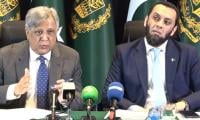
So, what are we to make of 2026, when the proposal for 12 – or is it 32? – provinces comes not from a desperate party but from the interior minister, and gathers momentum in forums far from parliament? The politicians, for once, are mostly the ones resisting. The resistance in Sindh is so deep that no party outside Karachi can afford to even consider it. Men who will never face the voters of the units they propose are seeking to redraw the map.
In 2011, my fear was that reckless politicians would abuse the constitutional process. Today, my fear is that the process itself will be treated as an obstacle to be worked around. That is more dangerous. A province created by consensus can be governed. A province created by decree will create deeper fissures. One Unit is proof enough.
I am not alone in this apprehension. Dr Ishrat Husain served as deputy secretary of the committee that dismantled One Unit, and he recalls that the reorganisation took years before ordinary administration worked again. Imagine, he asks in a recent op-ed in the Dawn, repeating that exercise 32 times over, just as fiscal consolidation finally takes hold. He advises that Pakistan should "avoid experiments in political and economic fragmentation”. He is right. Every new province means a legislature, a secretariat, a high court – and one more claimant at an NFC table that has not produced an award since 2010.
The erudite Farooq Tirmizi of Profit makes what I consider the deeper point. The average Pakistani voter now lives in a city and wants decent public services, not clan representation. Pakistan, he writes, "needs a stronger mayor of Faisalabad", not a weaker chief minister of Punjab. Cut Punjab into four provinces and the citizen of Faisalabad gets four smaller versions of the same distant setup. She still does not get a working municipality.
The system’s failure to deliver is not imagined – and Karachi is its poster child. But the remedy is to fix the grievance, not to multiply provinces. Article 140A already commands devolution to local governments. What it lacks is teeth: guaranteed election cycles, protected funding, a bar on suspending mayors the moment they begin to matter. Writing these guarantees into the constitution needs the same two-thirds majorities as new provinces, yet disturbs no boundary and stirs no ethnic question.
New provinces imposed from above will not break Pakistan in a season. They will do something slower. They will teach every region that maps are settled by proximity to power, not by the constitution. Pakistan does not need a new map. It needs the old constitution, honoured this time all the way down to the union council.
The writer is an advocate of the Supreme Court.