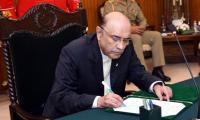
The debate over creating new provinces and administrative units in Pakistan is still monopolising politics, with President Asif Ali Zardari reportedly cutting short his stay in London to return to Pakistan amid the prevailing political situation. What began with Interior Minister Mohsin Naqvi gained momentum after Planning Minister Ahsan Iqbal proposed dividing Pakistan into 12-15 provinces and called for a national political dialogue on restructuring its administrative system. Reports also suggest that powerful quarters favour restructuring the existing setup through additional provinces or administrative units. Yet the matter has not so far been formally discussed in the federal cabinet. That gap between what is being publicly debated and what has formally reached political institutions should concern us. Administrative restructuring on this scale cannot be treated as political messaging or a decision announced after the fact. The strongest resistance has come from Sindh. The Sindh Assembly has opposed creating new provinces or administrative units in the province, while PPP leaders have strongly resisted any move that could divide Sindh. PTI Chairman Barrister Gohar Khan has also backed the PPP, warning that dividing Sindh without the consent of its people would weaken the federation.
Given the country’s existing political polarisation. Redrawing provincial boundaries without political and popular consensus risks turning an administrative question into an existential political confrontation. Some observers believe new administrative units will happen sooner or later. Others believe the debate is currently about generating political and institutional consensus rather than deciding the precise number or boundaries The essential is that discussing whether Pakistan’s administrative structure needs reform is one thing but then deciding how many provinces there should be, and where their boundaries should lie, is another. Reports that a high-level committee has presented Prime Minister Shehbaz Sharif with a draft proposal for a 27-member elected assembly for the Islamabad Capital Territory, with a chief executive and 27 administrative departments, add another dimension. If such proposals form part of a broader restructuring exercise, political parties need to engage openly rather than allowing rumours to shape the national conversation. There is already speculation over whether the plan, if it exists, would be implemented before the next elections or afterwards. There are also rumours that it could involve a 28th Amendment or a referendum. If a referendum produced a result favouring new administrative units or provinces, would all provincial assemblies respect it and proceed accordingly? And what happens if they don’t?
For now, these remain speculations. But all this is heading to a rather tense fall since its quite clear that not all parties or provinces are on board. The Sindh Assembly has made its position clear, while the Punjab Assembly has remained largely quiet. Neither PML-N supremo Mian Nawaz Sharif nor Chief Minister Punjab Maryam Nawaz has publicly stated a position. Some interpret their silence as opposition. Others believe Prime Minister Shehbaz is not against more units or provinces, while the Punjab government may not be too keen on this arrangement. The argument that they may ultimately be unable to resist because they are in power after being backed by powerful quarters is also why this process needs transparency and consensus. Pakistan does need devolution. But the first step is empowered local government. Political parties should take ownership of Article 140-A, which they have repeatedly promised to implement, and deliver on that commitment. More provinces may or may not improve governance; that assumption needs to be tested. Creating them without consensus, however, could deepen political divisions. Constitutional restructuring cannot be rushed or imposed. We need more democracy, not less. And before drawing new lines on the map, political parties should strengthen the democratic structures already promised to citizens.