As Pakistan prepares its federal budget for FY2026–27, the country’s higher education sector stands at a critical juncture.
Public universities are grappling with mounting financial pressures driven by inflation, rising operational costs and shrinking development allocations. Without a substantial increase in funding, maintaining educational quality, advancing research and fostering innovation may become increasingly difficult.
Over the past several years, Higher Education Institutions (HEIs) have faced growing challenges in meeting their financial obligations. Expenditures on salaries, pensions, utility bills, transportation, maintenance and administrative operations have risen sharply. At the same time, universities are expected to invest in research, laboratory modernisation, digital infrastructure and student support services to remain competitive in an increasingly knowledge-based global economy.
The financial constraints facing universities are closely linked to fluctuations in government funding. Although allocations for higher education increased during certain periods, the real value of these funds has been significantly eroded by inflation. In recent years, Pakistan’s broader economic difficulties, compounded by the lingering effects of the Covid-19 pandemic, have further strained public finances and limited investment in higher education. As a result, many universities have struggled to sustain academic excellence and research productivity.
Development funding has been particularly affected. Public universities rely heavily on allocations under the Public Sector Development Programme (PSDP) to improve infrastructure, establish research facilities and introduce modern technologies. A few years ago, development allocations for higher education exceeded Rs60 billion, supporting a range of ongoing and new projects. However, economic pressures have steadily reduced these allocations. In FY2025–26, approximately Rs39.5 billion was allocated for higher education development projects, significantly constraining the sector’s capacity for expansion and modernisation.
These reductions have direct implications for national development. PSDP-funded projects support the construction of academic buildings, smart classrooms, research laboratories and technology-driven learning environments. They also facilitate innovation in key sectors such as agriculture, engineering, information technology and scientific research. Provincial governments similarly support public universities through Annual Development Programmes (ADPs), but these resources have not kept pace with the growing number of institutions and increasing operational demands.
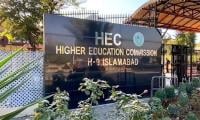
The Higher Education Commission (HEC) remains central to the development of Pakistan’s knowledge economy. Adequate and predictable funding is essential not only for maintaining existing institutions but also for strengthening research capacity, promoting innovation and enhancing international competitiveness. Public universities play a vital role in producing skilled graduates, generating knowledge and contributing to evidence-based policymaking.
Encouragingly, recent policy initiatives have emphasised digital learning, artificial intelligence, entrepreneurship, industry-academia collaboration and merit-based scholarships. Reforms introduced by the HEC and provincial authorities to improve governance, quality assurance and international engagement are also steps in the right direction. However, these ambitions cannot be realised without adequate financial backing.
Pakistan continues to allocate less than two per cent of its GDP to education, considerably below the levels observed in many developing and developed countries, where spending often ranges between four and six per cent of GDP. This persistent underinvestment limits the country’s ability to build a skilled workforce capable of driving economic transformation and technological advancement.
Investing in higher education should be viewed not as a fiscal burden but as a strategic investment in national development. Countries that have successfully transitioned to knowledge-based economies have consistently prioritised higher education, research and innovation as pillars of growth. Pakistan cannot afford to lag behind in this global competition.
As the government finalises the FY2026–27 budget, there is an urgent need to reverse the trend of declining support for higher education. Increased recurring grants are necessary to help universities meet operational requirements, while enhanced development allocations are essential for infrastructure expansion, research funding and technological modernisation.
The HEC and provincial higher education departments are expected to advocate for greater operational and development support, the restoration of r esearch grants, the expansion of scholarship programmes and increased allocations under the PSDP and ADP frameworks. Policymakers must recognise that universities are not merely educational institutions; they are engines of innovation, economic growth and social progress.
A meaningful increase in higher education funding in FY2026–27 would show a commitment to Pakistan’s future by empowering universities to produce the skilled professionals, researchers and innovators needed to address the country’s development challenges and compete effectively in the global economy.
The writer is affiliated with PMAS-Arid Agriculture University, Rawalpindi and serves as assistant registrar (planning). The views expressed are his own.