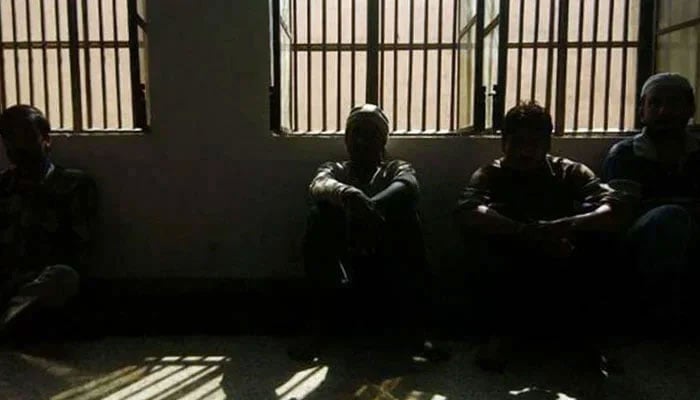
ISLAMABAD: The Federal Investigation Agency’s Anti-Corruption Circle has arrested two key suspects accused of recruiting vulnerable donors for unlawful kidney transplants.
The arrest of the two suspected recruiters is part of the investigating agency’s ongoing crackdown on human organ trafficking rings.
According to an FIA spokesperson, the agency apprehended the network’s principal agent, Shabbir Hussain, from Jalalpur Bhattian in Hafizabad district. Hussain was a wanted suspect in an active criminal case registered earlier this year.
In a coordinated operation, his close associate and alleged sub-agent, Ghulam Abbas, was arrested from Mian Channu in Khanewal district.
According to the investigators, the two suspects actively targeted brick kiln workers, daily wage laborers, and other economically disadvantaged individuals across Punjab and Islamabad, persuading them to sell their kidneys in exchange for nominal sums of money.
The latest arrests follow the earlier detention of Dr. Nadir and members of his medical team in Islamabad, which initiated the formal criminal case.
Investigators claim that the evidence collected so far suggests Dr. Nadir may have performed approximately 187 illegal kidney transplant procedures. The probe has revealed a massive disparity in the financial mechanics of the ring, with wealthy recipients allegedly charged between Rs6 million and Rs10 million per transplant, while the impoverished donors received only a tiny fraction of the funds. The remaining profits were reportedly distributed among the network’s facilitators.
Officials disclosed that Hussain’s sophisticated operation relied on a web of sub-agents to source donors, with evidence indicating he personally arranged more than 50 donors for Dr. Nadir’s procedures.
Furthermore, the investigation has uncovered that approvals from the Human Organ Transplant Authority (HOTA) were systematically bypassed or obtained through forged and fraudulent documentation, entirely lacking the legally required authorisation from the official evaluation committee.
The FIA is currently auditing these documents to identify any insiders or accomplices involved in the administrative fraud.
The scope of the illicit operation extends well beyond local borders. Investigators disclose that the network allegedly facilitated black-market kidney transplants for foreign nationals, including patients from Afghanistan, China, and Saudi Arabia.
The authorities are now conducting extensive forensic and legal analyses of international patient records, bank accounts, and financial transactions to map out the global footprint of the syndicate.
According to the FIA, Hussain is a habitual offender who had previously been named in multiple organ trafficking cases across different agency circles but has consistently managed to evade law enforcement.
Officials described his arrest as a significant milestone in Pakistan’s national campaign against the illegal trade of human organs.
The agency has expressed confidence that the interrogation of the custody suspects will expose additional facilitators, financiers, and medical professionals linked to the syndicate.