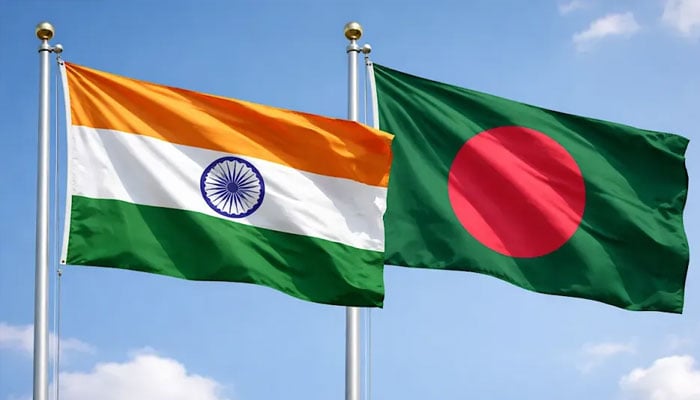
ISLAMABAD: After Pakistan, India has entangled on water dispute with Bangladesh on the question of river water distribution.
Diplomatic sources told The News/Jang here Sunday the two countries had failed in developing any understanding in the wake of Ganges Water Sharing Treaty (GWST), about to expire this year after completing its 30 years duration in a couple of weeks.
The two countries have reached a critical juncture in their water-sharing relationship as the 1996 GWST nears expiry this year amid rising climate-driven floods and drought risks across South Asia.
The sources pointed out that at the heart of the issue are shared rivers that sustain agriculture, ecology and livelihoods for millions in Bangladesh, while also serving as a persistent source of geopolitical concern between the two neighbours.
The two countries share 54 trans-boundary rivers, forming part of the Ganges–Brahmaputra–Meghna basin. For downstream Bangladesh, this geography creates deep dependence on upstream flows, making trans-boundary water governance a key strategic concern.
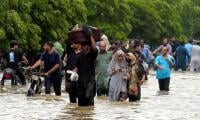
For decades, concerns in Bangladesh have focused on upstream dams, barrages and diversion projects in India. During the dry season, reduced river flow disrupts irrigation, agriculture, fisheries and river navigation. In the monsoon, sudden surges of water have often intensified downstream flooding.
The Farakka Barrage, commissioned in 1975 in India’s West Bengal, remains one of the most contentious symbols of the dispute. Built to divert water towards the Hooghly River to improve navigability of Kolkata Port, it has long been blamed in Bangladesh for reduced dry-season flow in the Ganges, increased salinity intrusion and ecological stress in the southwest region.
Pakistan never allowed India till 1971 to construct the diversion. India succeeded in browbeating Bangladesh and forced Dhaka to ink an agreement contrary to its interests. The sources reminded that although Bangladesh and India signed the 30-year GWST in 1996, the agreement is set to expire this year, making renegotiation a pressing diplomatic priority.