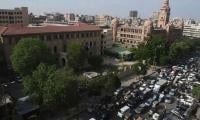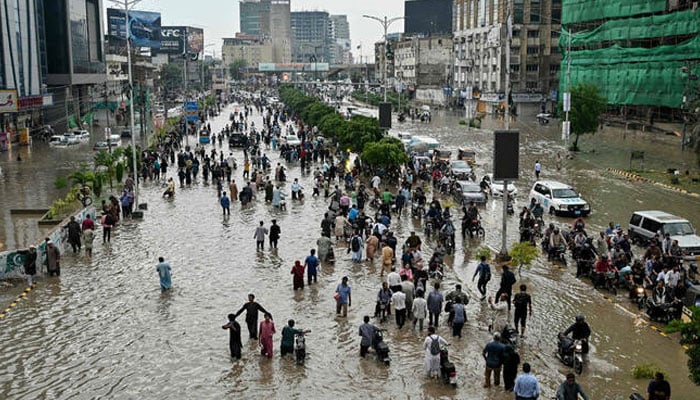
Unchecked urbanisation, a worsening housing crisis, shrinking green spaces and mounting environmental degradation have emerged as some of the gravest threats facing Pakistan, with climate experts warning that the country’s major cities are rapidly becoming more vulnerable to climate-related disasters due to years of poor planning and weak urban governance.
These concerns were voiced by leading environmentalists, climate change specialists and senior academics during a webinar organised by the Federation of Pakistan Chambers of Commerce & Industry Central Standing Committee on Sustainable Development Goals (SDGs) to mark World Environment Day.
The speakers warned that the explosive population growth of major urban centres, including Karachi, Lahore and Islamabad, coupled with a severe shortage of affordable and legally sanctioned housing plans, has created an environmental and social emergency.
They stressed that thousands of families from low- and middle-income groups are being pushed into informal settlements and slums that lack legal protection, civic amenities and basic municipal services.
Delivering the keynote address, Dr Muhammad Irfan Khan, a senior environmental sciences academic formerly associated with the International Islamic University Islamabad, described rapid urbanisation and unchecked expansion of cities as key drivers of Pakistan’s growing climate vulnerability.
He noted that nearly 68 per cent of the global population now lives in urban areas, which accounts for approximately 70 per cent of worldwide carbon dioxide emissions. According to him, Pakistan’s cities are increasingly struggling to absorb their rapidly expanding populations, resulting in the spread of poorly planned settlements and growing environmental stress.
Dr Khan explained that urban residents had constituted only 17 per cent of Pakistan’s population in 1950, while the proportion has now risen to 40-43 per cent. He warned that the urban population is expected to reach 50 per cent within the next quarter century, a demographic shift that existing urban infrastructure is ill-equipped to handle.
He observed that climate-induced migration following floods and other natural disasters has further intensified pressure on cities already grappling with inadequate housing and overstretched civic services. He also expressed concern over the rapid conversion of fertile agricultural land surrounding major cities into expensive gated housing developments, warning that such expansion is undermining both food security and environmental sustainability.
The senior environmental academic criticised the proliferation of housing schemes on city outskirts, noting that many projects are launched without properly sanctioned land, leaving investors vulnerable and contributing to unregulated urban sprawl.
Turning to transport-related pollution, Dr Khan said that mass transit systems introduced in Pakistan’s major cities remain insufficient to serve vast urban populations. Consequently, harmful vehicular emissions continue to be one of the leading contributors to deteriorating air quality and environmental pollution.
He further lamented the absence of modern waste management systems in many urban centres, saying that inadequate policies for plastic recycling and the lack of waste-to-energy initiatives have allowed municipal waste to become a major source of environmental degradation and a growing public health hazard.
Calling for urgent reforms, Dr Khan stressed the need for a comprehensive overhaul of urban governance and municipal management structures. He said Pakistan must immediately address critical challenges such as the housing shortage, the disappearance of green cover, encroachments upon parks and public amenity land, the discharging of untreated industrial effluents, and poorly planned infrastructure development.
Speaking on the occasion, climate change expert Aftab Ahmed Khan identified the relentless loss of urban forests, green belts and open spaces as a major factor behind rising temperatures in cities during summer months.
He urged residents to actively participate in tree planting campaigns and environmental conservation efforts to help cities withstand increasingly frequent heatwaves and extreme weather events.
He also called upon residents to remain vigilant in protecting neighbourhood parks and public spaces from encroachment, warning that rapidly shrinking amenity land is under constant threat from vested interests.
Highlighting the growing water crisis in urban areas, he advocated community-based rainwater harvesting initiatives to capture monsoon rainfall and replenish rapidly depleting underground water reserves.
He also encouraged university students across all academic disciplines to undertake climate change-related research and assignments as part of their studies, arguing that greater awareness among young people is essential for building climate-resilient and sustainable cities in the future.
Meanwhile, SDGs education expert Sher Shah Khan briefed the participants on the wide range of international fellowship and scholarship opportunities available in climate change and environmental studies through leading universities in developed countries, urging students to pursue specialised education in fields critical to addressing the global climate crisis.
The webinar concluded with a strong call for policymakers, urban planners, environmental regulators and civic authorities to treat unplanned urbanisation as a national environmental emergency.
The participants stressed that unless decisive action is taken to provide affordable housing, protect green spaces, modernise waste management systems and strengthen urban governance, Pakistan’s cities can face an increasingly severe combination of environmental degradation, climate vulnerability and declining quality of life.