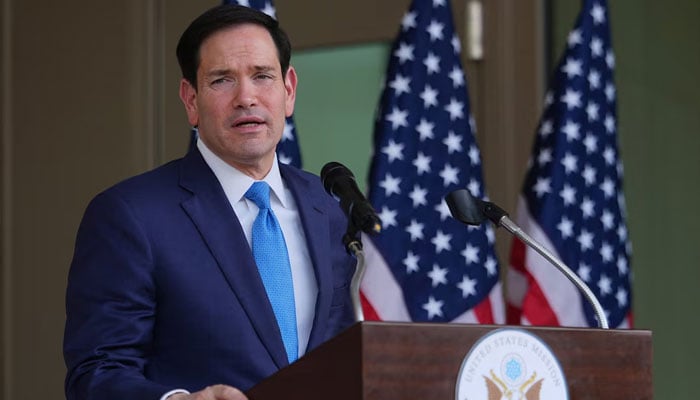
NEW DELHI: US Secretary of State Marco Rubio discussed trade and energy with Indian Prime Minister Narendra Modi on Saturday on a visit aimed at shoring up relations battered by Washington’s tariffs and engagement with New Delhi’s rivals Pakistan and China.
Rubio - who said before the trip the U.S. wanted to sell India energy - pressed his case and told Modi that “U.S. energy products have the potential to diversify India’s energy supply,” according to a U.S. summary of the meeting.
Rubio “emphasized that the United States will not let Iran hold the global energy market hostage,” his office added. The energy crisis sparked by the Iran war has set back U.S. efforts to wean India off Russian oil.
U.S. presidents, including Trump in his first term, have long tried to pull historically non-aligned India closer as a counterweight to Russian and rising Chinese influence in the Indo-Pacific. Those efforts appeared to take a blow last year when Trump slapped some of the highest U.S. tariffs on India.
“India is at the cornerstone of how the United States approaches the Indo-Pacific, and not just through the Quad, but bilaterally,” Rubio told reporters after meeting Modi, referring to a diplomatic partnership between the United States, Australia, India, and Japan.
Many of those were rolled back in an interim agreement, but the two countries are yet to finalise a comprehensive agreement on trade.
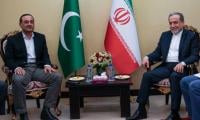
The U.S. has meanwhile grown closer to India’s rival and neighbour Pakistan, with Islamabad emerging as a key interlocutor in efforts to end the Iran war, a new irritant to the U.S.-India relationship.
While Modi did not specifically mention Iran in Saturday’s meeting, he reiterated India’s support for peace efforts and called for peaceful resolution of conflict through dialogue and diplomacy, the Indian government said in a statement.
Rubio also extended an invite on behalf of U.S. President Donald Trump for Modi to visit the White House in the near future, U.S. Ambassador to India Sergio Gor said.
For India, Trump’s visit this month to Beijing amplified concerns about U.S. ties, said Basant Sanghera, a former State Department South Asia policy expert now with The Asia Group consultancy.
Sanghera said Trump’s approach had “created a perfect storm of anxiety” in India about the U.S. relationship, “but ties have stabilized and both sides are trying to build momentum in the areas that there is convergence.”
The Biden administration lavished attention on India as a vital strategic partner and feted Modi during a 2023 state visit. Trump also welcomed the prime minister to the White House early in his second term before imposing steep tariffs that threw ties off course.
On Saturday, Rubio “shared his appreciation for India hosting the upcoming Quad Foreign Ministers’ Meeting,” his office said in a statement which did not refer to India’s entreaties for Trump to take part.