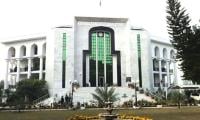
Islamabad was imagined as a city of order, calm and dignity when it was formally developed in the 1960s to replace Karachi as Pakistan’s capital. It was conceptualised as a symbol of unity in an ethnically and geographically divided country, flag bearer of modernity, and the seat of the central government.
Designed against the backdrop of the Margalla Hills, it was meant to be different from the crowded and chaotic cities of the country. Wide roads, green belts, organised sectors and government buildings gave it the image of a modern administrative capital. Over the decades, however, Islamabad has transformed from a sleepy bureaucratic town with deserted roads after 8 pm, into one of Pakistan’s busiest urban centres, carrying within it a mixture of nostalgia, migration, political tension and an evolving urban culture.
Older residents still remember a time when Islamabad was almost too quiet. Markets would close early, there were few restaurants, and evenings belonged to silence rather than traffic. Families knew one another within sectors, children cycled freely on empty roads, and the city largely revolved around government offices. Many of the first residents were civil servants who had moved from Karachi, Lahore or Peshawar. For them, Islamabad initially felt isolated and unfinished.
“The dirty ‘nullahs’ of these days were the streams when we started living in Islamabad around 50 years ago. I remember that as children, our favourite pastime was catching fish on these streams that we can’t come close these days filth and foul smell,” remembered Saeed Ahmed, a resident of sector F-6.
“I remember that my father was not happy of the plot that I bought in sector F-6/1 at that time, with Rs 5000. There was no Jinnah Avenue or Blue Area at that time. My children used to play cricket at the place where we see the Jinnah Avenue now,” said Jamil Farooq, another resident of the same area.
One of the strongest memories residents associate with old Islamabad is Eid. The city would practically empty out during religious holidays because most residents originally belonged to other parts of Pakistan. As soon as offices closed, people travelled to their native towns and villages. Streets became deserted, and even major markets looked abandoned. Many residents who grew up in the capital say the silence of Eid became part of Islamabad’s identity.
Even today, the city partially follows that tradition, though far less than before. Discussions among residents on social media frequently describe Islamabad during Eid as “peacefully empty,” with many recalling how the city once felt entirely abandoned during holidays because people returned to ancestral homes. “Now with third or fourth generation living in Islamabad, the roads are not that empty as they used to be a decade ago,” shared Jamil.
For many longtime Islamabad residents, the calmness was once the city’s biggest attraction. “You could drive from one end of the city to the other without traffic lights stopping you every few minutes,” says retired government employee Khalid Mahmood, who moved to Islamabad with his family in late 1980s. “People knew their neighbours, children played outside till late evening, and the city had a softness that is difficult to explain now.”
That softness has gradually given way to a more crowded and commercially active Islamabad. The city expanded rapidly after the 2000s as migration increased from other urban centres. New housing societies emerged around the capital, universities attracted students from across Pakistan, and the service economy grew. What was once considered a quiet administrative town slowly became a centre for food culture, tourism and urban lifestyles.
Perhaps nothing reflects this transformation more than Islamabad’s coffee and café culture. In older days, tea stalls and small dhabas dominated public spaces. Today, specialty coffee shops, rooftop cafés and late-night eateries define much of the city’s social life. Young professionals, students and freelancers spend hours in cafés working on laptops or socialising over coffee. These coffee houses have become symbols of a changing urban identity where café culture increasingly mirrors global metropolitan trends.
At the same time, Islamabad has developed its own distinct roadside tea culture famous as Quetta cafés. Outlets such as Quetta Tea & Tea, Quetta Karachi Café or even Singapore Quetta Cafe etc. remain crowded all day, attracting everyone from students to office workers and travellers. The “Quetta hotel” phenomenon has become deeply associated with Islamabad’s identity, especially among young people looking for affordable gatherings over chai, paratha and cigarettes.
Urban sociologist Farzana Ahmed believes this shift reflects how Islamabad has become more socially open than before. “Earlier, the city lacked public social spaces beyond parks and clubs,” she says. “Now cafés function as community spaces where people work, debate politics, meet friends and even spend entire evenings.”
Islamabad’s relationship with nature, however, remains one of its defining characteristics. The Margalla Hills continue to shape the city’s identity and lifestyle. Hiking trails have become more than recreational spots; they are now part of Islamabad’s everyday culture. Early mornings on Trail 3 Start Point or Trail 5 are filled with joggers, hikers, families and fitness groups. Many residents describe hiking as one of the reasons they cannot imagine living elsewhere in Pakistan.
The popularity of viewpoints such as View Point Trail 3 Margalla Hills National Park and hiking junctions like Trail 5 Junction Point (Chandni Chowk) reflects how Islamabad’s residents increasingly see outdoor activity as part of urban life. Unlike many Pakistani cities where public recreational spaces are shrinking, Islamabad still offers direct access to hills, parks and walking tracks.
Yet Islamabad’s development has also brought frustrations. Traffic congestion, rising rents and commercialisation have altered the city’s original character. Longtime residents complain that sectors once known for greenery are now overcrowded with plazas and commercial activity. Researchers believe that what was planned to be ‘a city of the future’ by its architect C. A. Doxiadis and named ‘Islamabad the Beautiful’ by its residents is fast turning into another case of urban decay.
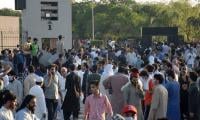
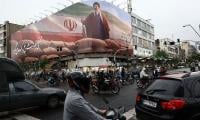
Some expressed their annoyance over the fact that the calm atmosphere, associated with Islamabad’s overall image, has been increasingly disrupted by political unrest and security restrictions. Analysts increasingly describe Islamabad as both Pakistan’s capital and its political battlefield.
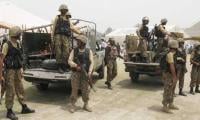
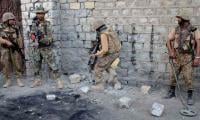
In recent weeks, road closures linked to anticipated Iran-US peace talks highlighted how quickly life in Islamabad can come to a standstill. Authorities sealed off major routes and tightened security across the Red Zone and surrounding commercial areas, creating severe disruptions for commuters and businesses.
For many residents, such closures have become routine. “Every protest, every diplomatic visit, every political march affects ordinary people,” says software engineer Ayesha Khan, who works in Blue Area. “You leave home not knowing whether roads will be open or whether containers will block your route.”
This has created a strange contradiction within Islamabad. On one hand, the city markets itself as modern, peaceful and scenic. On the other, it repeatedly becomes paralysed due to politics and security concerns. Residents living near the Red Zone often describe feeling trapped whenever protests or official events take place.
Still, despite criticism, Islamabad continues to attract people from all over Pakistan. Islamabad today is no longer merely a planned capital built for government officials. It has evolved into a living, restless city shaped by migration, politics, commerce and changing lifestyles. Yet beneath the traffic, protests and expanding skyline, residents still hold onto fragments of the old Islamabad, the city of quiet roads, winter fog, evening drives and peaceful Eid mornings.
-The writer is a staff member and is based in Islamabad
CAPTION
Islamabad’s relationship with nature, however, remains one of its defining characteristics. The Margalla Hills continue to shape the city’s identity and lifestyle.