I knew when I joined The News before its launch 35 years ago that there will be risks and rewards in the journey I was about to embark upon. And there were many. The rewards of being part of an exciting new venture in Pakistani journalism were clear to me and they became evident when the first copy of the paper rolled off the printing press. Risks I had to navigate not long after becoming editor when I was charged with sedition by the then government and served with warrants for my arrest.
Life as a Pakistani journalist has its hazards, then, as well as now. Yet those of us who chose this profession knew the risks but that didn’t make us change course or kowtow to the authorities. Our commitment to pursue and uphold the truth and inform our readers of the facts was unwavering even in the most challenging conditions. I had started my career in journalism with The Muslim, the only paper striving to be independent when the country was under military rule and the press under censorship. When I became its editor, I learnt how to write and publish ‘between the lines’ to stay in print but not cave in to the pressure that was constantly mounted on us. At times we would run a blank page in the paper as a protest to demonstrate we had been prevented from publishing what the regime didn’t want us to. But our effort to push the boundaries in defence of free speech was unrelenting.
It was with this experience that I joined The News. Democracy had been restored to the country and an elected government was in place. But that didn’t mean an end to official pressure and efforts to curb and control the media. The editor-in-chief Mir Shakil-ur-Rahman had assured me we would together confront challenges but also seize opportunities that had opened up with the advent of a more open era and of course the induction of modern technology in the media business. He had convinced me to join the paper, the newest venture then of the largest media group in the country, and one that aimed to break new ground in Pakistani journalism not just technologically but in content and commitment to the values integral to a free and independent media.
For all my previous experience this threw me into uncharted territory. Being part of a process of launching a new product, a new publication, was quite different from having worked in an established newspaper. Involvement from the very inception of The News meant an opportunity to shape the paper in so many ways–from the way it looked to its identity, the quality of its reportage and its editorial content and stance.
As editor of the Islamabad edition, I was also given the responsibility for the editorial and op-ed pages. This meant putting in place a system for editorial-writing, consultation with the other centres, commissioning articles and a process for selecting letters to the editor. This entailed building consensus with editors of the Karachi and Lahore editions and evolving agreed approaches to the paper’s opinion pages.
Fortunately, our team gelled well. Working with distinguished editors like Ghazi Salahuddin, Imran Aslam and Hussain Naqi made my job much easier and I learnt much from all of them.
Each brought extraordinary energy and creativity to our collective task of assembling the ‘dummies’ of the paper—the mock-up versions prepared before finalisation.
The days leading to the inaugural issues of the paper were perhaps the most anxious of my journalistic career–but also the most exciting. When the first copy rolled off the printing press on February 11, 1991, it was greeted by loud cheers and celebration at our office in Rawalpindi. We were delighted with what we saw but unsure how readers would respond and how the market would react.
Those early, exhilarating days were full of hope and excitement. Learning from mistakes we made–and there were many along the way–was an edifying experience. We set up a daily system of identifying errors and holding people to account. It didn’t make the editor popular but had to be done. The editor too was held to account by the editor-in-chief! As The News established itself and its readership grew so did the noise in the office and visitors, some curious, some irate others hoping their contributions could be published in our opinion pages.
There were many stressful moments in dealing with government pressures. The hazards of journalism in Pakistan and being a newspaper editor were brought home to me one day when, as editor, I was served with a notice of sedition from the authorities. I was required to present myself in an anti-terrorism court to defend myself of the charge of publishing seditious material. Yes, I was supposed to appear before an anti-terrorism court! The lawyer who I consulted advised me that we should go to the High Court to get a stay order on this. A warrant of arrest was served on me by officials who had walked into my office. But before it could be carried out, the High Court granted a stay order that stopped the government from proceeding with the case against me. That however was a temporary reprieve.
The sedition case led to a public outcry and even the Parliament proceedings came to a halt in protest. This political backlash eventually forced the government to withdraw the case. But before this happened, I and my colleagues witnessed some extraordinary scenes and spectacles–of police barricades outside our building to prevent newsprint from reaching our offices, threats to the owner and publisher, offensive anonymous phone calls to me and suspension of official advertising to the paper. They were all part of coercive efforts to stop us from performing our professional duty–to subject governance and the country’s rulers to critical scrutiny.
I learnt to take this in my stride even if my family didn’t quite see it the same way. My parents worried about me and ensured that I did not go out alone. One day my son Faisal, returning home from school, asked if all editors were provided with the ‘security and escort detail’ always parked outside our house. He was referring to cars that were invariably positioned outside our residence with odd-looking people sitting inside and usually hidden behind a cloud of cigarette smoke. They would often tail my car wherever I went to harass me. It took me a while to explain to Faisal that this was not a privileged perk of the job, but a professional hazard, as the vehicles outside belonged to intelligence agencies and the chain smokers were spooks.
At another time I figured high on the list of 10 journalists Mir Shakil-ur-Rahman was asked by the government to fire. But MSR held his ground and refused to sack anyone and eventually the government backed off. But it continued to block government advertising which at that time was an important source of revenue for the paper. Meanwhile, harassment of those on the ‘list’ continued. But none of the ‘ten’ were coerced into abandoning ship.
In many ways my years at The News were a defining, even life-changing experience. Despite the stresses and strains they were part of a professional evolution which taught me much and helped me hone the skills that were to prove so valuable in my later diplomatic career. Nothing quite tests your knowledge, endurance, patience and perseverance like being a newspaper editor does. The experience left a lasting imprint on me and my professional ethos, teaching me how to work on tight deadlines, exercise judgement under pressure, build consensus, be a team leader and listen to the voice of our ‘constituency’–the paper’s readers.
After returning from my first stint as Pakistan’s Ambassador to the US, Mir Shakil-ur-Rahman, asked me to join the paper as editor for a second time. “Are you sure you want to do this again”? he asked. “Yes” I replied, “But I know why you ask …… I am ready for both the joy and pain, risks and rewards.” And so it was that over a decade of my professional life was spent in The News.
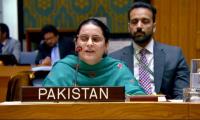
—The writer was launch Editor of The News, Islamabad and was editor for over a decade. She served as Ambassador to the UN and twice as Ambassador to the US and also as High Commissioner to the UK