PESHAWAR/ QUETTA/ISLAMABAD: The Khyber Pakhtunkhwa (KP) and Balochistan governments have announced sweeping energy conservation measures, including early closure of markets, restaurants and wedding halls, as authorities move to curb electricity consumption amid a worsening energy crisis and rising inflation.
In KP, a formal notification issued on Sunday stated that markets in divisional headquarters would close at 9pm, while those in other districts would shut at 8pm. Restaurants, cafes and hotels would close at 10pm, though takeaway and delivery services would be allowed. Wedding halls, marquees and event venues would also operate only until 10pm.
The restrictions apply to private offices, banks, academies, shops, gyms and other commercial activities, while agricultural and construction sectors, hospitals, laboratories and emergency services have been exempted. Medical stores would remain open round-the-clock but would be limited to the sale of medicines.
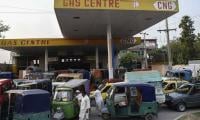
Tandoors, petrol pumps and public transport would receive limited exemptions, while industries may continue operations subject to a ban on unnecessary lighting. Decorative and flood lighting at buildings and plazas has been prohibited, while billboards and LED screens must remain switched off. The use of air conditioners, lifts, escalators and generators for non-essential activities after business hours has also been banned.
Government offices have been directed to enforce strict energy-saving practices with deputy commissioners tasked to ensure implementation through inspections and legal action against violators. The measures will come into effect from April 6.
Meanwhile, the Balochistan government has also rolled out similar steps, directing all markets and shopping centres to close by 8pm, while restaurants and wedding halls must shut by 10pm. Essential services such as pharmacies, tandoors and bakeries have been exempted.
Officials said the directives, issued following a meeting chaired by Chief Minister Mir Sarfraz Bugti, aim to manage the energy crisis and provide relief to citizens facing rising living costs. Authorities, including district administrations and law-enforcement agencies, have been instructed to ensure strict compliance, warning of legal action in case of violations.
However, the move has drawn strong opposition from traders. Central Anjuman-e-Tajiran Balochistan President Abdul Rahim Kakar rejected the decision, terming it “anti-trader” and warned of protests. Speaking at a press conference, he said traders would not accept the 8pm closure and proposed extending business hours to 10pm, with wedding halls and restaurants allowed to operate until midnight.
He argued that the decision resembles Covid-era restrictions and would further hurt businesses already struggling with inflation, unemployment, border closures and declining trade. Traders warned of province-wide protests if their demands are not addressed.
Meanwhile, a meeting chaired by Prime Minister Shehbaz Sharif on Sunday was informed that sufficient fuel reserves were available in the country to meet national requirements.
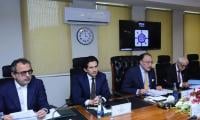
The meeting reviewed the implementation of government austerity and simplicity measures, with a report presented by the Intelligence Bureau. Progress on petroleum subsidies, fuel consumption and reserves was also discussed in the context of recent regional tensions.
The prime minister directed the provinces to deposit their respective shares for the national subsidy package at the earliest, stating that a public relief package worth Rs129 billion had been provided over the past three weeks. “The government cannot leave the public alone in this difficult time,” he said.
He appreciated the Balochistan government for depositing its allocated share, thanking Chief Minister Mir Sarfraz Bugti for the initiative.
Officials briefed the meeting that provincial governments had shared data on transport vehicles, including trucks, buses and freight carriers, to facilitate subsidy disbursement.
The prime minister said passenger buses are being given a monthly subsidy of Rs100,000, while minibuses and wagons are receiving Rs40,000 to prevent fare increases. Freight trucks are being provided Rs70,000, large transport vehicles Rs80,000 and delivery vans Rs35,000 per month to stabilise essential commodity prices.
To ensure transparency, subsidy payments are being made through digital wallets, he added. The PM ordered for immediate release of funds, noting that disbursement had already begun on Saturday, ahead of the scheduled rollout.
He said the government had also reduced the petroleum levy by Rs80 per litre to provide immediate relief. Additionally, Pakistan Railways is extending a subsidy of Rs6 billion, helping maintain current passenger and freight fares, while a planned 25 per cent quarterly increase in toll tax has been withdrawn.
The meeting was attended by Deputy Prime Minister/Foreign Minister Ishaq Dar, along with federal ministers and senior officials.
Separately, Minister of State for Finance and Revenue Bilal Azhar Kayani said on Sunday the government had ensured an uninterrupted fuel supply across the country since the onset of the regional crisis, while introducing targeted subsidies to shield vulnerable segments from its economic impact.
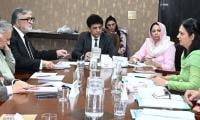
Addressing a press conference alongside Federal Minister for IT and Telecommunication Shaza Fatima Khawaja, he said the evolving regional situation had affected economies worldwide, including Pakistan, requiring timely and coordinated policy measures under the leadership of Prime Minister Shehbaz Sharif.
“The ongoing war in the region has impacted all economies, and Pakistan is no exception,” he said, noting that both developed and developing countries were facing similar challenges. Kayani said the government, under the leadership of the prime minister, along with COAS & CDF Syed Asim Munir and Deputy Prime Minister Ishaq Dar, had taken proactive steps since the outset of the crisis to protect citizens from economic shocks.
He said ensuring uninterrupted availability of petroleum products remained a top priority. “From day one, the government focused on maintaining adequate reserves and arranging alternative supply routes to avoid shortages,” he added.
A high-level committee, constituted at the start of the crisis, has been meeting daily to monitor developments and take prompt decisions, he said.
Highlighting relief measures, the minister said the government absorbed a significant portion of the global price increase for three consecutive weeks to prevent its impact on consumers. “There was going to be a substantial increase in fuel prices, but the prime minister ensured that this burden was not passed on to the public, spending Rs129 billion,” he added.
He said the government, in consultation with the provinces and coalition partners, including the Pakistan Peoples Party and Muttahida Qaumi Movement-Pakistan, had adopted a collective strategy to mitigate rising fuel costs.
Kayani said the government had reduced the petroleum levy by Rs80 per litre and introduced targeted subsidies. Motorcycle users are being given Rs100 per litre subsidy, while farmers are receiving Rs1,500 per acre support, with registration already underway in the provinces.
He added that further relief measures were being extended to public transport users, goods transporters and intercity commuters in collaboration with provincial governments. “Additional subsidies are also being considered to ease the burden on middle- and lower-income groups,” he said. Referring to urban transport facilitation, he noted that services such as metro buses had been made free to support commuters.
The minister said these measures were financed through prudent fiscal management, including expenditure rationalisation and resource reallocation in the final quarter of the current financial year. He reaffirmed the government’s commitment to continue coordinated efforts with provinces to protect citizens from the economic fallout of the regional situation. “The government will continue to take all possible measures to safeguard the people of Pakistan,” he said.